







 Australia’s Spring Auctions Rise but Remain Well Below 2025
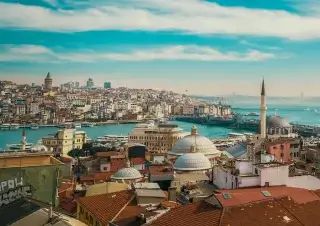 Number of Foreigners Holding Turkish Residence Permits Exceeds 1.27 Million
 Demand from Russian Tourists for Holidays in Georgia Rises by 20–25%
 Montenegro Property Buying Costs in 2026
 Four in Ten Companies Would Not Choose Slovakia
 Gulf Countries Prepare Unified Tourist Visa
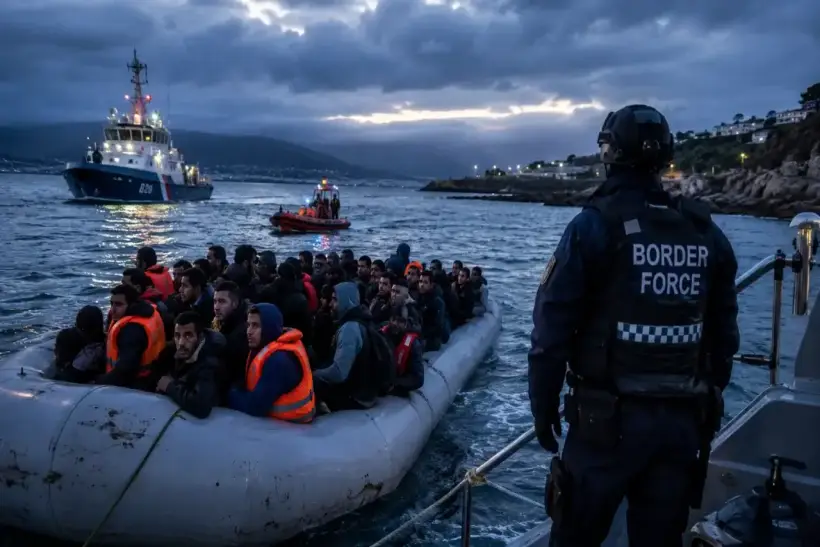
European leaders at the European Political Community summit in Yerevan moved toward a tougher migration framework, shifting the focus from responding to arrivals to controlling routes, accelerating returns, sanctioning smugglers and coordinating action with third countries.
Europe agrees a common migration language
At the European Political Community summit in Yerevan on May 4, 2026, leaders from 33 European countries, including the UK, Germany, France, Italy, Poland, the Netherlands, Switzerland and Nordic states, reaffirmed their commitment to joint action against illegal migration. A statement published by the UK government emphasized a “whole-of-route” approach, covering countries of origin and transit as well as Europe’s external and internal borders.
The document’s wording shows that Europe’s migration policy is increasingly moving beyond the logic of a single national border. Its priorities include operational information-sharing, humanitarian assistance in countries of origin, cooperation with the UN Refugee Agency, the International Organization for Migration and the Council of Europe, stronger land and maritime border protection, action against smuggling networks and faster returns of people without the right to stay.
The Yerevan statement extends the Copenhagen line
The Yerevan declaration builds on decisions taken at the previous European Political Community summit in Copenhagen. At that meeting, leaders identified several priorities: combating organised immigration crime, safeguarding domestic and international legal frameworks from abuse, accelerating returns, building new partnerships and managing migration before people reach dangerous routes.
The statement also refers directly to the lessons of the 2015 migration crisis. That is a significant political signal: European governments are effectively acknowledging that renewed displacement from Sudan, the Horn of Africa and the wider Middle East may require not only a humanitarian response but also a pre-arranged system of deterrence, monitoring and burden-sharing.
Conflicts are redrawing migration routes
Pressure on European routes is not created only at the borders of the European Union or the United Kingdom. Sudan remains one of the largest humanitarian risk points: the UN Refugee Agency estimates that 30.4 million people in the country need humanitarian assistance, including 16 million children. It also describes the conflict that began in April 2023 as one of the world’s largest displacement and protection crises.
That is why Europe’s migration debate increasingly links migration, security, humanitarian aid and foreign policy. If assistance in countries of origin shrinks while routes through North Africa, the eastern Mediterranean and the Balkans remain active, pressure inevitably shifts to border agencies, courts, asylum systems and reception centres.
Lower crossings have not ended political pressure
Data from the European Border and Coast Guard Agency show that irregular crossings of the EU’s external borders fell 26% in 2025 to about 178,000, the lowest level since 2021. The agency warned, however, that routes can shift rapidly under the influence of conflict, instability and smuggling networks.
That explains the dual character of Europe’s policy. On one hand, total irregular entries into the EU have fallen. On the other, governments do not see the decline as a durable victory. The central Mediterranean remains the most active route, while political risks are amplified by the fact that even smaller flows can place heavy pressure on local reception and return systems.
The Channel is a separate test for London
For the UK, the issue has its own political dynamics. According to the House of Commons Library, around one-third of people who claimed asylum in the UK since 2018 arrived by small boat; in 2025, that share rose to 41%. Between 2018 and 2025, around 7,600 small-boat arrivals were returned from the UK, equal to about 4% of total small-boat arrivals over that period.
Official small-boat operational data are updated by the UK Home Office and French authorities, but they are published as provisional and may differ from final quarterly statistics. That matters for interpreting daily reports: current figures show the operational picture, not the fully quality-assured statistical series.
Returns become the core policy lever
In Yerevan, leaders singled out returns as a central tool. The issue is not only deportation after an asylum refusal, but also agreements with countries of origin and transit that are intended to reduce incentives to leave and ease pressure on destination states.
This remains the most contested area of the policy. Without workable third-country agreements, European asylum systems accumulate unresolved cases, accommodation costs rise and political tensions intensify. Yet excessive acceleration carries legal risks: states remain bound by the Refugee Convention, the European Convention on Human Rights and the principle that people must not be sent to places where they face persecution or torture.
Smugglers become a sanctions target
The statement places separate emphasis on organised immigration crime. European leaders agreed to use targeted measures against smugglers, human traffickers and their supply chains, including sanctions.
This reflects the changing structure of migration routes. Irregular migration is rarely a fully individual journey: it often relies on intermediaries, logistics, forged documents, illicit payments, boat storage sites and coordination through digital channels. Border control is therefore increasingly being combined with financial investigations, international data-sharing and efforts to disrupt smuggling infrastructure before boats depart.
The humanitarian cost remains high
Tougher migration policy is developing against a backdrop of high mortality on migration routes. The International Organization for Migration’s Missing Migrants Project says data on deaths and disappearances are incomplete because information is difficult to collect, and that every number represents a person, a family and a community left without answers.
According to Euronews, citing the UN agency, about 7,900 people died or went missing on migration routes in 2025, pushing the total since 2014 above 80,000. Sea routes to Europe remain among the deadliest, turning border policy into a question not only of security but also of responsibility for saving lives.
The EU prepares for a new asylum system
Europe’s 2026 migration agenda coincides with the rollout of key elements of the EU Pact on Migration and Asylum. The European Union Agency for Asylum noted that from June 2026, a mandatory border procedure is set to apply to certain categories of asylum seekers, including those from countries with low recognition rates for international protection.
The mechanism is designed to speed up the processing of some claims at the border. For governments, it is a way to reduce procedural delays and more quickly distinguish people in need of protection from those without grounds to stay. For rights groups, the main risk is that speed may come at the expense of case quality, especially when applicants lack access to legal help, interpretation or effective appeal.
Europe moves migration policy beyond its borders
The Yerevan statement confirms a shift toward external migration management. Europe is trying to act before people reach its borders: through aid in countries of origin, agreements with transit states, operations against smugglers, intelligence-sharing and return mechanisms. That makes migration policy part of diplomacy, security and budget planning.
As International Investment experts report, the critical risk in Europe’s new line is that route control may become politically easier than addressing the causes of displacement. A decline in border crossings does not automatically mean a decline in humanitarian pressure: if conflict, poverty and institutional collapse persist in countries of origin, routes do not disappear but become more expensive, more dangerous and more profitable for criminal networks. Europe is building a tougher system, but its effectiveness will be measured not by summit statements, but by returns, procedure speed, legal safeguards and lower mortality on migration routes.