







 Argentina Rents Rise but Lag Inflation
 Hungary Plans Wealth Tax Above 1 Billion Forints
 China Rewrites Its New-Home Sales Model
 Apartment Sales in Tbilisi and Batumi Reached $485 Million in July
 Migrant Regularization Changes Spain’s Labor Market Statistics
 Lithuania’s Economy Accelerates in the Second Quarter
Netherlands Raises Water Shortage Response to Level Two
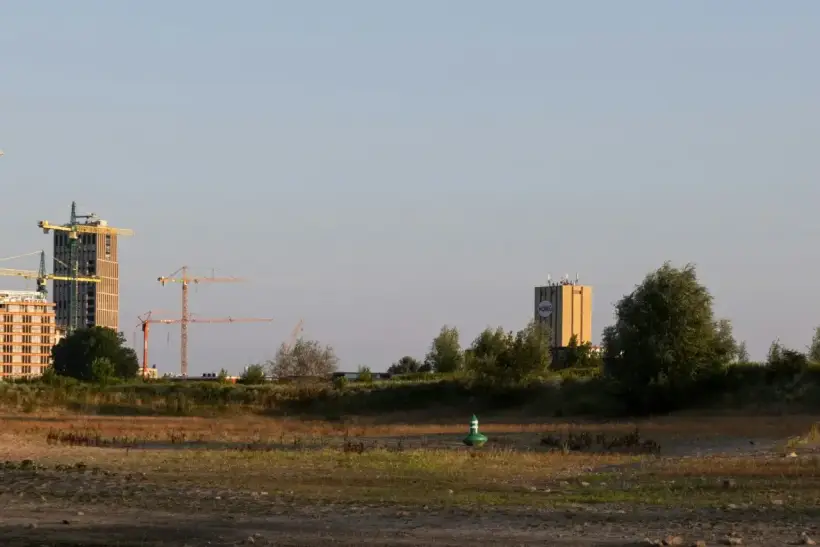
The Netherlands has raised its national drought response to Level 2, officially described as an “actual water shortage”, after Rhine flows fell to a record July low and demand increased during hot weather. Drinking water supplies remain secure, but authorities are restricting abstraction, operating locks less frequently, redirecting freshwater towards the west and preparing to close the Twente Canal to shipping.
Level 2 is not a national emergency
The Dutch government moved from Level 1, an “impending water shortage”, to Level 2 on July 16, 2026.
The decision does not mean that household taps are running dry or that the Netherlands has declared a national emergency. It indicates that available water can no longer satisfy every demand without stronger coordination and prioritisation.
The National Water Distribution Coordination Committee brings together Rijkswaterstaat, regional water authorities, provinces, drinking water companies and government ministries. They determine how limited supplies should be distributed and which restrictions are required in individual regions.
The government says drinking water remains available. No nationwide ban on watering gardens, filling pools or other household uses has been imposed, although consumers are being asked to avoid unnecessary use, particularly during peak hours.
CNN showed exposed riverbanks and houseboats resting partly on the riverbed. The images illustrate the unusually early low-water conditions, but do not necessarily show structural damage: residents said such vessels were designed to cope with seasonal fluctuations, although the river had receded earlier than usual in 2026.
Rhine flow sets a record for July
The Rhine’s average daily flow at Lobith, near the German border, fell to 771 cubic metres per second on July 15. It was the lowest flow recorded there during any July.
The distinction is important. It was not the river’s absolute lowest flow across all months. Lower readings have occurred later in the year or during periods when ice disrupted the movement of water.
The previous July record was associated with the 1976 drought. By July 16, flow was around 750 cubic metres per second, compared with approximately 1,000 at the beginning of the month.
The decline cannot be attributed solely to weather inside the Netherlands. The Rhine collects water across Switzerland, Germany, France and other countries. A dry spring, high evaporation, earlier seasonal snowmelt and declining glacial contributions have reduced summer inflows throughout the basin.
The Netherlands lies near the end of the river system and cannot compensate for prolonged upstream deficits solely through domestic pumps, canals and locks. Deltares says effective adaptation will require cooperation across the Rhine and Meuse basins.
A wet June did not end the hydrological drought
June 2026 was not nationally dry when measured by average rainfall. The Netherlands received approximately 85 millimetres, compared with a long-term average of 65 millimetres.
Most of the rain fell during the first half of the month and was unevenly distributed, often through local thunderstorms. Parts of the coast and the Wadden Islands received considerably less than normal. Sunny and hot conditions during the second half accelerated evaporation.
The national average also says little about conditions across the international Rhine and Meuse basins. Heavy Dutch showers cannot rapidly restore river flows when water deficits persist in the Alps, Germany and France.
A month that is wet on a national average can therefore coincide with dry soil in particular regions, low groundwater and hydrological drought in major rivers.
Saltwater is moving further inland
Under normal conditions, strong river flows create pressure that keeps North Sea water closer to the coast. When Rhine flows weaken, salt can penetrate further into western rivers, canals and groundwater.
Salinisation threatens freshwater intake points, farmland, natural areas and industrial users. Many crops are sensitive to even moderate increases in salt concentration.
Rijkswaterstaat partially opened the Hagestein weir on July 17. Between 20 and 25 cubic metres of freshwater per second is being directed along the Lek towards Rotterdam to create a buffer against saltwater entering through the Lek and Hollandsche IJssel.
The additional supply is transferred from the Waal through the Amsterdam–Rhine Canal. This helps western regions but slightly reduces depth in the Waal, meaning authorities release no more water than necessary.
The Climate-resilient Water Supply system is also moving freshwater through canals and pumping stations when conventional western intake points become too saline.
Shipping restrictions are becoming more severe
Low river levels reduce the maximum draught available to vessels. Barges must carry less fuel, minerals, construction materials, chemicals and agricultural goods to avoid touching the riverbed.
Lower loads increase the cost of moving each tonne. More vessels or journeys are required to transport the same quantity, raising expenses for industrial and logistics companies.
Locks are being operated less frequently in some areas because every passage can allow saltwater to mix with freshwater. This has increased waiting times on routes including Terneuzen and IJmuiden.
Restrictions intensified after the CNN article was published. On July 23, the government announced that the locks at Eefde, which provide access to the Twente Canal system, would close to shipping from noon on July 25.
Water abstraction from the canal for crop irrigation was also banned. Authorities are attempting to prevent the level on the Almelo–De Haandrik section from falling below 9.10 metres relative to Amsterdam Ordnance Datum. A further decline could destabilise an embankment that also serves as a flood defence.
Agriculture and nature compete for freshwater
Regional authorities have restricted abstraction from streams, canals, rivers and groundwater. The rules vary geographically, so there is no single nationwide irrigation ban.
Sandy soils in the east and south are particularly vulnerable because they retain less moisture. Coastal agricultural areas face the additional problem of saltwater intrusion.
Insufficient irrigation may reduce yields of potatoes, vegetables, fruit and other crops. The impact depends on location, crop type, the timing of the drought and access to alternative supplies.
Prolonged drying of peat and clay soils can cause subsidence and damage building foundations. Streams, ponds, wetlands and nature reserves may dry out, with some ecological effects becoming long-lasting or irreversible.
The Netherlands uses a priority system established after the 2003 drought. Maintaining flood defences and preventing irreversible land subsidence and ecological damage take precedence over lower-priority uses.
Warm water is damaging river quality
The Rhine and Meuse were close to 25 degrees Celsius when CNN prepared its report. Warmer water holds less oxygen and places additional stress on fish and other organisms.
Rijkswaterstaat reported more cases of blue-green algae and the first incidents of fish mortality. Weak flows also increase pollutant concentrations and reduce the natural flushing of waterways.
Industrial facilities use surface water for cooling and return it at a higher temperature. Authorities can restrict abstraction or discharge during hot weather to prevent additional heating.
For households, the most immediate risk concerns swimming in open water rather than tap water. Authorities advise checking official warnings about algae and bathing-water quality before entering rivers, lakes or ponds.
Climate change increased drought through evaporation
A World Weather Attribution study published on July 23 examined two large European regions. The Netherlands was included in the eastern domain alongside Germany, Switzerland and countries extending towards the Baltic.
Across that broad region, January-to-June soil moisture deficits of the observed severity are expected about once every 15 years in the present climate. Human-driven warming of approximately 1.4 degrees Celsius made them an estimated 11 times more likely.
The finding should not be treated as a probability calculation exclusively for the Netherlands. The authors warn that results are aggregated across large regions and may not reflect local variations.
The main climate-related driver is increased potential evapotranspiration. Warmer air removes moisture more rapidly from soils and vegetation, allowing heat to intensify agricultural and ecological drought even without a clear long-term decline in rainfall.
In the eastern domain, highly evaporative conditions comparable with those observed in 2026 became about 40 times more likely. This is a separate measure and should not be confused with the elevenfold increase in the probability of the soil moisture deficit.
Drinking water supplies remain resilient
The government and Deltares say there is currently no national threat to drinking water availability. Companies and water authorities expanded drought preparations after the dry years of 2018 and 2022.
Prolonged drought can still place local systems under pressure. High household demand during morning and evening peaks can strain treatment plants, pumping stations and distribution networks.
The quality of source water may become as important as its volume. Salinity, pollution, high temperatures and low surface-water levels can restrict abstraction or make treatment more difficult.
Authorities are currently relying on conservation advice and regional restrictions. Level 2 strengthens coordination but does not automatically impose identical rules on every household.
The Netherlands must retain and discharge water
Dutch water management was historically designed primarily to protect low-lying land from floods and discharge excess rainfall rapidly.
Climate change increasingly requires the opposite function: retaining more water during wet months for use during dry summers. Storing all winter flow is impossible because permanently high levels in rivers, lakes and canals would increase flood risks.
The IJsselmeer remains the country’s main freshwater reserve. Elevated levels were maintained there and in the Markermeer before the dry season to store additional water.
Longer-term adaptation includes wetland and floodplain restoration, improving the ability of soils to absorb moisture, temporary rainwater storage, reducing losses and using water more efficiently in farming and industry.
Cross-border dependence remains the central limitation. The Rhine and Meuse pass through several countries, meaning that irrigation, reservoirs, industrial demand and allocation decisions upstream affect the water ultimately reaching the Netherlands.
As International Investment experts report, Level 2 does not yet represent a household drinking-water crisis, but it is already creating economic losses and forcing authorities to choose between competing users. Locks, pumps and weirs can redistribute existing water but cannot replace declining inflows from international rivers. The Twente Canal closure shows that the drought is beginning to affect transport infrastructure as well as farming and ecosystems. Without lower demand and greater freshwater-storage capacity, such restrictions risk becoming a regular feature of Dutch summers.