







read also
 Australia’s Spring Auctions Rise but Remain Well Below 2025
 Number of Foreigners Holding Turkish Residence Permits Exceeds 1.27 Million
 Demand from Russian Tourists for Holidays in Georgia Rises by 20–25%
 Montenegro Property Buying Costs in 2026
 Four in Ten Companies Would Not Choose Slovakia
 Gulf Countries Prepare Unified Tourist Visa
Germany Bans Entry for Russians with Old-Style Passports

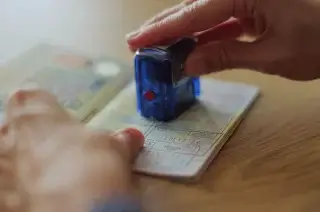
Photo: Pexels
Germany is changing its entry rules for Russian citizens. Starting January 1, 2026, non-biometric Russian passports will no longer be accepted, the country’s embassy reports. There are some exceptions, but in most cases modern 10-year biometric passports will be required from this date.
What Has Changed
German consulates will continue issuing Schengen visas to holders of old-format passports until the end of 2025. These visas can be used until they expire. However, if an application is not processed before January 1, a biometric passport will be required to receive the visa.
Starting in 2026, German consulates and visa centers will no longer accept applications submitted with 5-year passports. This rule applies to all types of German visas as well as Schengen visas of other countries when Germany is the intended point of entry. If the applicant already has a biometric passport, nothing changes — it can be used for visa issuance, entry, and stay in Germany as before.
Tourdom notes that German Schengen visas now account for only a small percentage of all visa requests from Russian tourists. Several years ago, Germany introduced new requirements for applicants, including mandatory European medical insurance and proof of finances from a foreign bank. This has limited the ability of many Russians to travel to the country.
Other Countries
Some countries already do not allow entry with old-style Russian passports. Lithuania introduced this rule on June 1 — the only exception applies to rail transit between the Kaliningrad region and the rest of Russia. France adopted a similar rule on June 4 — children under 14 can still enter with an old passport if their visa was issued before May 3, 2025.
Estonia and Denmark allow entry only for holders of residence permits of these countries or other EU states. Latvia, Iceland, the Czech Republic and Malta also do not recognize 5-year Russian passports.
Passport Fees
Many Russians previously chose the old-style passport because the state fee was half the cost of the 10-year biometric one — 3000 vs. 6000 rubles (about $37 and $94). For children under 14, the fees are even lower — 1000 and 2000 rubles ($12.3–25).
Now, for anyone planning a trip to Europe, it is recommended to obtain a biometric passport. It is expected that other EU states will introduce similar rules soon as part of the transition to the new entry-exit system.
New EU Entry Rules
Starting October 12, 2025, the Entry/Exit System (EES) will be implemented across the Schengen Area. It will require biometric data scans for all travelers entering the EU. Russians with non-chip passports will not be able to use automated terminals. Officially, they may continue traveling, but will need to undergo manual checks, which will take longer. Overall, using old passports will become increasingly inconvenient and risky, especially for complex itineraries with transfers.
In addition, since November 7, 2025, the EU restricted multiple-entry visas for Russians. Now only visas tied to specific travel dates are issued. Formally, each EU country may decide individually, but in practice the measure was approved by all member states. Many European countries have already confirmed that they have switched to the new rules.
Europe continues tightening regulations for Russians, and additional measures may be introduced as early as December. EU officials explain these policies by growing security risks amid ongoing hostilities in Ukraine.