











Permanent Residence in Finland: Minimum Residence Period Extended to Six Years
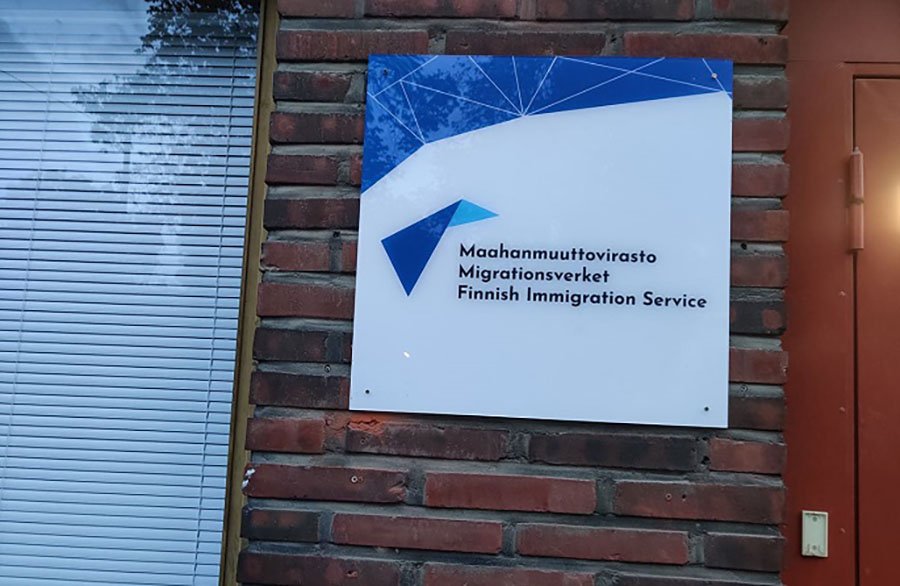
Photo: Daily Finland
Finland will introduce stricter requirements for obtaining permanent residence permits starting from January 8, 2026. The key change is an increase in the mandatory period of residence from four to six years on a continuous legal basis, reports Daily Finland. In addition, two new mandatory requirements will be introduced: proof of proficiency in Finnish or Swedish and a work history in the country.
What Will Change
The amendments to the Aliens Act were approved by the President and adopted on the initiative of the government led by the National Coalition Party. Minister of the Interior Mari Rantanen stressed that applicants must comply with the rules of Finnish society, work, and study the language. According to her, permanent residence in Finland should be the result of genuine integration rather than formal residence.
Under the new rules, after six years of residence a foreign national may obtain a permanent residence permit provided they demonstrate a satisfactory level of proficiency in one of the state languages and have at least two years of work experience in Finland. Periods of unemployment and receipt of social benefits will be closely monitored. If the applicant has used unemployment benefits or social assistance, their total duration must not exceed three months.
The law also clarifies that if an unconditional prison sentence is imposed, the continuity of residence is interrupted. The required period will start counting anew after the sentence has been fully served.
Fast-Track Permanent Residence
At the same time, the government retains the option of obtaining permanent residence after four years of residence, but only if additional requirements are met. The applicant must satisfy one of the following three criteria:
— a confirmed annual income of at least €40,000;
— a master’s degree or postgraduate qualification recognised in Finland combined with two years of work experience;
— an exceptionally high level of proficiency in Finnish or Swedish together with three years of work experience in the country.
Separate conditions apply to graduates of Finnish universities. Foreign nationals who have obtained a bachelor’s, master’s or postgraduate degree in Finland may apply for a permanent residence permit without meeting the minimum residence period. However, even in this case, proof of a certain level of proficiency in Finnish or Swedish will be required.
Other Tightening Measures
Earlier, Finland’s Minister of Finance Riikka Purra proposed limiting access to the basic living allowance for foreigners who have lived in the country for less than ten years. She believes that the current social support system is increasingly losing its incentive function and, in some cases, is turning into a primary source of income rather than a temporary safety net.
Originally, the basic allowance was conceived as a last line of social protection, but today it is used on a permanent basis by hundreds of thousands of households. Nearly 30% of benefit recipients are people who do not speak Finnish or Swedish. Among Arabic-speaking residents, more than half receive support, while among speakers of the state languages the figure is less than 4%.
The amount of benefits varies depending on family composition, ranging from €1,300 to €5,000 per month. Under such conditions, according to Purra, incentives to seek employment decline, especially in low-paid sectors. Every euro earned above the minimum threshold immediately reduces the size of the benefit, meaning that work often brings little or no financial advantage.
The reform is currently under parliamentary consideration. Recipients are expected to first rely on primary forms of support, such as unemployment benefits or student allowances. In the longer term, the Finns Party insists on introducing a minimum ten-year residence requirement for access to the basic allowance, viewing this measure as a way to reduce long-term dependence on social assistance and align Finland’s model more closely with practices in other Nordic countries.
Background and Outlook
The amendments to Finland’s permanent residence rules are part of a broader migration policy that the government has been consistently tightening since 2023. In June 2025, the bill was submitted to parliament, while similar initiatives had previously been discussed in January and March. In July 2024, parliament also approved an increase in the residence period required for Finnish citizenship from five to eight years.
The government’s hardline approach has sparked public debate. In 2023, Helsinki saw repeated mass demonstrations against the tightening of migration policy. Despite the protests, the authorities continued implementing the announced reforms, emphasising the priority of long-term integration and the sustainability of the social system.
Analysts at International Investment note that Finland’s migration policy is undergoing a fundamental shift. This is not a matter of isolated adjustments but a comprehensive redesign of the entire framework governing the admission of foreigners — from entry and residence to access to permanent status and the social system. The tightening has affected almost all segments, including education, family reunification, social support, and the acquisition of temporary and permanent residence permits. The strictest measures are being applied to Russians: they are banned from purchasing real estate in the country, and mass deportations have been reported.
This policy reversal appears particularly sharp compared with the period before 2022, when Finland offered some of the most liberal conditions for foreigners in Europe. In effect, the country is moving away from a model based on “social trust” toward strict selection, where permanent status becomes a privilege for economically integrated migrants rather than an automatic outcome of residence.