







read also
 Australia’s Spring Auctions Rise but Remain Well Below 2025
 Number of Foreigners Holding Turkish Residence Permits Exceeds 1.27 Million
 Demand from Russian Tourists for Holidays in Georgia Rises by 20–25%
 Montenegro Property Buying Costs in 2026
 Four in Ten Companies Would Not Choose Slovakia
 Gulf Countries Prepare Unified Tourist Visa
Snow Cyclone “Francis” in Russia: Widespread Disruptions at Airports and on Roads
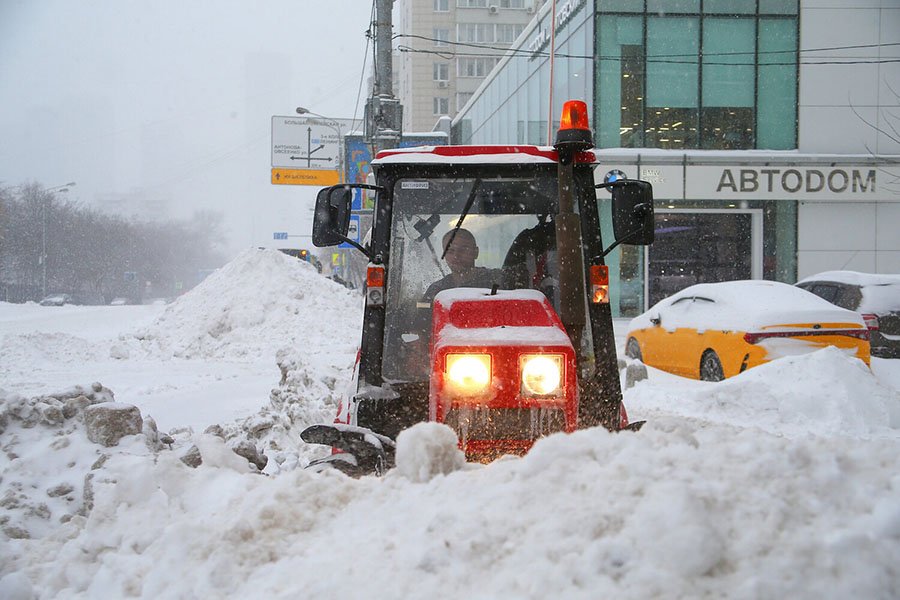
Photo: Gazeta.ru
Heavy snowfall caused by cyclone “Francis” led to large-scale transport disruptions in Moscow and on the approaches to the capital on January 9–10. The city saw so-called “black” traffic jams on the MKAD, flight restrictions were introduced at airports, and passengers were forced to spend many hours in terminals, often sitting or sleeping on the floor. Severe weather conditions also caused problems in other regions of Russia.
Cyclone “Francis” affected a vast area of the European part of the country, stretching from Pskov to Volgograd. In Dagestan, more than 107,000 people were left without electricity on January 9, Radio RBC reports. In Moscow, snowfall resulted in congestion levels of up to six points, around 30 road accidents within the MKAD, and more than 400 temporary traffic restrictions. Municipal services worked around the clock to deal with the aftermath of the storm, with about 130,000 workers and over 15,000 units of equipment deployed for snow removal.
A difficult situation was also observed on the railway network in the Moscow region. A total of 112 units of specialized equipment and around 4,500 personnel were involved in clearing tracks and platforms, but due to intense snowfall, stations were not able to cope everywhere. The need to clear runways and carry out aircraft de-icing led to disruptions in flight schedules. More than 300 flights were delayed, and another 42 were canceled.
URA.ru reported on the night of January 10 that flights to Minsk, Mineralnye Vody, and Gomel were canceled at Sheremetyevo Airport, while another 108 departures were listed as delayed. These included flights to Magadan, Beijing, Baku, Ufa, Kazan, St. Petersburg, and Omsk. At Vnukovo Airport, nine flights had been canceled by that time, and another 54 were delayed. Disruptions also affected flights to Surgut, Istanbul, Hurghada, and Antalya. At Domodedovo, three flights were canceled and another 27 departed late.
FederalPress reported on January 10 that around a dozen major traffic jams had formed on the MKAD, some of which were marked in black on traffic maps, indicating a complete standstill. Disruptions were recorded not only at airports but also on the rail network, and tram services were temporarily suspended in certain areas.
Sheremetyevo Airport temporarily suspended the arrival of aircraft due to adverse weather conditions. Initially, the restrictions were in effect until 8:00 a.m. Moscow time, but were later extended until 10:00 a.m. Passengers were not provided with clear information about departures, and flights were postponed by two, four, or more hours.
After flights were canceled, passengers were directed to baggage claim areas, where large crowds formed among piles of suitcases. Finding personal belongings, according to eyewitnesses, was difficult due to the sheer volume of baggage, and waiting times could reach up to four hours. As a result, Aeroflot and Rossiya airlines decided to deliver delayed baggage directly to passengers’ homes.
In departure areas, travelers waited for flights on the floor or on mattresses provided by airport staff. Many families with children were among those remaining in the terminals. One passenger who had planned to fly to Omsk to join his family and go to work spent about 15 hours at Sheremetyevo. During that time, his flight was postponed several times and eventually canceled, forcing some passengers to remain at the airport for nearly a full day.
In Moscow and the Moscow region, a yellow weather alert has been declared and will remain in effect until 9:00 p.m. on January 12. As of January 10, the capital recorded a new daily snowfall record, while St. Petersburg also registered a new winter maximum snow depth.
Similar weather-related disasters were previously recorded in the United Kingdom, France, Germany, and the Netherlands, where mass flight cancellations, disruptions to rail services, and power outages were reported. Analysts at International Investment note a rise in systemic climate risks to transport infrastructure, particularly during peak travel seasons, when even short-term restrictions can trigger cascading disruptions to logistics. Cyclones and storms also highlight the vulnerability of transport infrastructure to extreme weather conditions.
Tags: Russia, weather, cyclone Francis, snowfall, transport, airports, aviation, railways, Moscow, infrastructure