







read also
 Australia’s Spring Auctions Rise but Remain Well Below 2025
 Number of Foreigners Holding Turkish Residence Permits Exceeds 1.27 Million
 Demand from Russian Tourists for Holidays in Georgia Rises by 20–25%
 Montenegro Property Buying Costs in 2026
 Four in Ten Companies Would Not Choose Slovakia
 Gulf Countries Prepare Unified Tourist Visa
Tourism & hospitality / News / Reviews / United Kingdom / France / Germany / Netherlands / Czech Republic / Albania / Hungary 10.01.2026
Europe Hit by Storm Goretti: Transport Disruptions and Power Outages
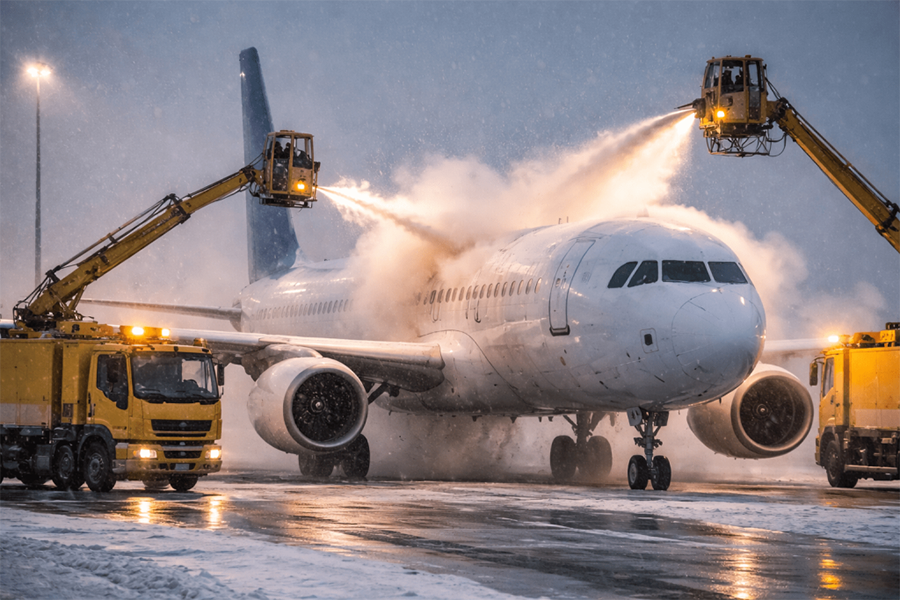
Photo: Archive.ph
Storm Goretti has disrupted daily life across several European countries. Heavy snowfall and gale-force winds have led to widespread power outages, severe disruption to ground transport, and large-scale flight cancellations and delays at airports. The most serious impacts have been recorded in the United Kingdom, France, Germany, and the Netherlands, Reuters reports.
Britain and France without power
As a result of the storm, more than 57,000 people were left without electricity in south-west England, the Midlands, and Wales. In northern Scotland, snowfall exceeded half a metre, with municipal services working at full capacity to clear roads. On Friday, January 9, around 250 schools across the region were closed, some of them for the fifth consecutive day, AP News notes. Birmingham Airport, which had temporarily suspended operations due to snowfall, said flights had resumed with reduced use of the runway.
In France, power outages affected around 380,000 households, mainly in Normandy and Brittany. In coastal areas, wind speeds exceeded 150 km/h, while a record gust of 213 km/h was recorded in Barfleur. Due to infrastructure damage, rail operator SNCF temporarily suspended passenger services between Paris and Normandy.
State-owned energy company EDF said it was forced to take two reactors offline at the Flamanville nuclear power plant after a high-voltage line was damaged. Against the backdrop of disruptions and weather-related risks, wholesale electricity prices rose across Western Europe. The storm also caused structural damage, including torn-off roofs and uprooted trees.
In Hungary, the military was deployed to assist motorists trapped in snowdrifts. Across the Western Balkans, weather-related damage has continued since Sunday: in Albania, which has been hit by extensive flooding, one fatality was reported, while strong winds tore roofs off buildings in north-eastern Turkey.
In the Czech Republic, the major D5 motorway linking Prague with Germany was blocked by trucks at two points near the German border for several hours. In parts of Prague, public transport was effectively brought to a halt. At Prague’s Václav Havel Airport, flights were delayed and some departures were cancelled.
Germany: rail and ferry services suspended
In Germany, state rail operator Deutsche Bahn suspended long-distance services in the north of the country, leaving thousands of passengers stranded. In other regions, strong winds and snowfall disrupted road, bus, and rail transport, while schools were temporarily closed in some areas.
Around 40 flights were cancelled at Hamburg Airport. The storm also affected the industrial sector: carmaker Volkswagen suspended operations early at its Wolfsburg plant, while its facility in Emden did not resume work that day. In Bavaria, two people were killed in a head-on collision between two cars, with one vehicle believed to have skidded on an icy road. In the Upper Palatinate region, a driver died after his car left the road and crashed into a tree. Ferry services along the North Sea coast in the federal state of Lower Saxony were severely disrupted. Due to strong easterly winds, several islands, including Langeoog, Spiekeroog, Norderney, and Wangerooge, became temporarily inaccessible.
Heavy snowfall also led to the cancellation of a Bundesliga football match between St Pauli and RB Leipzig, which was scheduled to take place in Hamburg. St Pauli said that despite days of efforts to clear snow, particular concern remained over accumulation on the stadium roof. The fate of other fixtures in the round also remained uncertain.
Netherlands: aviation crisis at Schiphol
In the Netherlands, prolonged snowfall, strong winds, and icy conditions have been recorded since January 2. Amsterdam Schiphol Airport has faced one of the most serious operational crises in recent years, with more than 3,200 flights cancelled, according to Flightradar24. This triggered a ripple effect across Europe, as airlines opted to adjust schedules in advance to avoid aircraft becoming stuck at an overloaded terminal.
The crisis was driven not only by prolonged snowfall but also by an acute shortage of de-icing fluid. KLM, which handles most aircraft de-icing operations at Schiphol and operates a fleet of 25 specialised vehicles, was using around 85,000 litres per day. Supplies, sourced mainly from Germany, failed to keep pace with consumption, leading to critically low stock levels and the risk of a complete operational shutdown.
Another complicating factor was the limited holdover time after de-icing. During heavy precipitation, this window shortens sharply, and if an aircraft fails to take off in time, it must return for re-treatment, further reducing airport capacity. At the same time, crews were forced to continuously clear runways, taxiways, and aprons. On January 7, KLM said it had arranged emergency deliveries of de-icing fluid, with the first shipments arriving at the airport. Even so, 346 departures and 333 arrivals were cancelled that day.
For several consecutive days, Schiphol topped the list of European airports with the highest number of flight disruptions. Experts note that the airport’s infrastructure is not designed to handle such prolonged and intense winter conditions. Unlike airports in northern countries such as Sweden, Amsterdam rarely faces this level of strain, limiting its ability to rapidly scale up ground operations.
Outlook and near-term risks
According to meteorological services and infrastructure operators, weather conditions across Europe remain unfavourable. In a number of regions, freezing temperatures, snowfall, and strong winds are expected to persist, increasing the risk of further disruptions to transport and energy systems. Flightradar24 warns of the likelihood of continued aviation disruption, particularly in the Netherlands, where the impact of snowfall and shortages of de-icing resources continues to constrain airport capacity. Travellers planning trips across Europe are advised to regularly check weather forecasts, airport operations, and ground transport status.
Analysts at International Investment note that such incidents have become more frequent across Europe in recent months. The highest number of disruptions is being recorded in the aviation sector, where passengers are increasingly facing flight cancellations and delays. Rising weather-related risks and the high degree of integration within Europe’s transport network mean that such disruptions are no longer a local issue for individual countries, but a systemic factor affecting mobility across the continent.