







read also
 Australia’s Spring Auctions Rise but Remain Well Below 2025
 Number of Foreigners Holding Turkish Residence Permits Exceeds 1.27 Million
 Demand from Russian Tourists for Holidays in Georgia Rises by 20–25%
 Montenegro Property Buying Costs in 2026
 Four in Ten Companies Would Not Choose Slovakia
 Gulf Countries Prepare Unified Tourist Visa
Fire Disrupts Key London Rail Hub
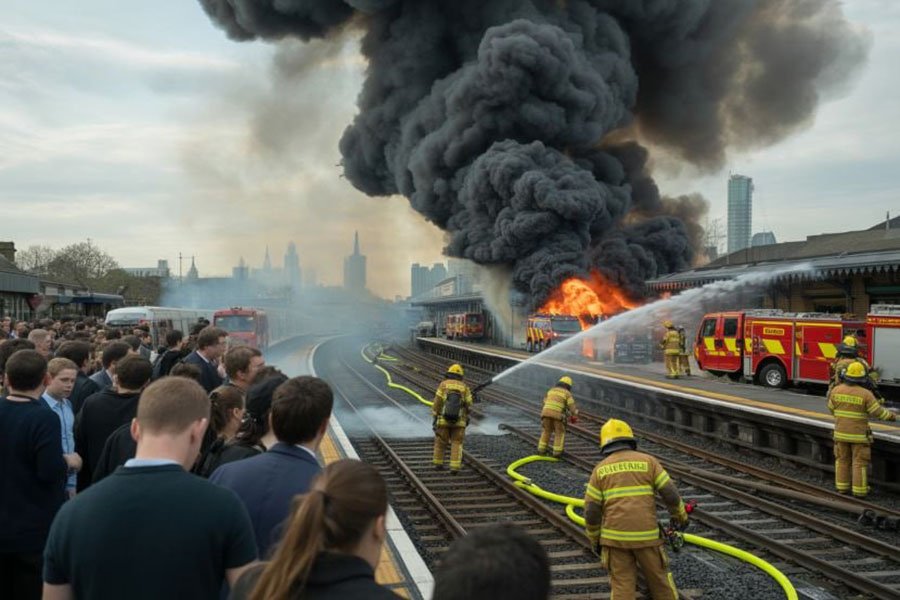
A major fire at Queens Road Peckham station in south London caused widespread disruption to rail services and forced the evacuation of passengers, highlighting the vulnerability of urban transport infrastructure. The incident occurred in the evening of February 2026, shortly before 9 p.m., when thick black smoke rose above the railway arches and power to the tracks was shut down as a precaution.
Emergency services acted swiftly, halting train traffic in both directions to allow firefighters safe access to the affected area.
Emergency response and containment
London Fire Brigade received more than 90 emergency calls reporting the blaze. Three fire engines and around 15 firefighters were deployed, supported by additional crews from Greenwich, New Cross and Old Kent Road. Firefighters worked under difficult conditions, including heavy smoke and strong winds, to prevent the fire from spreading to nearby structures.
The fire was brought under control later in the evening. No injuries were reported, although the proximity of the blaze to live rail infrastructure raised significant safety concerns.
Rail service disruption
Train services through Queens Road Peckham were suspended, causing delays and cancellations on routes connecting Peckham Rye with Canada Water and London Bridge. The disruption coincided with the evening rush hour, leaving many passengers stranded or seeking alternative transport options.
National Rail confirmed that services resumed later that night after firefighters completed their work and safety checks were carried out on power and signalling systems.
Impact on business travel and tourism
The incident disrupted business travel across south and central London, particularly for commuters heading toward major commercial districts such as London Bridge and Canary Wharf. Evening disruptions are especially costly for professionals relying on tight schedules and connections.
Tourists were also affected, with some experiencing confusion and delays as they attempted to navigate unfamiliar transport alternatives. For visitors dependent on rail links to reach central attractions or accommodations, the fire added unexpected complexity to travel plans.
Infrastructure resilience under scrutiny
While the immediate economic impact was limited in duration, the fire underscored the fragility of transport networks in high-density cities. Even short-lived incidents can trigger cascading delays across interconnected systems.
Transport analysts note that such events reinforce the case for continued investment in fire prevention, infrastructure resilience and contingency planning within metropolitan rail networks.
Conclusion
The fire at Queens Road Peckham station served as a sharp reminder of the challenges facing London’s transport system. Rapid intervention by emergency services prevented injuries and prolonged shutdowns, but the disruption illustrated how quickly mobility can be compromised by unexpected events in major urban hubs.
Expert conclusion by International Investment:
As reported by International Investment experts, incidents like the Queens Road Peckham fire highlight the strategic importance of resilient transport infrastructure. For global cities, sustained investment in safety systems and network redundancy is increasingly viewed as essential to economic continuity and investor confidence.