











Azerbaijan closes airspace after drone attack from Iran
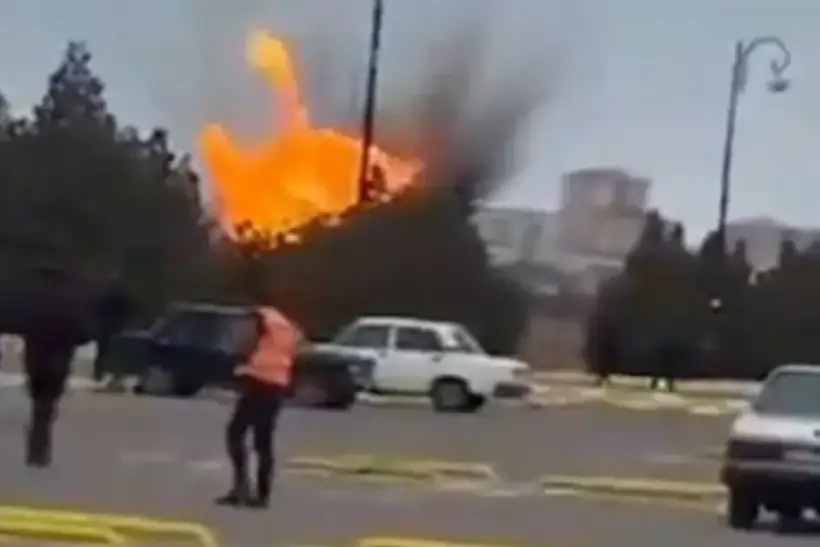
Damage reported at Nakhchivan airport and a rural school
Azerbaijan suspended air traffic on March 5, 2026, following a drone strike launched from Iranian territory. The attack damaged Nakhchivan International Airport and a school in the village of Shakarabad, Babek District. Four people were injured, Reuters reports.
Details of the attack and Baku's response
According to the agency, four drones crossed the border and targeted sites in the Nakhchivan Autonomous Republic. One drone hit the terminal building of Nakhchivan International Airport (about 10 km from the Iranian border), while another exploded near a school in the nearby village. The injured were hospitalized, and their condition is stable.
The Ministry of Foreign Affairs of Azerbaijan demanded that Iran clarify the situation as soon as possible and take urgent measures to prevent similar incidents in the future. President Ilham Aliyev called the incident an “unprovoked act of terror and aggression” and ordered the armed forces to prepare a response. “We are ready to demonstrate our strength against any hostile force — and Iran should not forget this,” he said at a Security Council meeting.
Turkey, a key ally of Azerbaijan, also issued a statement, “strongly” condemning the strike and warning of the risk of the conflict spreading to third countries.
Iran's position and context of tensions
Tehran officially denied the accusations. Iran’s Deputy Foreign Minister Kazem Garibabadi stated that Iran’s policy is to strike exclusively at the military bases of its adversaries (the US and Israel), and that Iran does not target neighboring countries.
Al Jazeera notes that the attack occurred against the backdrop of longstanding tensions between Baku and Tehran. Iran has repeatedly accused Azerbaijan of turning its territory into an “Israeli spy base” and opposed the planned “Zangezur corridor,” fearing it would cut off Iran from Armenia and the Caucasus.
Reuters adds that around 20 million ethnic Azerbaijanis live in Iran, forming the country’s largest national minority. Azerbaijan is a major oil and gas producer, and any attack on its infrastructure could affect global energy prices.
Regional escalation
The Nakhchivan incident occurred amid broader regional escalation: on the same day, Iranian drones and missiles targeted sites in Iraq, Qatar, and Saudi Arabia. A ballistic missile was also launched toward Turkey, which successfully intercepted it with its air defense system.
International Investment analysts note that the attack on Nakhchivan represents the first direct strike on Azerbaijan’s civilian infrastructure since the escalation of the conflict involving Iran, the US, and Israel. Baku has already announced preparations for retaliatory measures, raising the risk of opening a new front and drawing neighboring states into the confrontation. Iran, denying its involvement, continues to demonstrate its power by striking targets in other countries in the region. The situation remains extremely tense, threatening not only regional stability but also global energy markets, given Azerbaijan’s key role as an oil and gas supplier to Europe.