










European Gas Prices Surge Amid Middle East War
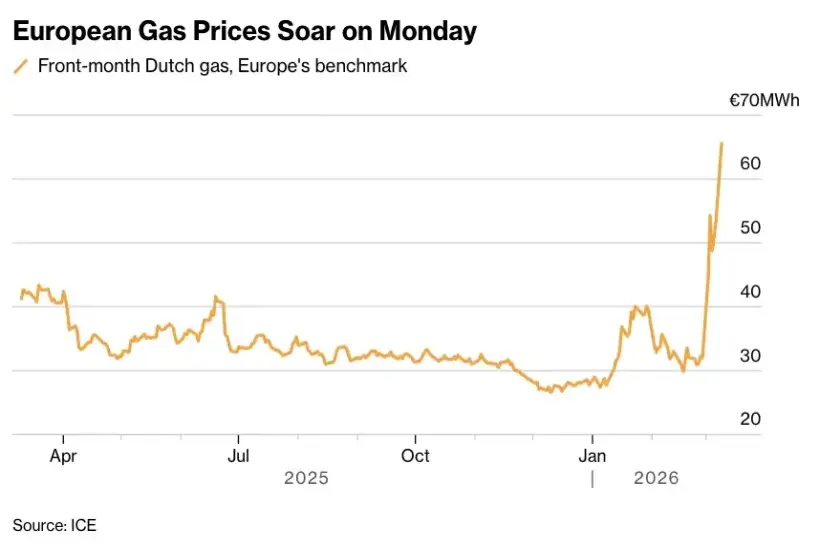
European natural gas prices surged sharply as the ongoing conflict in the Middle East continues to disrupt global energy markets and threaten key supply routes. Benchmark gas futures jumped by as much as 30% on Monday, marking one of the strongest weekly increases since the energy crisis and reflecting mounting concerns over supply stability.
The rally came as oil prices climbed above $100 per barrel amid production cuts by major Middle Eastern producers and the effective closure of the Strait of Hormuz. The developments have intensified fears of prolonged disruptions across the global energy supply chain and renewed inflation risks for European economies.
Middle East conflict shakes global energy supply chains
The war in the Middle East has entered its tenth day and continues to unsettle commodity markets worldwide. Energy traders are increasingly pricing in the risk of extended disruptions affecting both oil and natural gas flows.
One of the most critical factors is the disruption of shipments through the Strait of Hormuz, a strategic maritime corridor for global energy transport. With several producers curbing output and shipping routes facing uncertainty, markets are reacting to the possibility of reduced supplies for months rather than weeks.
At the same time, US natural gas futures also moved higher, reaching their strongest level in roughly a month as traders anticipate tighter global supply conditions.
Europe faces gas storage challenges after winter
Europe is particularly vulnerable to supply shocks as it emerges from the winter heating season with depleted gas storage levels. This creates a pressing need to secure additional liquefied natural gas shipments during the summer months to refill reserves ahead of the next winter.
However, limited global LNG availability could complicate those efforts. If Middle Eastern exports remain constrained, European buyers will face increasing competition from Asian importers for a restricted pool of cargoes.
Rabobank energy strategist Florence Schmit said markets are only gradually recognizing the scale of potential disruptions. According to her assessment, supply disruptions across the energy value chain could last for roughly three months.
Qatar LNG shutdown reshapes global market outlook
Another major factor influencing gas markets is the temporary shutdown of liquefied natural gas production in Qatar, one of the world’s largest LNG exporters. The closure of the Ras Laffan LNG complex — the largest facility of its kind globally — last week marked an unprecedented interruption to global LNG supply.
While the plant infrastructure appears largely intact, restarting production and resuming shipments may take weeks or even months. Qatar’s energy minister indicated that the ramp-up of operations will likely be gradual.
State-owned QatarEnergy declared force majeure for several contracts after suspending LNG and related product output. European buyers such as Italy’s Edison and Poland’s Orlen have been directly affected by the disruption.
Banks raise forecasts for European gas prices
Major financial institutions have already begun revising their price forecasts in response to the evolving situation. Analysts at Goldman Sachs raised their forecast for European gas prices in the second quarter to around €63 per megawatt-hour, up from a previous estimate of €45.
The revised outlook assumes that Qatari LNG exports will remain halted until late March, followed by a gradual recovery of shipments throughout April.
Despite the recent surge, prices remain far below the record highs seen during the 2022 energy crisis, when European gas prices briefly exceeded €300 per megawatt-hour. On Monday morning, Dutch front-month gas futures — the benchmark for Europe — traded near €62 per megawatt-hour.
As experts at International Investment report, the future trajectory of gas prices will largely depend on how long the Middle East conflict continues and how quickly LNG production in Qatar resumes. If export disruptions persist for several months, Europe could face renewed competition for global LNG supplies and additional inflationary pressure across the regional economy.