









Visa Cards of Three Belarusian Banks Stop Working in Europe
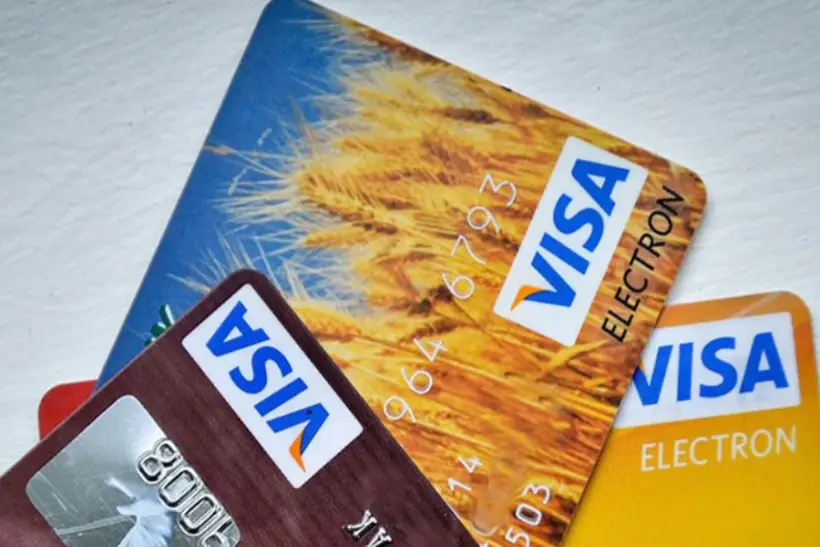
The international payment system Visa has restricted the use of Belarusian cards issued by Alfa-Bank, Belgazprombank, and Belagroprombank within the European Union, the United Kingdom, Norway, Iceland, and Liechtenstein. The decision affected millions of customers and represents the most significant reduction in cross-border capabilities of Belarusian banks in recent years, reports Onliner.
EU Sanctions on Belarus
The first announcement about the restrictions came on March 18 from Alfa-Bank via its official Telegram channel. The bank received a notification from the payment system about the blocking of Visa card operations in 31 European countries. Later, Belgazprombank and Belagroprombank issued similar statements.
Representatives of all three banks emphasized that the decision was made by the international payment system, not the banks themselves, and is related to sanction risks. The EU began gradually implementing measures in 2020 following the presidential elections and subsequent political events.
Initially, the restrictions were personal in nature, but in 2021 the EU expanded them to sectoral sanctions, targeting key sectors of the economy, including the financial sector. Measures were introduced limiting Belarusian banks’ access to European capital markets and financial infrastructure.
After 2022, the sanction regime was further tightened. The EU expanded restrictions on Belarusian banks and financial operations, including to prevent the circumvention of sanctions through the country’s financial system.
As a result, some banks ended up under direct or indirect restrictions, which affects their ability to use international payment infrastructure. Payment systems, including Visa, are required to comply with sanction regulations in the jurisdictions where they operate; therefore, they may limit card services in EU countries when such measures are introduced.
Countries Where Belarusian Cards Do Not Work
The list of countries where Visa cards of the three banks have stopped functioning includes all 27 EU member states, the United Kingdom, as well as Norway, Iceland, and Liechtenstein (countries of the European Free Trade Association, part of the Schengen Zone and closely integrated with the EU in financial regulation).
In these countries, cardholders cannot withdraw cash from ATMs, pay for purchases in stores, restaurants, or hotels, make payments in online stores and services registered in the specified jurisdictions, or perform card-to-card transfers through international payment services.
At the same time, the cards continue to work in Belarus and in other countries not included in the restricted list. For example, payments and cash withdrawals are possible in Turkey, the UAE, Georgia, China, and most countries in Asia, Africa, and Latin America.
Bank Recommendations
Financial institutions have provided several options for clients affected by the restrictions.
Mastercard cards, issued both by the banks themselves and other Belarusian issuers, continue to work in Europe without limitations. Clients who do not have a Mastercard are advised to issue one remotely via the bank’s app.
Alfa-Bank outlined a procedure in the INSNC app for transferring funds via ERIP: “Payments” → “ERIP” → “Transfer to another bank’s card.” This allows transferring money from the blocked Visa to another Belarusian bank card (for example, Mastercard), which will work in Europe.
Belgazprombank noted that the Dragon Pass service (access to airport lounges) continues to operate but is not linked to the card’s payment functions. For cash withdrawals, clients can use money transfer systems such as Western Union or Zolotaya Korona, which operate in several European countries.
Market and Client Implications
Belarusian cardholders now need to diversify their payment instruments before traveling to Europe. Holding only a Visa card from one of the three banks leaves the client effectively unprotected in the EU. Mastercard currently serves as the only alternative, but further sanction expansions could change this situation.
For issuing banks, the blocking means lost commission income from cross-border operations and potential retail client migration to banks whose Visa cards still work in Europe, or to institutions focusing on Mastercard.
For the market as a whole, the reliability of “dependency” on international payment systems comes into question. In the long term, Belarusian banks may accelerate the development of alternative channels: their own card systems (Belkart), China’s UnionPay, as well as payments via ERIP and interbank transfers.
Outlook
Analysts at International Investment note that further developments will depend on the dynamics of EU sanction policies and the decisions of international payment systems, including Visa. If restrictions are eased, banks could restore access to international payment infrastructure. If sanctions persist or tighten, the limitations are likely to become permanent and may extend to new financial instruments.
This will lead to structural changes in Belarus’s payment services market: an increased role for alternative systems, a reduced share of international cards, and a reorganization of cross-border settlements.
Previously, EU sanctions were mainly focused on Russia, while measures against the Belarusian financial sector were more limited. This is now changing: restrictions are becoming systemic and affecting daily financial operations, including card payments.
In this context, clients, businesses, and banks must adapt by diversifying payment instruments and taking new restrictions into account when operating in foreign markets.