







 Vietnam Mortgage Surge Pushes Homes Out of Reach
 Lithuanian Apartment Prices Accelerate Across Major Cities
 London Flats Lose Value Ahead of Leasehold Reform
 Construction of the Batumi–Sarpi Highway Begins in Georgia
 Baltic Property Investment Accelerates in 2026
 Hong Kong and Singapore Renew Their Expat Rivalry
Euro weakens as oil shock bites
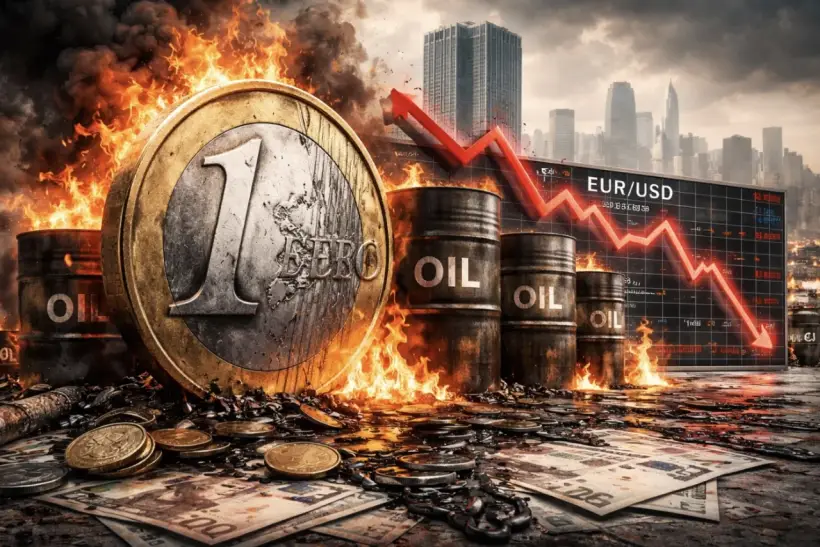
Euro heads for its worst quarter since 2024
The euro is ending the first quarter of 2026 under heavy pressure as an oil-price shock reshapes the outlook for inflation, growth and monetary policy across the euro area. The currency has been hit by the renewed Middle East conflict, rising energy costs and a broader reassessment of Europe’s vulnerability as a major net importer of oil and gas. Earlier this month, Bloomberg argued that an energy shock had once again exposed the euro’s deepest weakness, and on March 13 the outlet reported that the common currency had fallen to its lowest level against the dollar since August as the conflict escalated and the US currency strengthened.
By the end of March, the oil move had become extreme. The Guardian reported that Brent crude rose to nearly $117 a barrel and was heading for its biggest monthly gain on record, up close to 60% in March. For Europe, that kind of move means a much steeper energy import bill and a renewed risk that inflation will stop easing as quickly as policymakers had hoped.
The oil surge is changing the euro-area outlook
The problem for the euro is not just higher oil prices in isolation, but the way they feed through the euro-area economy. In its March 2026 projections, the European Central Bank said the war in the Middle East had already triggered spikes in oil and gas prices and would push inflation higher. In its more adverse energy assumptions, the ECB said oil could peak at $145 a barrel and gas at €106 per megawatt-hour in the second quarter of 2026. It also warned that compared with the baseline, headline inflation could be 1.8 percentage points higher in 2026, 2.8 points higher in 2027 and 0.7 points higher in 2028.
For the currency market, that creates a double drag. Higher energy prices worsen Europe’s terms of trade and squeeze household purchasing power and corporate margins. At the same time, they leave the ECB facing a much harder trade-off between containing inflation and protecting growth. Bloomberg noted earlier in March that this same dependence on imported energy had previously helped drag the euro below parity with the dollar during the 2022 energy crisis.
ECB faces a renewed inflation challenge
By late March it was clear that energy had become a fresh inflation problem for Frankfurt. AP reported that ECB President Christine Lagarde warned businesses might now be quicker to pass on higher energy costs because the 2022 inflation shock had changed price-setting behavior across the economy. AP also noted that euro-area inflation stood at 1.9% in February, but the oil shock was already altering the policy debate. The ECB kept its deposit rate unchanged at 2% on March 19, yet the tone became markedly more cautious.
Euronews had already reported earlier in March that euro-area inflation unexpectedly picked up even before the full oil shock had fed through, complicating the ECB’s disinflation narrative. Later in the month, the outlet said Lagarde warned markets were underestimating the economic impact of the Iran war. That helped reinforce the view that the path toward easier monetary policy in Europe is now much less straightforward than investors expected at the start of the year.
Why higher rate bets have not rescued the euro
Under normal conditions, rising expectations for ECB tightening could support the common currency. In March, that logic broke down. Bloomberg reported that the euro weakened even as money markets came to price in two possible ECB rate hikes in 2026. The reason is that investors see expensive oil less as a yield-positive story for Europe and more as a direct threat to regional growth. For a net energy importer such as the euro area, higher crude prices are first and foremost a hit to demand, confidence, industrial margins and the external balance.
The dollar has also retained a safe-haven advantage during the geopolitical shock. That has magnified the asymmetry in EUR/USD. In periods of war-driven commodity stress, the US currency tends to benefit from haven flows, while Europe is seen as more exposed to imported energy inflation.
Markets are pricing weaker growth and a bigger energy bill
The ECB’s March projections show that the energy shock is not just a temporary inflation story. In more adverse scenarios, euro-area growth also weakens and financial conditions tighten further. Market News said in its March ECB review that if supply disruptions intensify, oil could move close to $120 a barrel in the second quarter of 2026 and euro-area GDP growth could come in around 0.3 percentage points below the baseline already in 2026. Even though that is not the central forecast, it shows how rapidly the macro balance is changing.
For the euro, that means a softer fundamental backdrop. A more expensive energy import bill worsens Europe’s external position, while weaker growth reduces the appeal of euro-area assets. When those pressures arrive at the same time, the market tends to demand a discount for holding the currency.
What comes next for EUR/USD in the second quarter
If oil prices remain elevated and the geopolitical conflict fails to de-escalate, the euro could stay under pressure into the second quarter. For businesses, that means higher imported energy costs and renewed risks for manufacturing and transport. For households, it means more expensive fuel and a slower path back toward lower inflation. For the ECB, it means watching inflation expectations and second-round effects much more closely. AP said the central bank is prepared to react if higher oil costs begin to feed more broadly into wages and prices.
As experts at International Investment note, March 2026 showed that the euro remains one of the world’s most energy-sensitive major currencies. For investors, that means EUR/USD in the coming months will depend not only on the rate path of the ECB and the Federal Reserve, but also on how long Europe has to live with expensive imported fuel and deteriorating terms of trade.
FAQ
Why did the euro weaken at the end of the first quarter of 2026?
Because higher oil and gas prices increased fears about inflation and growth in the euro area, while Europe remains highly dependent on imported energy.
How much did oil prices rise in March 2026?
The Guardian reported that Brent crude climbed to nearly $117 a barrel and was heading for a monthly gain of about 60%.
What did the ECB say about the oil shock?
The ECB said the Middle East war had already pushed oil and gas prices higher and could raise euro-area inflation significantly over 2026 to 2028.
Why has the euro not been supported by higher ECB rate expectations?
Because markets see expensive oil mainly as a growth risk for Europe rather than a simple tightening story that would support the currency.
Could the euro keep falling in the second quarter of 2026?
Yes. If the oil shock persists and geopolitical tensions remain high, pressure on the euro could continue, according to ECB scenarios and recent market behavior.