









New restrictions in Lithuania for Russians and Belarusians: migration, real estate and fuel
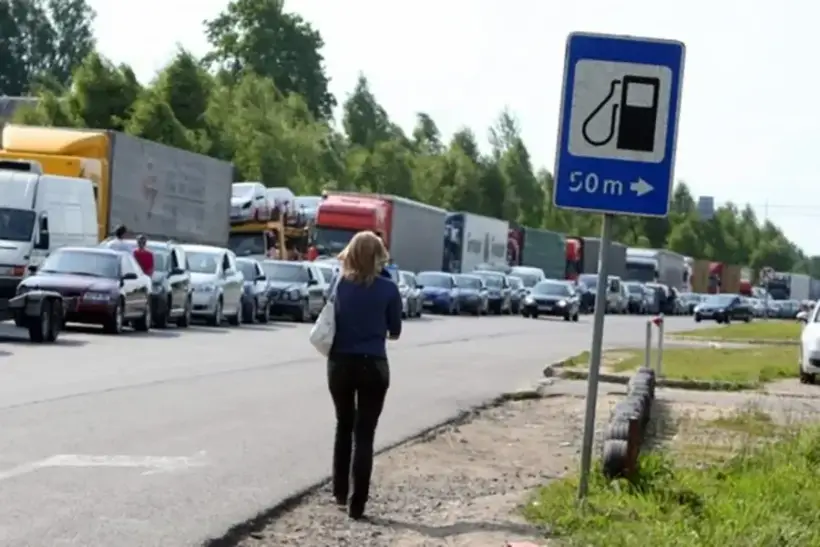
The Foreign Affairs Committee of the Lithuanian Parliament has proposed strengthening national restrictive measures against citizens of Russia and Belarus. The decision is linked to the ongoing hostilities in Ukraine and assessments of national security risks. The parliamentary committee is urging the government to prepare a new draft law that would expand existing sanctions and tighten control over several areas, including migration and real estate.
Committee calls for a review of the sanctions regime
On April 8, the Seimas Foreign Affairs Committee (URK) unanimously supported an appeal to the government requesting the preparation of an updated law on national restrictive measures. The current sanctions against Russian and Belarusian citizens are proposed to be extended until 2028, although MPs believe the existing set of restrictions is insufficient.
Committee chair, Social Democrat Remigijus Motuzas, noted that the proposed initiatives are under discussion, and the government is being asked to independently develop a new package of measures.
Representatives of the conservative party propose equalizing restrictions for Russian and Belarusian citizens. Among the ideas under discussion are suspending the issuance of new residence permits, restricting travel to both countries, and introducing stricter rules for real estate purchases, especially near strategic facilities.
Some MPs stated that such initiatives require legislative development by the government, as parliamentary amendments do not allow for rapid changes to the existing sanctions mechanism.
Conservative MP Audronius Ažubalis believes that the approach to citizens of both countries should be reconsidered in light of the current geopolitical situation. He stressed that risks for Lithuania require a more unified strategy.
Security and real estate in Lithuania
MP Mindaugas Lingė drew attention to international media reports about potential real estate purchases near sensitive facilities. He referred to materials from the British publication The Telegraph, which discussed the possible use of real estate assets in Europe in the context of hybrid threats and sabotage.
Lingė also emphasized that, according to the real estate registry, citizens of Russia and Belarus are acquiring properties near strategic infrastructure, including areas close to airports and military sites.
Earlier, the Homeland Union – Lithuanian Christian Democrats (TS-LKD) proposed amendments tightening real estate acquisition rules in Lithuania for citizens of Russia and Belarus holding temporary residence permits. However, no restrictions currently apply to permanent residents, provided the property is not located near military or strategically important areas.
Finland and Latvia have already tightened regulations on real estate transactions involving Russian citizens, while Estonia is considering similar measures.
Real estate transactions in Lithuania and residence permits
As of February 1, 2026, 45,877 Belarusians and 5,069 Russians held Lithuanian residence permits. Between 2022 and 2024, Russian citizens purchased 2,814 real estate properties in the country, of which 1,845 were located within a 10-kilometer radius of critical infrastructure. Out of the total, 364 transactions were carried out by temporary residence permit holders.
Among Belarusian citizens, 1,834 transactions were registered, including 1,152 near facilities considered security-sensitive. In 556 cases, buyers held Lithuanian residence permits.
Fuel imports via third countries: sanctions circumvention
The draft law also considers limiting fuel imports in standard vehicle tanks exceeding 200 liters. Similar measures are already in place in Latvia and Poland.
Deputy Foreign Minister of Lithuania Audra Plepytė stated that the proposed changes aim to prevent circumvention of European Union sanctions. She explained that cases have been identified where large volumes of fuel are brought into Lithuania via third countries, requiring additional regulation.
Current restrictions
Since 2023, Lithuania has implemented a law on national restrictive measures aimed at supporting Ukraine and limiting certain rights of Russian and Belarusian citizens. Visa issuance has been suspended, residence permit options restricted, and additional screening procedures introduced at the border.
The law also prohibits Russian citizens from purchasing real estate without a residence permit, restricts e-residency, and introduces monitoring of cross-border travel. Other provisions concern financial transactions, goods imports, and national security risk assessments.
Outlook for further decisions
Parliament members emphasize that the current sanctions require regular updates, as they are set to expire in the coming months. The issue of extension and expansion remains on the agenda, and the government is expected to prepare a new draft law incorporating parliamentary proposals.
Experts at International Investment believe that the debate over Lithuania’s sanctions policy will continue to develop, particularly in the context of regional security and the ongoing conflict in Ukraine. The country’s real estate investment attractiveness has previously been assessed as low, and after the tightening of rules, the market is becoming even more unpredictable for Russian and Belarusian citizens.