







 Vietnam Mortgage Surge Pushes Homes Out of Reach
 Lithuanian Apartment Prices Accelerate Across Major Cities
 London Flats Lose Value Ahead of Leasehold Reform
 Construction of the Batumi–Sarpi Highway Begins in Georgia
 Baltic Property Investment Accelerates in 2026
 Hong Kong and Singapore Renew Their Expat Rivalry
Swiss wages rise by 1.6% — highest in 15 years
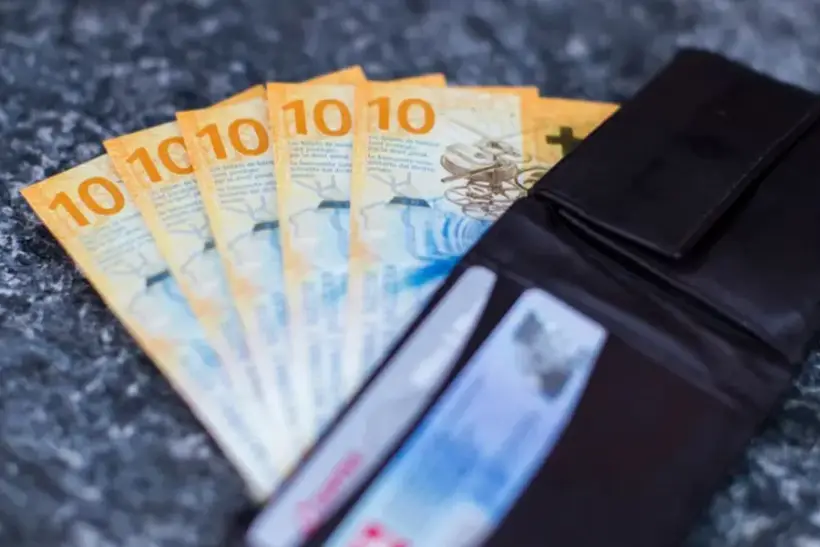
Real wages in Switzerland increased by 1.6% in 2025, marking the strongest performance in the past one and a half decades. Slowing inflation turned wage growth into a real increase in purchasing power. In previous years, salary increases were largely offset by rising prices, Swissinfo reports, citing the Federal Statistical Office (FSO).
Nominal and real wage growth in Switzerland
In 2025, nominal wages in Switzerland rose by an average of 1.8%, according to calculations by the Federal Statistical Office (FSO). An initially higher figure of around 2% had been expected, but the final estimate was revised after updated quarterly data.
Inflation played a decisive role, ending the year at just 0.2%. In this environment, wage growth was barely eroded by rising prices, allowing real incomes to increase. As a result, real wages — a measure of purchasing power — rose by 1.6%.
The FSO notes that this is the strongest increase since 2009, when real wages grew by 2.6%. Comparable gains were only recorded occasionally in later years, such as in 2015 and 2020, when growth was around 1.5%.
By comparison, real wages increased by only 0.7% in 2024, while they declined over the previous three years amid higher inflation and weaker economic momentum.
Return to growth after inflationary pressure
Recent trends suggest that the current rise is more of a recovery than an acceleration. Between 2021 and 2023, inflation consistently outpaced wage growth in Switzerland, leading to a decline in real incomes. Even when nominal salaries increased, purchasing power was eroded.
The situation began to shift in 2024. Nominal wages rose by 1.8%, but inflation of 1.1% limited real growth to about 0.7%. That year marked a transition: incomes stopped falling, but gains remained modest.
A clearer turnaround came in 2025, when inflation fell close to zero. Against this backdrop, even moderate wage increases translated into noticeable real income growth. The combination of low inflation and steady wage increases restored purchasing power after several years of price pressure.
How wages vary across sectors
Overall wage growth in Switzerland masks significant differences between industries. According to the FSO, a substantial share of increases in 2024 resulted from collective bargaining agreements between trade unions and employers. These covered around 613,000 employees and delivered average wage growth of 1.7%.
However, outcomes varied widely. In some industrial segments, such as rubber and plastics manufacturing, wages rose by as much as 4.9%. In healthcare, social services and elderly care, incomes increased by around 3%, with similar gains in postal services. Insurance and public administration recorded growth of about 2.5%.
At the lower end, wage growth was minimal. Metal product manufacturing saw increases of around 0.8%, while publishing, audiovisual media and telecommunications recorded just 0.4%.
These differences reflect the structure of the economy, varying bargaining power across sectors, and the degree of exposure to external demand and cost pressures.
How much people earn in Switzerland
Strong wage growth comes alongside traditionally high income levels. According to the Federal Statistical Office (FSO), Switzerland’s median monthly gross salary in 2025 stood at CHF 7,024 (€7,340) for full-time employment, an increase of roughly 3.5% compared with 2024.
The median represents the midpoint of the labour market: half of employees earn more, and half earn less. It is considered more representative than the average salary, as it is not skewed by very high incomes in finance or pharmaceuticals.
Regional differences remain significant. In Zurich, the median salary reaches CHF 7,502 (€7,830), while in Ticino it stands at CHF 5,708 (€5,960). Across the country, the median remains at CHF 7,024 (€7,340), with a gap of nearly CHF 1,800 (€1,880) between regions.
The FSO also identifies low-wage employment as salaries below CHF 4,683 (€4,890) per month. Around 10.8% of jobs fall into this category, with women disproportionately represented.
Bonuses and variable compensation also play an important role. About one-third of employees receive variable pay, with an average annual bonus of around CHF 12,000 (€12,540), significantly increasing total compensation in several sectors.
Outlook and risks: will growth continue?
The outlook for wage growth in Switzerland remains moderate. The trade union Unia expects increases of around 1.7–2% in collective agreements for 2025. Employers are more cautious. Travail Suisse notes uneven negotiation outcomes and argues that, in real terms, incomes remain close to mid-2010s levels.
UBS, based on a survey of 345 companies, forecasts wage growth of around 1.4%. Part of this increase could be offset by rising prices, particularly due to higher healthcare costs, which remain a major burden for households.
External risks also weigh on the outlook. Trade tensions and US tariff policy could affect prices and global trade flows. Depending on the scenario, this may either push prices higher or slow economic activity and employment in certain sectors.
The Swiss National Bank (SNB) notes that the economic environment has become less predictable, with external factors representing the main risk for the country. Inflation is expected to remain low at around 0.4%, but future developments will depend heavily on global economic and geopolitical conditions.
Conclusion: income growth in one of the world’s most stable economies
Analysts at International Investment note that Switzerland remains one of the most stable and highest-paying economies in the world, consistently ranking among Europe’s top income countries. In 2025, the combination of low inflation and moderate wage growth finally allowed workers to experience a real increase in purchasing power after several years of erosion.
This reflects not domestic instability, but rather exposure to external forces such as global trade, energy markets and international economic conditions. These factors play a greater role in shaping wage and inflation dynamics than internal developments.
Overall, 2025 marked a recovery phase for Switzerland’s labour market: real incomes returned to growth, and the country reinforced its position among global leaders in wage levels.