







 Vietnam Mortgage Surge Pushes Homes Out of Reach
 Lithuanian Apartment Prices Accelerate Across Major Cities
 London Flats Lose Value Ahead of Leasehold Reform
 Construction of the Batumi–Sarpi Highway Begins in Georgia
 Baltic Property Investment Accelerates in 2026
 Hong Kong and Singapore Renew Their Expat Rivalry
Philippines Inflation Hits Three-Year High
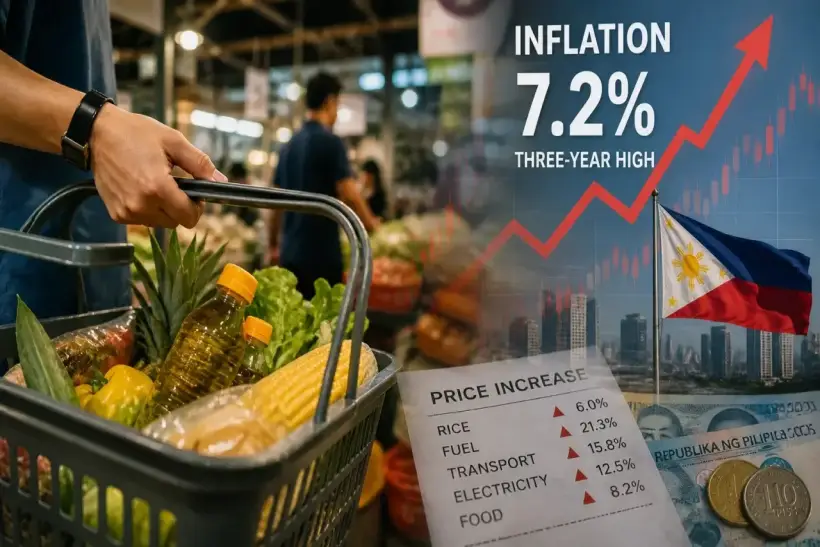
Inflation accelerates sharply
Headline inflation climbed to 7.2% year-on-year in April from 4.1% in March, marking the fastest increase since March 2023 and exceeding expectations
Bloomberg reported that the spike reflects the impact of global instability, including war-related disruptions that are pushing up commodity prices.
Food and transport drive price surge
Food and transport were the main contributors to inflation. Food prices rose 6%, with rice showing particularly strong increases, while transport costs surged by more than 21% due to higher fuel prices
Housing and utilities also contributed to inflation, reflecting higher energy costs across the economy.
War-linked energy shock spreads globally
International coverage highlights that the inflation spike is linked to rising energy prices driven by conflict in the Middle East. Higher fuel costs are feeding into food prices and supply chains, amplifying inflation in developing economies
Countries like the Philippines are especially exposed because of their reliance on imports.
Central bank faces tightening dilemma
The surge in inflation is likely to push the Bangko Sentral ng Pilipinas toward tighter monetary policy. The central bank typically targets inflation in a 2–4% range, meaning current levels are significantly above its comfort zone.
Raising interest rates could help contain inflation but risks slowing economic growth.
Markets react to inflation shock
Financial markets have already responded, with equities weakening and the peso facing pressure amid higher inflation and global uncertainty
Investors are adjusting expectations for monetary policy and economic growth.
Risks to growth increase
Higher inflation reduces consumer purchasing power and may dampen domestic demand. While forecasts suggest inflation could ease in the medium term, near-term risks remain elevated
As experts at International Investment report, the Philippines’ inflation surge underscores how external shocks can rapidly transmit into domestic economies. The key challenge for 2026 is balancing inflation control with economic stability, as tighter policy could weigh on already fragile growth.
FAQ
Why did inflation rise to 7.2%?
Due to higher food and fuel prices and global geopolitical tensions.
What sectors drove inflation?
Food, transport and utilities.
How will the central bank respond?
It may raise interest rates to contain inflation.
What are the risks for the economy?
Lower consumption and slower economic growth.