







 Vietnam Mortgage Surge Pushes Homes Out of Reach
 Lithuanian Apartment Prices Accelerate Across Major Cities
 London Flats Lose Value Ahead of Leasehold Reform
 Construction of the Batumi–Sarpi Highway Begins in Georgia
 Baltic Property Investment Accelerates in 2026
 Hong Kong and Singapore Renew Their Expat Rivalry
ETIAS Puts Microstates Into Focus
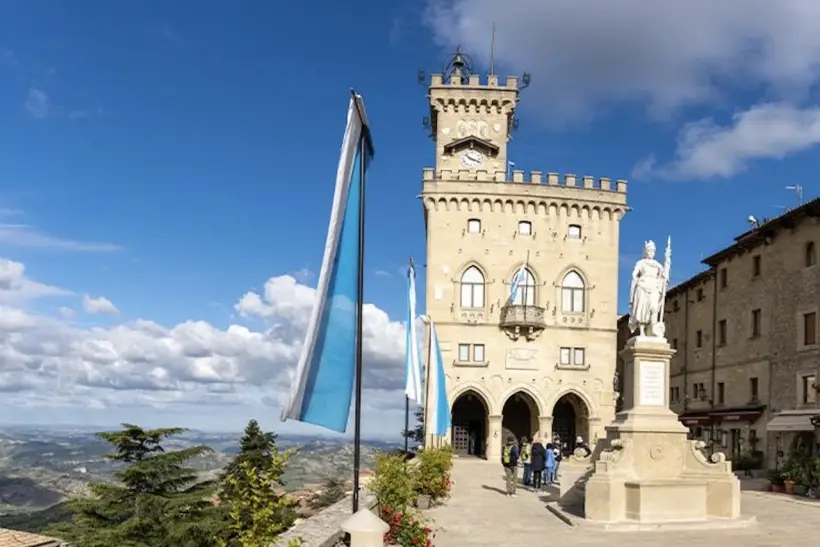
The launch of ETIAS in late 2026 will create a new border-control trap around Europe’s microstates: Andorra, Monaco, San Marino and Vatican City are formally outside the system, but almost every real-world route to them runs through France, Spain or Italy, where visa-exempt travellers will need electronic travel authorisation. Liechtenstein is the exception: it is part of the Schengen area and will require ETIAS directly.
ETIAS divides microstates into two groups
The European Travel Information and Authorisation System, known as ETIAS, is expected to become operational in the final quarter of 2026. It will apply to nationals of visa-exempt countries travelling for short stays to participating European states. The authorisation will be requested online, will not replace a passport and will not be a visa, but it will become a pre-travel requirement for eligible visitors.
ETIAS.com’s guide to European microstates highlights the central practical distinction: among Europe’s five microstates, only Liechtenstein will require ETIAS directly because it is part of the Schengen area. Andorra, Monaco, San Marino and Vatican City remain formally outside the system, but travellers almost always have to reach them through countries where ETIAS will apply.
That means the key question for travellers will not be only whether ETIAS is required in the destination itself. It will also be which country they use to get there. Andorra is reached through France or Spain, Monaco through France, and San Marino and Vatican City through Italy. All of those states will be part of the European travel-authorisation framework.
Liechtenstein becomes a direct ETIAS destination
Liechtenstein has a distinct status among Europe’s microstates. It is not a member of the European Union, but it is part of the Schengen area alongside Iceland, Norway and Switzerland. The European Commission says the Schengen area consists of 29 countries: 25 EU member states and four non-EU countries — Iceland, Norway, Switzerland and Liechtenstein.
In practice, that makes Liechtenstein a direct ETIAS destination. A traveller from a visa-exempt country going to Vaduz via Switzerland or Austria will be treated as travelling within the Schengen system. There will be no separate Liechtenstein authorisation: one valid ETIAS will cover travel to participating countries, provided the traveller complies with the short-stay limit.
For tourism, this is a technical but important point. Liechtenstein is often visited as part of an itinerary through Switzerland, Austria or southern Germany. Once ETIAS starts, a standalone trip to the principality, a day tour or a road-trip stop will require the same pre-travel formalities as a journey to Zurich, Vienna or Munich.
Andorra remains outside the system but not outside the route
Andorra is not part of the European Union or the Schengen area. The principality has no international airport and no rail station directly linking it to overseas markets. Most visitors arrive through Spain or France, usually flying into Barcelona, Toulouse, Girona or another regional airport before continuing by bus or car.
That is why Andorra’s formal exclusion from ETIAS will not remove the practical requirement for most visitors. A UK, US, Canadian, Australian, Japanese or other visa-exempt traveller will first have to enter France or Spain. After ETIAS launches, carriers and border authorities will focus on that first entry, not on the fact that the final destination is Andorra.
Ski tourism is particularly exposed. Andorra remains a popular winter destination, and many travellers buy packages combining flights to Barcelona with ground transfers to the mountains. In that scenario, the absence of ETIAS may be detected before boarding the flight to Spain, not at the Andorran border.
Monaco depends on entry through France
Monaco is also outside the Schengen area, but it is geographically and operationally tied to France. For most travellers, the closest gateway is Nice Côte d’Azur Airport, followed by train, car, coach or helicopter transfer to the principality. The effective entry point is therefore France.
For passengers, this means a trip to the Monaco Grand Prix, a yacht show, a business meeting or a short Riviera stay begins with French entry rules. If a traveller belongs to a category that requires ETIAS, authorisation will be needed before departure even if they do not plan to stay overnight in France.
Monaco captures the core paradox of the new system: a microstate may not participate in ETIAS, yet still fall within its practical orbit through neighbouring infrastructure. Hotels, event organisers and tour operators will need to explain that a “trip to Monaco” often legally begins as “entry into France”.
San Marino and Vatican City depend on Italy
San Marino and Vatican City are sovereign states, but in travel terms they are deeply embedded in Italian itineraries. San Marino is usually reached through Rimini, Bologna or other Italian cities. Vatican City is located inside Rome and does not operate a separate full border regime for ordinary tourists.
After ETIAS starts, visits to both states will depend on entry into Italy. For a tourist flying to Rome and visiting the Vatican Museums, the relevant border event is Italian entry. For a traveller taking a day trip to San Marino from Rimini, the same logic applies: the legality of the visit depends first on the right to be in Italy.
This will matter for religious, cultural and group tourism. Vatican City is often included in pilgrimage programmes, school trips and organised tours where documents are handled centrally. If one participant lacks valid ETIAS, the problem may arise at the flight to Italy rather than at the Vatican itself.
A short exit will not reset 90 days
One of the most common misconceptions concerns the short-stay limit. Visa-exempt travellers are subject to the rule of 90 days in any 180-day period. Visiting a microstate that is formally outside Schengen should not be treated as a simple way to reset that allowance.
The European Commission states that third-country nationals can travel within the Schengen area for up to three months in a six-month period if they meet entry conditions. The same guidance notes that the Entry/Exit System and ETIAS will complement existing systems to strengthen border security while keeping travel efficient.
In practice, a brief visit to Vatican City or Monaco does not create a meaningful break from an Italian or French itinerary. The traveller remains dependent on the time allowed through the surrounding country. Andorra’s position is more complex because of its separate status, but using it as a technical pause in a France or Spain stay may raise questions at later checks.
The passport becomes the critical document
ETIAS will be tied to a specific passport. If a traveller obtains authorisation and then renews a passport, replaces a document or travels on a second passport, the previous authorisation may not work. This is especially important for microstate trips because they are often treated as short add-ons to a larger itinerary.
The EU legal portal EUR-Lex says an ETIAS applicant must hold a valid travel document that does not expire less than three months after the intended departure from EU member-state territory and is not older than 10 years.
Travellers will therefore need to match passport data across flight tickets, hotel reservations, cruise itineraries and ETIAS applications. A mistake in document number, name spelling or date of birth may disrupt not only entry into the main country but also a trip to a microstate that does not check ETIAS directly.
Carriers will check the entry country
Carriers will play a central role in the new system. Airlines, sea operators and some land carriers will be expected to verify authorisation before departure to countries where ETIAS applies. For a traveller going to Monaco via Nice, that means a check before flying to France. For Vatican City, it means a check before flying to Italy. For Andorra, it means a check before entering Spain or France.
This changes the psychology of microstate travel. Many visitors have long seen these destinations as easy because they involve little visible bureaucracy at the destination itself. Under ETIAS, the weak point will not be the microstate border. It will be the first transport gateway in the neighbouring country.
For tour operators, that creates an additional duty to inform clients not only about destination rules but also about the rules of the transit or access country. Otherwise, a technically correct “Rome-Vatican” or “Nice-Monaco” programme may encounter a denial of carriage before the trip has started.
Tourism faces more administrative risk
The ETIAS fee itself is unlikely to be a major barrier for travellers heading to Monaco, Liechtenstein or Andorra. The bigger issue is that the system adds a digital control layer to journeys that were often seen as simple intra-European movements. Group tours, coach trips, weekend breaks, cruise calls and multi-country itineraries will be particularly sensitive.
The effect will differ by microstate. Liechtenstein will be directly inside the new regime. Andorra, Monaco, San Marino and Vatican City will keep their special status but depend heavily on how neighbouring countries, carriers and travel companies communicate the rules. The shorter the trip, the greater the risk that travellers postpone documentation until too late.
As experts at International Investment report, ETIAS will not cut off tourist flows to Europe’s microstates, but it will make those destinations more dependent on the rules of neighbouring countries. The main problem is not the price of the authorisation but the legal ambiguity for ordinary travellers: a country may not require ETIAS itself, yet the route to it may almost inevitably pass through a state where ETIAS is mandatory. For tour operators, hotels and event organisers, this will become a test of communication quality, because a poorly explained rule may cost the client the entire trip.
FAQ
Do travellers need ETIAS for Andorra?
Andorra is not formally part of ETIAS. However, most routes go through Spain or France, where ETIAS will be required for visa-exempt travellers after the system launches.
Do travellers need ETIAS for Monaco?
Monaco itself is not an ETIAS country, but most visitors enter through France. Travellers who need ETIAS for France will therefore need it before reaching Monaco.
Do travellers need ETIAS for San Marino?
San Marino does not require ETIAS directly, but entry usually takes place through Italy. After ETIAS starts, eligible travellers may need authorisation to enter Italy.
Do travellers need ETIAS for Vatican City?
Vatican City is not a separate ETIAS destination, but it is located inside Rome. Visitors effectively enter Italy first, so Italian ETIAS rules will matter.
Why is Liechtenstein different?
Liechtenstein is part of the Schengen area, so ETIAS will apply to it directly, as it does to Switzerland, Norway and Iceland.
Can a visit to a microstate reset the 90-day limit?
No, relying on that is risky. Short stays are governed by the 90-days-in-180-days rule, and visits to Monaco, Vatican City or San Marino remain practically tied to France or Italy.
When will ETIAS start?
The expected launch is in the final quarter of 2026. Travellers do not need to apply before the official start.
Is ETIAS a visa?
No. It is an electronic travel authorisation for visa-exempt nationals. It does not guarantee entry because the final decision remains with border authorities.
What happens if a passport is renewed after ETIAS approval?
The traveller will need a new authorisation because ETIAS is linked to a specific passport.
Who should check the rules most carefully?
Travellers going to Andorra through Spain or France, Monaco through France, San Marino or Vatican City through Italy, and anyone joining group tours or short weekend trips should check requirements in advance.