







 Vietnam Mortgage Surge Pushes Homes Out of Reach
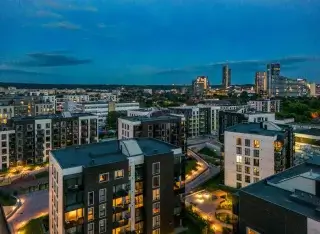 Lithuanian Apartment Prices Accelerate Across Major Cities
 London Flats Lose Value Ahead of Leasehold Reform
 Construction of the Batumi–Sarpi Highway Begins in Georgia
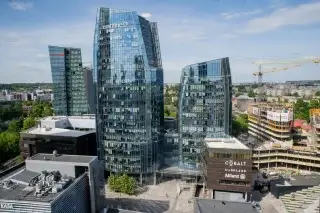 Baltic Property Investment Accelerates in 2026
 Hong Kong and Singapore Renew Their Expat Rivalry
Hong Kong Banks Back Student Housing Boom

Student accommodation is becoming one of the few parts of Hong Kong commercial real estate where lenders are again competing actively for new business. Centaline Investment is discussing roughly HK$1 billion of financing to convert the former Regal Oriental Hotel, while Singapore-listed Wee Hur has secured HSBC financing for its proposed transformation of One Bedford Place. The credit appetite is being supported by rising non-local enrolment, government measures facilitating commercial-building conversions and a structural shortage that JLL expects could reach 147,200 beds by the 2029/30 academic year. The change in lender behaviour is the focus of an August 19 Bloomberg report. A syndicated version confirms the Centaline loan discussions and financing of Wee Hur's office conversion.
Regal Oriental Anchors Centaline’s Expansion
The Regal Oriental Hotel in Kowloon City is becoming one of the largest projects in Hong Kong's emerging private student-housing market.
Centaline Investment acquired the property at an agreed value of HK$1.518 billion and plans to transform it into accommodation for roughly 1,500 students. Including acquisition and redevelopment costs, the company has committed more than HK$2 billion to the project.
Centaline is targeting a portfolio of about 6,000 student beds in Hong Kong within two to three years, making Regal Oriental an anchor asset rather than an isolated conversion.
According to Centaline Investment's own project information, the company is building its strategy around sustained non-local student demand and the repricing of Hong Kong property assets.
Centaline is seeking approximately HK$1 billion of debt for the redevelopment. The financing should not yet be described as a completed Bank of China (Hong Kong) loan: at the time of the report, Centaline said discussions were continuing and several banks had shown strong interest.
Office Conversions Are the Next Test
The more significant development for the market may be the move beyond hotels.
Wee Hur acquired One Bedford Place in Tai Kok Tsui in June. The property is a 26-storey commercial building with two basement levels and approximately 184,000 square feet of gross floor area.
The Singapore-listed group intends to reposition the building into purpose-built student accommodation of about 500 beds, with operations targeted for the first half of 2028, subject to regulatory approvals.
The building is around nine minutes' walk from Prince Edward MTR station and within 30 minutes of City University of Hong Kong, Hong Kong Baptist University, Hong Kong Metropolitan University and Hong Kong Polytechnic University.
Those details are confirmed in Wee Hur's official Singapore Exchange announcement, which describes One Bedford Place as the group's second Hong Kong student-accommodation investment after Starvia by Y Suites at Fortress Hill.
Office conversions carry greater execution risk than many hotel schemes because layouts, ventilation, natural lighting, plumbing and fire-safety systems may require substantially more work. That makes bank financing of such projects a more significant test of whether the asset class can develop beyond relatively straightforward hotel conversions.
Student Visa Approvals Have Risen 52% in Two Years
The demand story begins with migration for education rather than with property itself.
Hong Kong approved 94,517 student visa and entry-permit applications in 2025, compared with 74,466 in 2024 and 62,079 in 2023. The number of approvals therefore increased by about 52% in two years.
Those figures should not be treated as a count of newly enrolled university students. The data cover different categories of study, including certain short-term programmes, and applications approved in a calendar year were not necessarily submitted during that same year.
The methodological distinction is set out in an official Hong Kong government response to the Legislative Council. Immigration authorities received 95,498 student visa and entry-permit applications in 2025 and approved 94,517.
Even with that qualification, the direction is clear: the pool of non-local people authorised to study in Hong Kong is expanding much faster than dedicated accommodation supply.
Hong Kong Raised Its Non-Local Student Ceiling to 50%
Government policy is designed to sustain the growth.
From the 2026/27 academic year, each publicly funded post-secondary institution can increase its ceiling for self-financing non-local students from the equivalent of 40% of local student places to 50%.
The government says its 15,000 funded places for local students will not be reduced. The over-enrolment ceiling for self-financing places in funded research postgraduate programmes is also increasing from 100% to 120%.
Hong Kong's 2025 Policy Address explicitly links the changes to the territory's ambition to become an international post-secondary education hub.
For property investors, that makes accommodation demand partly policy-driven rather than purely cyclical.
The Bed Shortage Could Reach 147,200
Supply remains far behind projected demand.
JLL's June 2026 research estimates that Hong Kong's student accommodation supply-demand gap could almost double from 76,300 beds in the 2025/26 academic year to 147,200 by 2029/30.
Major private purpose-built schemes provided only around 6,900 leasable beds at the end of April 2026. Occupancy at major developments was running at 98% to 100%, while rents had risen by as much as 10% annually since 2022.
The visible pipeline amounted to around 16,300 beds, including purchased assets intended for conversion, applications under the government scheme and potential government land supply. Even full delivery of that identified pipeline would leave a substantial projected gap.
For lenders, those numbers provide a stronger argument than falling commercial-property prices alone: the underlying tenant base is expanding while existing institutional-quality projects are close to full occupancy.
Planning Rules Have Been Relaxed
The sector's growth also reflects a major regulatory change.
Hong Kong officially launched its Hostels in the City Scheme on July 21, 2025 to facilitate the conversion of eligible commercial buildings, including hotels, into student hostels.
Following the Chief Executive's September 2025 Policy Address, the scheme was expanded beyond conversions to include qualifying redevelopments in which an existing commercial building is demolished and replaced by a new student hostel.
According to the Education Bureau's official guidance, there is no application deadline. Eligible developments can also benefit from planning facilitations including retention of certain existing excess plot-ratio entitlements.
That can materially change project economics in a land-constrained market where completely new development is expensive.
Falling Commercial Values Created a Buying Opportunity
Student housing is expanding after a severe repricing of conventional commercial property.
Hong Kong office capital values fell 7.8% in 2025, while industrial values declined 13.2%. Total commercial-property investment volume increased only 3.1% to HK$44.5 billion.
Financial distress remained a major feature of the market. Half of the 106 investment transactions recorded during the year involved distressed assets, worth a combined HK$19.8 billion.
CBRE's Hong Kong Market Outlook 2026 notes that hotels accounted for only 11% of overall investment volume but continued to attract interest partly because of opportunities for conversion into student and staff accommodation.
This creates a potentially attractive value-add strategy: acquire an office or hotel at a substantial discount to earlier valuations, invest in conversion and reposition it into a sector with stronger occupancy.
Education Is Already Drawing Billions Into Property
Student housing sits within a wider surge in education-related real-estate activity.
Education-related property investment reached HK$11.1 billion in the first five months of 2026, compared with about HK$4 billion during all of 2025.
One significant transaction came when Far East Consortium agreed to sell a student-accommodation project based on the former Silka Seaview Hotel to a JD.com unit for HK$750 million.
According to Reuters reporting carried by CNA, Far East Consortium will continue managing the property for three years after completion and guarantee HK$45 million of income in each of those years. The developer expects a disposal gain of about HK$423 million and plans to use part of the proceeds to repay an existing HK$630 million bank loan.
The transaction illustrates how student accommodation is beginning to develop not merely as an operating business but as a tradable investment product.
Hong Kong’s Private Student Market Is Still Young
Strong demand does not remove execution risk.
HSBC Commercial Banking's July market review said non-local enrolment at Hong Kong's eight University Grants Committee-funded universities reached 30,379 in the 2025/26 academic year, up 14% year on year. Yet private student-housing penetration remains below 10%, significantly lower than in mature international markets such as London or Sydney.
That lack of maturity is both the investment opportunity and the problem.
Hotel conversions now have a growing operating history, but major office-to-student projects remain less tested. Investors must assess not only acquisition prices but plumbing and ventilation changes, natural-light requirements, fire-safety work and the number of viable beds that can actually be created.
Exit pricing is another unresolved issue. Hong Kong still has limited evidence from full institutional investment cycles in which an owner acquires a commercial building, converts it, stabilises a large student operation and then sells the mature asset to another institutional buyer.
A Citywide Shortage Does Not Eliminate Oversupply Risk
A projected shortage of 147,200 beds should not be interpreted as evidence that every location can absorb unlimited new supply.
Student demand is highly location-sensitive. Travel time to universities, access to the MTR network, rents, room configuration, communal facilities and operating quality can materially change occupancy.
Several large schemes opening around the same universities could therefore put pressure on local rents even while Hong Kong as a whole remains undersupplied.
There is also policy risk. Current projections assume continued growth in non-local enrolment. Changes in university admissions, tuition costs, exchange rates or international relations could alter student flows more rapidly than a large commercial building can be converted to another use.
As International Investment experts report, Hong Kong student accommodation currently stands out from conventional commercial property because it combines very high occupancy, supportive government policy and rapid growth in non-local student demand. The projected 147,200-bed deficit, however, should not be treated as a blanket investment case for every hotel or office acquisition. Purchase price, full conversion costs, university accessibility, loan terms and operating capability remain decisive. Office conversions warrant particular caution: they can offer greater value-creation potential but also involve greater construction and regulatory risk, while Hong Kong still lacks a mature history of institutional exits from stabilised office-to-student projects.
FAQ: Hong Kong Student Housing
Why are Hong Kong banks financing more student housing?
The segment combines rising non-local enrolment, near-full occupancy at major existing schemes and government support for commercial-building conversions. That can provide a more predictable demand profile than some conventional office and hotel assets.
How many student visas did Hong Kong approve in 2025?
Authorities approved 94,517 student visa and entry-permit applications. The figure is broader than university enrolment and covers several study categories.
How large could Hong Kong’s student-bed shortage become?
JLL estimates the supply-demand gap could reach 147,200 beds in the 2029/30 academic year, compared with 76,300 in 2025/26.
How much private purpose-built supply exists today?
Major private purpose-built student schemes provided around 6,900 leasable beds as of the end of April 2026, with occupancy at major properties running at 98% to 100%.
What is happening to the Regal Oriental Hotel?
Centaline Investment plans to convert it into one of Hong Kong's largest private student accommodation developments, with roughly 1,500 beds and more than HK$2 billion committed to acquisition and redevelopment.
What is One Bedford Place?
It is a 26-storey commercial building in Tai Kok Tsui that Wee Hur plans to convert into approximately 500 student beds. Operations are targeted for the first half of 2028, subject to regulatory approval.
Can Hong Kong offices and hotels be converted into student hostels?
Yes. The government's facilitation scheme allows qualifying commercial buildings to use streamlined arrangements, and the framework has been expanded to cover certain redevelopment projects.
What are the main risks for investors?
Key risks include construction costs, regulatory approvals, local oversupply, dependence on non-local student demand, operator quality, financing terms and uncertainty over future institutional exit values.