







 Friends, Shopping, and Leisure: Why and at What Age Do Georgian Residents Travel Abroad Most Often?
 Home Purchases by Foreigners in Armenia Rose 47%
 Gandagana: A Journey Through Adjara Without Leaving the City
 Hungary's Property Price Growth Comes to a Near Standstill
 Russia Proposes 30,000-Ruble Limit on Bank Transfers
 Employment of Foreigners in Georgia: Who Faces the Work Permit Deadline?
Metropoles.com
Italian authorities are investigating schemes to obtain citizenship by descent illegally. Foreign nationals were promised faster access to passports, while intermediaries forged documents to establish supposed Italian ancestry, arranged sham residence registrations and even supplied court rulings that did not exist. Municipal officials are implicated in some cases, and intermediaries charged as much as €10,000.
A Factory of Italian Ancestors in Brazil
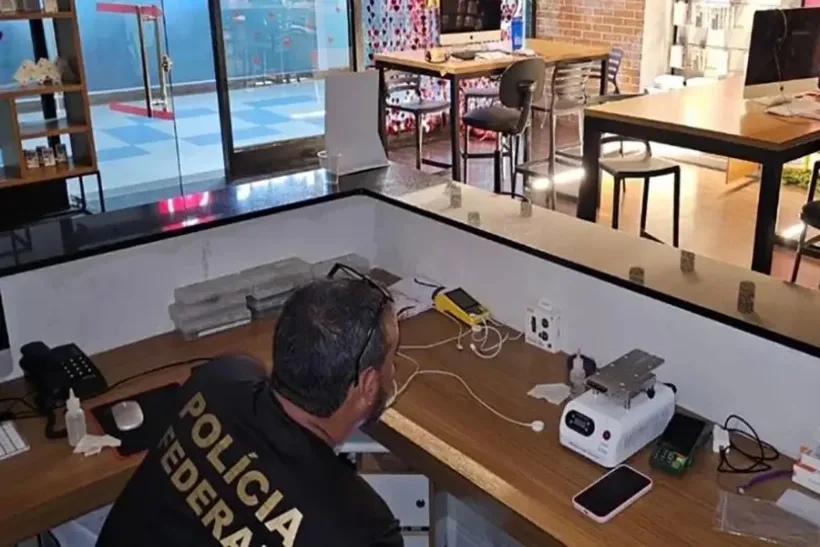
In May 2026, Brazil's Federal Police launched an operation against a group suspected of forging documents to obtain Italian citizenship. Members of the alleged network created fictitious family histories: using counterfeit birth, marriage and death certificates, they linked applicants to supposed Italian ancestors with whom they may have had no genuine family connection.
Searches took place in Itapemirim, Marataízes, Rio de Janeiro and Goiânia. Acting under six warrants, police seized phones and documents. A court also authorized travel restrictions for certain suspects, passport seizures and measures involving their assets. The operation followed an earlier investigation into the possible falsification of civil registry records.
To be recognized as a citizen by descent, an applicant must document a family connection to an Italian ancestor. Fake certificates can create the appearance of such a link. In Brazil, suspects could face charges including forgery of official records, corruption and facilitating illegal migration.
A Fake Italian Court Ruling
In October 2026, reports emerged of a complaint from a 36-year-old woman who had paid nearly €10,000 for citizenship recognition through the courts. Her maternal grandfather was born in Italy and later moved to Brazil, retaining his passport from his country of birth.
In 2024, the woman approached an intermediary who recommended two Brazilian lawyers. She was later told that proceedings in a court in Potenza had ended in her favor and was sent what purported to be a favorable ruling. One subsequent payment amounted to €8,707. Further demands for money prompted her to consult other lawyers.
The checks uncovered discrepancies: no ruling matching the stated case number could be found in the court records. The lawyers questioned whether the case had ever been filed. The document may have been produced using artificial intelligence, although there is no evidence to confirm this. In September 2026, the woman filed a complaint with the Italian police through a lawyer. Investigators must now determine whether the proceedings existed and where the money went.
Sham Residence Registration in Lombardy
In Lombardy, investigators are examining a suspected scheme to expedite citizenship applications through the municipality of Collio in Brescia province. Of the 408 applications reviewed, 170 raised suspicions of falsification, La Repubblica reported. Investigators estimate that the network may have earned more than €1.2 million. Applicants paid between €3,700 and €10,000 per case.
According to law enforcement, an intermediary from Brazil arranged for clients to enter Italy on tourist visas. The visitors were then registered at four properties where they did not actually live. This allowed their applications to be processed through an Italian municipality. Fewer than 1% of those who obtained documents remained in the country.
The unusually large number of Brazilians listed as residents of the small town raised suspicions. Investigators found alterations, additions and allegedly forged registration numbers in some case files. Two municipal employees were suspended from duty. Collio mayor Mirella Zanini, who denies the allegations, is also among those implicated. Ten people are involved in the case. The scheme may have operated since 2016.
Investigators are also examining the possible laundering of at least €200,000 through accounts in Italy and abroad. However, allegations against officials and intermediaries do not establish their guilt; that remains a matter for the courts.
Corruption in Sicily
In Agrigento province, investigators are examining a suspected scheme to obtain Italian citizenship unlawfully for people from Brazil. In October 2026, prosecutors sought to bring 22 people to trial. They include Camastra mayor Dario Gallo, municipal employees, police officers, a lawyer and representatives of agencies working with foreign applicants.
Prosecutors allege that intermediaries worked with officials to arrange sham residence registrations and speed up application reviews. Similar cases are under investigation in Camastra, Comitini and Porto Empedocle. According to local media, the services cost €3,500–€5,000.
Investigators reviewed 314 applications, most of them submitted through two agencies in Raffadali. Prosecutors had previously sought precautionary measures against some suspects. Their guilt has yet to be determined by a court.
How Italy's Citizenship Rules Have Changed
Before the reform, descendants of Italian emigrants could qualify for citizenship even through distant ancestors, provided they met the legal requirements. In March 2025, the authorities tightened the rules, narrowing access to citizenship by descent. The decree became law in May. The changes primarily affected people born abroad who also hold another nationality.
Exceptions apply to applicants whose parent or grandparent holds only Italian citizenship, or held it at the time of death. Another route is available if a parent lived continuously in Italy for at least two years after acquiring that status and before the child's birth. Transitional provisions also protect certain applications and court cases filed before March 27, 2025.
The reform narrowed eligibility but did not stop unscrupulous intermediaries. The investigations involve fabricated family trees, questionable court rulings and suspicions of bribery involving officials. If fraud is proven, a decision recognizing citizenship may be reviewed, and those responsible could face criminal charges.