







 Employment of Foreigners in Georgia: Who Faces the Work Permit Deadline?
 EES System Errors: Tourists Face Fines and Entry Bans in Europe
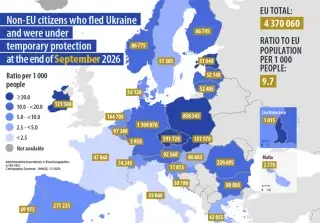 Number of Ukrainians Under Temporary Protection in the EU Falls
 Tbilisi Residential Real Estate Market: Prices, Rentals, and Investment Yields
 Investment in Albania: Growth and Risks
 Rule of Law: Fresh Data Shows Georgia Ahead of Albania, Moldova, and Ukraine
Russia Proposes 30,000-Ruble Limit on Bank Transfers
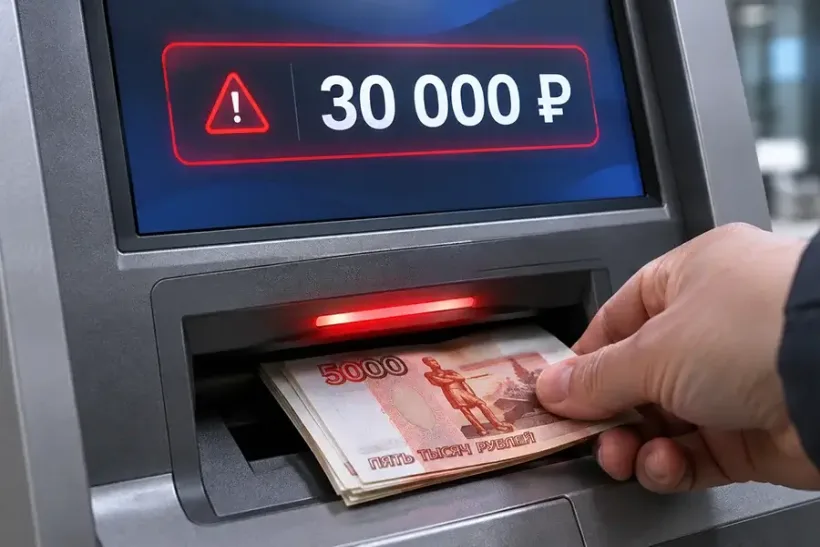
Russia has proposed a new monthly cap of 30,000 rubles on certain bank transactions. The measure would affect people suspected of suspicious financial activity, covering incoming transfers from other individuals and cash deposits into bank accounts. The bill has been submitted to the State Duma, Interfax reports. The new rules could take effect on March 1, 2028.
Which Transactions Would Be Restricted
The proposed amendments distinguish between two categories of incoming funds. In a calendar month, a customer would be allowed to deposit no more than 30,000 rubles in cash into their own bank accounts or electronic wallets. A separate ceiling of the same amount would apply to transfers between individuals and other payments received from private persons. The two allowances would not be combined into one overall limit; each type of transaction would be counted separately.
The rules would also cover foreign-currency transactions. Banks would calculate their ruble equivalent when recording deposits or incoming payments. Financial institutions would have to provide access to Russia’s Faster Payments System for receiving money from other people, although alternative transfer methods could also be offered.
The proposal does not impose a universal monthly ceiling on all account holders. The restrictions would apply only when the Bank of Russia’s assessment of suspicious activity matches the servicing bank’s own findings. The bill does not introduce an equivalent cap on outgoing payments or require bank cards to be automatically blocked. Other customer transactions would remain outside the proposed limits.
How Suspicious Transactions Would Be Identified
The Bank of Russia would be authorized to identify risks of suspicious activity involving accounts and electronic payment instruments. The criteria would be developed jointly with Rosfinmonitoring and approved by the central bank’s board of directors. Information about people flagged for possible violations would be sent to their banks. However, a notification from the regulator alone would not be enough to impose restrictions.
A review by the financial institution would be the second mandatory step. If the bank independently detected transactions matching the established warning signs and received a central bank alert about the same customer, it would have to introduce the limits by the next business day. A bank that disagreed with the risk assessment could notify the regulator.
The mechanism is linked to the development of the Anti-Drop platform, designed to share information about suspicious transfers. It is intended to help identify schemes involving multiple financial institutions. According to the proposal’s developers, a common pool of risk data would make it harder to evade scrutiny by opening new accounts or switching banks.
Duration of Restrictions and Appeals
The initial restrictions would last no longer than one year, with the exact period determined by the bank. If the institution and the central bank identified suspicious activity again within three years after the limits were lifted, a new two-year restriction would apply. Closing an account and opening another at the same bank would not circumvent the measure.
Customers would have to be notified of the decision by the next business day. The notice would state how long the limits would apply, why they had been imposed, and which types of transactions and periods raised concerns. It would also explain how to challenge the decision and what evidence could be submitted for review.
The customer would first need to contact the bank and provide documents confirming that the funds were legitimate. The institution would have seven business days to review the appeal. If it upheld the restriction, the person could challenge the decision in court after completing the required pre-trial procedure. Banks that repeatedly failed to comply with the new requirements could face license revocation.
Why the New Rules Were Proposed
The bill was introduced by State Duma members Anatoly Aksakov and Oleg Dimov, along with seven senators, including Federation Council Deputy Speaker Nikolai Zhuravlev. Its sponsors link the measures to the growth of illicit payments through personal bank accounts. The explanatory note refers to illegal drug sales, anonymous cryptocurrency exchange services, prohibited online casinos and fraudulent transfers. Such schemes use intermediaries, known as money mules or “droppers,” to move funds on behalf of others.
One way to evade banking oversight is to split payments among different institutions. The bill’s authors say that participants in unlawful schemes may operate through as many as 30 banks at once and frequently change providers. Sharing information about identified risks is intended to make these practices more difficult and reduce the banking sector’s involvement in illicit transactions.
Bill No. 32298-9 is currently under consideration in the State Duma. The proposed limits are not yet in force and could change during parliamentary debate. If the amendments are adopted, they are scheduled to take effect on March 1, 2028. The transition period would give banks time to prepare their IT systems and internal procedures.
Financial Restrictions and Investment in Russia
The new proposal follows several years of changes to Russia’s financial rules. In 2022, authorities prohibited taking more than $10,000 in foreign-currency cash out of the country. The same ceiling applies to withdrawals of dollars and euros from accounts opened before March of that year. In 2026, rules on transporting ruble cash across borders with the Eurasian Economic Union countries, Azerbaijan, Tajikistan and Uzbekistan changed. Individuals may carry up to 1 million rubles, while companies and sole proprietors face stricter requirements.
Oversight of non-cash payments has tightened as well. In 2024, banks were required to suspend transactions for two days when the recipient’s details appeared in the central bank’s database of suspicious payments. Since May 2025, certain customers have faced a monthly online-transfer ceiling of 100,000 rubles. In December of the same year, however, the Bank of Russia lifted earlier restrictions on sending money abroad.
According to analysts at International Investment, efforts to combat fraud should not obstruct legitimate business activity. Additional checks can delay payments to partners and increase costs for entrepreneurs. Although the new bill targets a specific group of individuals, further complications in banking procedures could have a negative impact on businesses and investment.
FAQ
What monthly limit on person-to-person transfers is being proposed in Russia?
The proposal sets a 30,000-ruble monthly ceiling on incoming payments from other individuals. A separate 30,000-ruble allowance would apply to cash deposits.
Who would face restrictions on bank transfers?
Only customers whose transactions are flagged as suspicious by both the Bank of Russia and their servicing bank.
Would it still be possible to send more than 30,000 rubles per month?
Yes. The bill does not impose this cap on outgoing payments.
When would the 30,000-ruble bank transfer limit take effect?
March 1, 2028, if the amendments are adopted. The proposed rules are not currently in force.
How can a customer appeal a bank transfer restriction?
Submit documents showing that the incoming funds are legitimate. The bank must respond within seven business days; its decision may then be challenged in court.