







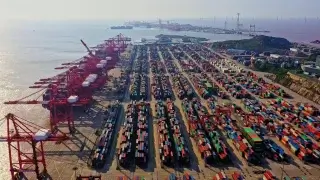
 China Nears a Decision on Fresh Stimulus
 Fines for Illegal Rentals in Spain Reach €800,000
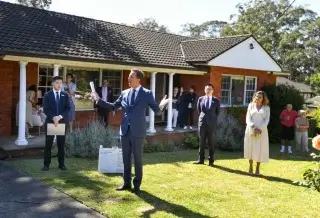 Australia’s Spring Auctions Rise but Remain Well Below 2025
 Number of Foreigners Holding Turkish Residence Permits Exceeds 1.27 Million
 Demand from Russian Tourists for Holidays in Georgia Rises by 20–25%
 Montenegro Property Buying Costs in 2026
Storm Kristin Reprices Portugal Property Risk

A late-January 2026 shock for Portugal’s real estate cycle
Storm Kristin has become a defining stress event for Portugal’s real estate sector at the start of 2026, arriving at a moment when the market had been supported by foreign demand and tourism-linked fundamentals. Portugal’s sea and atmosphere institute IPMA reported extreme wind conditions during the system’s passage, noting disruptions to parts of its station network and subsequent recovery of data, highlighting the intensity of the episode.
The political response framed the event as exceptional. Official acts referenced the declaration and extension of a “state of calamity” in the most affected municipalities, linking the measure to damage across sectors and setting the administrative basis for reporting losses and activating support.
Extreme winds and large-scale outages raise asset-level questions
The storm’s impact quickly translated into a property-risk narrative. Euronews reported six deaths and wind speeds reaching 202 km/h, alongside widespread electricity disruption affecting around one million customers at peak.
For the housing market, this type of event shifts attention from headline prices to technical resilience: roof integrity, façade performance, drainage capacity, waterproofing, and the reliability of local infrastructure. Even properties without direct damage can face a valuation conversation shaped by elevation, exposure, and the condition of older building stock.
Transactions move toward heavier due diligence and disclosure
Market behavior typically adjusts faster than national statistics. In the storm’s immediate aftermath, national and regional mechanisms for reporting and inventorying damages were activated, signaling that reconstruction and claims assessment would be a central policy focus.
In practice, buyers increasingly demand clearer documentation: prior incident history, insurance terms, structural surveys, and evidence of mitigation works. Sellers, in turn, face a more disclosure-driven environment where transparency can protect liquidity, while uncertainty can translate into price negotiations and longer marketing periods.
Recovery policy may accelerate higher resilience standards
Government measures and public debate have focused on recovery financing and the extension of emergency arrangements into early February. Spanish-language reporting highlighted a major aid package and the continuation of the calamity framework, reinforcing expectations of broad infrastructure repair and targeted support for affected areas.
A key investment implication is whether resilience requirements tighten in the zones most exposed to wind and flash-flood dynamics. If standards and enforcement rise, Portugal’s housing market may see sharper segmentation: resilient, modern assets sustaining a premium, while vulnerable legacy stock faces a higher cost-of-capital and refurbishment discount.
Investor implications for 2026
Storm Kristin effectively embedded climate risk into Portugal’s 2026 property pricing conversation. For investors, that means underwriting not only location and yield, but also adaptation capex, insurance availability, and the asset’s ability to remain liquid after a stress event. At the same time, reconstruction demand can support renovation-led strategies where upgrades materially improve resilience and long-term marketability.
As reported by experts at International Investment, Kristin marks a shift in how Portugal’s property market will be evaluated in 2026: resilience features and verifiable mitigation work are increasingly treated as value drivers, and assets that can demonstrate climate readiness are more likely to retain pricing power in exposed coastal and low-lying micro-markets.