







 Australia’s Spring Auctions Rise but Remain Well Below 2025
 Number of Foreigners Holding Turkish Residence Permits Exceeds 1.27 Million
 Demand from Russian Tourists for Holidays in Georgia Rises by 20–25%
 Montenegro Property Buying Costs in 2026
 Four in Ten Companies Would Not Choose Slovakia
 Gulf Countries Prepare Unified Tourist Visa
Ranking of the World’s Most Expensive Cities in 2026
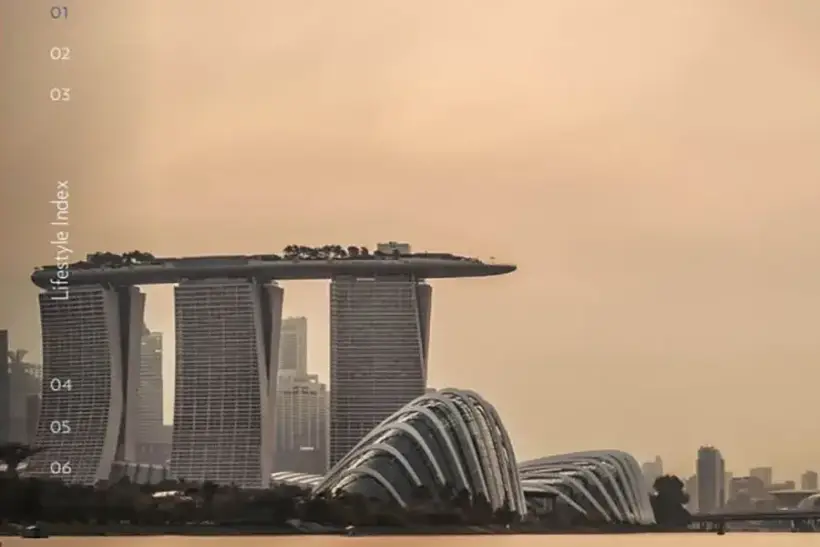
Swiss bank Julius Baer has presented its ranking of the world’s most expensive cities for wealthy individuals in 2026. Experts compared the cost of 20 premium goods and services across 25 cities, ranging from real estate and cars to private education, hotels and restaurants.
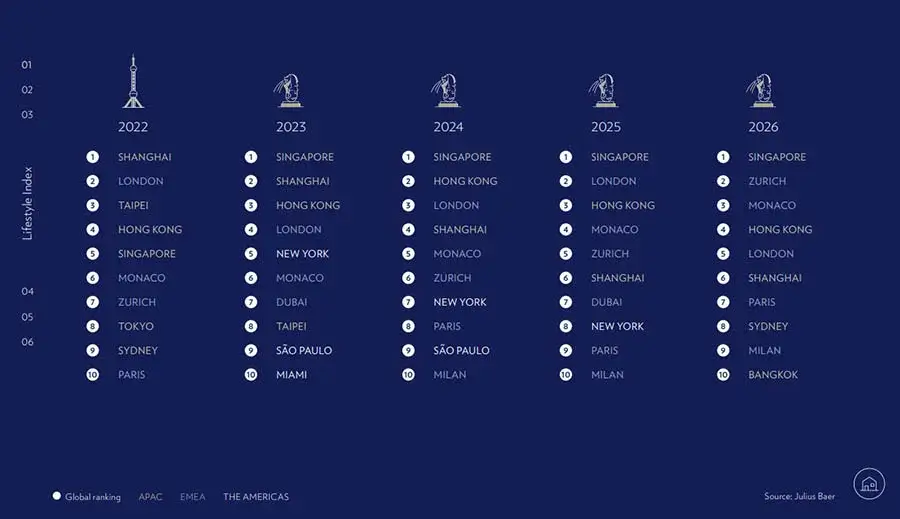
Singapore retains the top spot for the fourth year
Singapore remains the world’s most expensive city for wealthy individuals for the fourth consecutive year. Its position is largely determined by the two categories with the greatest weight in the index — residential property and cars. Housing accounts for 20% of the overall score and cars for 10%. Singapore ranks third among the 25 cities for premium residential property and first for cars.
Other expenses are also high. Singapore ranks fourth for business-class flights, fifth for private school education and sixth for fine dining. In some categories, however, the city is closer to the middle of the ranking: its technology package, for example, is 16th, as is jewellery. This means its overall lead is driven primarily by the most expensive and heavily weighted spending categories rather than uniformly high prices across all goods and services.
Exchange rates were another factor. Price growth in Singapore dollars was relatively moderate, but after conversion into US dollars the overall cost of a premium lifestyle rose by around 10%. The report also links the city’s strong position to its robust economy and political stability. For residents earning in Singapore dollars, the increase is therefore less pronounced than for visitors whose income is denominated in other currencies.
Zurich rises to second place
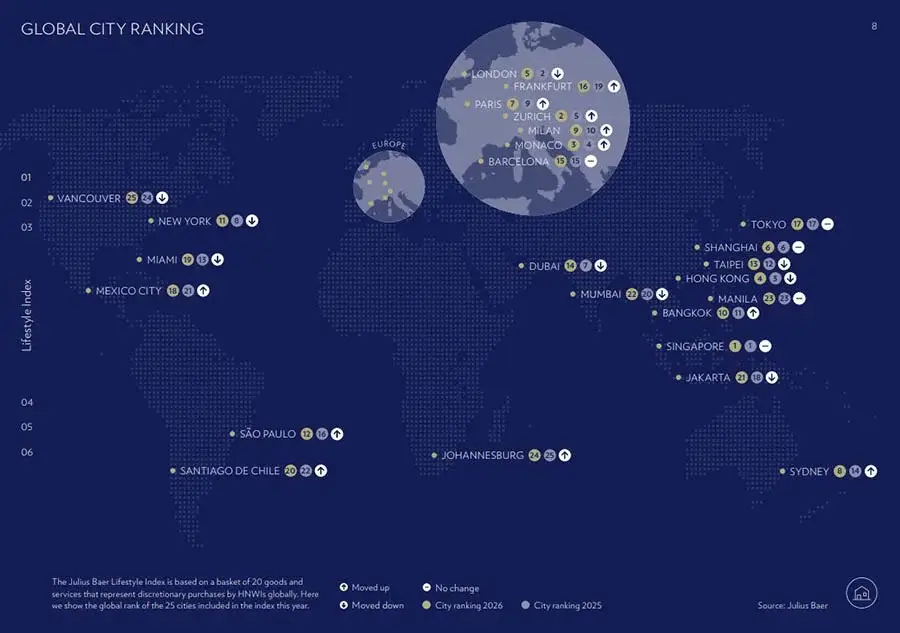
Zurich jumped from fifth to second place and became the most expensive European city in the ranking. The sharp rise was not accompanied by comparable local price growth: none of the categories included in the index increased by more than 8% in Swiss francs. The main factor was the appreciation of the franc against the US dollar.
The city ranks highly across several components of the index. Zurich is fifth for premium residential property, second for healthcare and spa services, and sixth for watches. Private education, however, is relatively less expensive than in many other cities in the study, placing Zurich 21st in this category.
Julius Baer links the strength of the franc to Switzerland’s political and financial stability and its traditional role as a safe-haven currency during periods of uncertainty. Zurich’s second place therefore illustrates an important feature of this year’s ranking: a higher position in US-dollar terms does not necessarily mean affordability has deteriorated to the same extent for local residents. Those earning in Swiss francs are largely insulated from the currency effect.
Monaco enters the top three for the first time
Monaco rose from fourth to third place and entered the top three most expensive cities for wealthy individuals for the first time. The principality overtook Hong Kong, which slipped to fourth place. One of the main reasons is the exceptionally high cost of housing: Monaco ranks first among all cities in the study for premium residential property.
Costs are also high in several other categories. Monaco ranks second for watches and the technology package, and fourth for private school education and fine dining. At the same time, not every element of a premium lifestyle is among the world’s most expensive there: the principality ranks 14th for cars and 16th for women’s shoes.
The stronger euro also affected Monaco’s overall position. In 2026, this raised the dollar-denominated figures for most cities in continental Europe. On average, the cost of a premium lifestyle in European cities increased by 14.1%, well above the global average of 10.2%.
London falls from second to fifth place
London recorded one of the most notable shifts among the leaders, falling from second place in 2025 to fifth. A year earlier, the British capital had been one of Singapore’s closest challengers, but it has now been overtaken by Zurich, Monaco and Hong Kong.
London nevertheless remains among the leaders in a number of expensive service categories. It ranks first for private school education and LASIK eye surgery, third for premium hotel suites and healthcare, and fourth for luxury residential property. The British capital is sixth for legal services.
The drop in the overall ranking does not mean London has become cheaper. The cost of the goods and services covered by the index rose by around 3% in pounds sterling. However, the pound moved more closely in line with the US dollar, while the euro and Swiss franc strengthened more significantly. As a result, other European cities overtook London once prices were converted into a common currency.
Sydney makes the biggest leap
Sydney recorded the largest rise in the ranking. The city climbed six places over the year, from 14th to eighth, entering the top ten. Julius Baer attributes the move to two main factors: the stronger Australian dollar and the high cost of imported premium goods, partly due to Australia’s geographic isolation.
Individual categories show where Sydney is particularly expensive. It ranks third for business-class flights, fourth for men’s suits and LASIK eye surgery, fifth for women’s shoes and sixth for handbags. Premium residential property ranks ninth and cars tenth. Hotel suites, by contrast, are only 21st among the cities surveyed.
Sydney’s rise is particularly notable against the broader trend in the Asia-Pacific region. The average cost of a premium lifestyle there increased by 7.4% in US-dollar terms, well below the global rate of 10.2%. Even so, the region remains strongly represented, with five cities in the global top ten.
Dubai drops seven places
Dubai fell from seventh to 14th place, one of the largest declines during the year. However, the report’s authors caution against interpreting this as evidence that life in the emirate has become significantly cheaper. The shift is mainly explained by faster increases in other cities. A year earlier, Dubai had been one of the biggest risers in the ranking.
Dubai remains expensive in several individual categories. The city ranks fifth for premium hotel suites, sixth for champagne and men’s suits, seventh for legal services and ninth for spa services. It is 14th for residential property, 19th for cars and 20th for business-class flights.
The UAE dirham’s peg to the US dollar had a significant impact on Dubai’s final position. As the euro and Swiss franc strengthened, cities linked to those currencies became more expensive in dollar terms, while Dubai lost relative ground. The study also reflects conditions before the latest escalation in the Middle East: data collection ended earlier, so subsequent changes in costs are not included in the results.
New York drops out of the top ten
New York fell from eighth to 11th place and moved outside the top ten. Miami also lost significant ground, dropping from 13th to 19th, while Vancouver slipped from 24th to last place, 25th. As a result, no city in North or South America made the Julius Baer Lifestyle Index top ten for the first time in three years.
New York nevertheless remains one of the leaders in several individual categories. It ranks first for premium hotel suites, second for legal services and private school education, third for LASIK eye surgery, fifth for business-class flights and sixth for luxury residential property.
Several Latin American cities moved in the opposite direction. São Paulo rose from 16th to 12th place, Mexico City from 21st to 18th, and Santiago from 22nd to 20th. Julius Baer notes that their progress was supported by price growth both in local currencies and after conversion into US dollars. The Americas therefore split into two distinct groups in the 2026 ranking: major North American centres lost ground, while several Latin American cities moved higher.
The cost of a premium lifestyle rises by 10.2%
Across the 25 cities included in the Julius Baer Lifestyle Index, the average cost of a premium lifestyle increased by 10.2% over the year in US-dollar terms. Growth was uneven, with the final figures influenced by both local prices and exchange-rate movements. A city’s rise or fall in the ranking therefore does not always correspond to a comparable change in costs for its residents.
Premium goods recorded the strongest increases, with prices rising by an average of 12.3%. Jewellery became 16.4% more expensive, while watches rose by 15.5%. One factor was higher raw-material costs: the price of gold has more than doubled since 2024. More expensive leather and other materials, skilled labour costs and manufacturers’ pricing strategies also contributed.
Exchange rates added another layer of pressure. Many of the world’s largest luxury-goods producers are based in Europe and anchor their prices to the euro or Swiss franc. The appreciation of these currencies pushed up prices in other markets once converted into US dollars. Companies also adjust pricing to reflect logistics and trade tariffs as they seek to maintain broadly comparable prices across countries.
The currency effect was particularly pronounced in Europe, where the average cost of a premium lifestyle rose by 14.1% in US-dollar terms, significantly above the global average. Growth was 7.4% in Asia-Pacific and 10.3% in North and South American cities.
What to consider when choosing a city
Analysts at International Investment note that amid high global uncertainty, stable countries and cities are becoming more attractive. Singapore, Zurich and Monaco stand out for their combination of strong institutions and resilient currencies, helping to preserve capital while maintaining a high standard of living.
For wealthy individuals, important considerations include jurisdiction, the currencies in which income is earned and expenses are paid, the geographic distribution of investments, and protection against currency and geopolitical risks. For those with multiple residences, tax and legal requirements, asset ownership structures and long-term financial planning also become increasingly important.
The ranking itself does not provide a complete picture of a city’s attractiveness. A key consideration is the value received for the money spent, including stability, quality of life and the balance between income and expenses. The combination of these factors helps determine how suitable a particular destination is for long-term residence and capital preservation.