







 Alta Banka Collapse in Serbia: What Happens to Russian Depositors' Money
 Covivio Hotels Revenue Grows 4.7% as European Markets Split
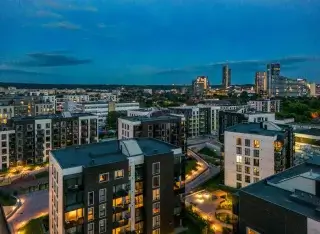 Lithuanian Apartment Prices Accelerate Across Major Cities
 Georgia's Tourism Revenue Hits Record High
 Norway's Sovereign Fund Commits €1.5bn to European Warehouses
 Market Rout of October 2026: Can Branded Hotels Protect Capital?
The World's Best Collectible Real Estate Projects: RE:VALUE Awards Winners
Even in prime real estate, there are properties that surpass the overall level of the segment—unique assets without direct comparables, united by no standard criteria. These are masterpieces: not merely expensive, but truly without a price ceiling. Buyers choose them not for quality, but for sheer exclusivity.
It could be a historic building, a rare natural enclave, unconventional architecture, or an audacious vision bordering on a miracle. High-end real estate with comparable specifications can be found in any major city. A non-replicable, collectible asset cannot be found anywhere else; that is why it is regarded much like a rare painting or a classic car.
The editors of International Investment have summarized the results of the Best Collectible Project category of the independent RE:VALUE Awards and present the seven winning projects. Each showcases in its own way where collectible value comes from. Some stand out for heritage, others for location, and still others for engineering ingenuity or form of ownership.
What the Editorial Team Considered Collectible
Price and project scale did not play the primary role in the selection. The editorial team sought what is impossible to replicate, evaluating projects across seven criteria.
The first is a historic building. If a project occupies a structure of genuine historical, architectural, or cultural value, its owner inherits that heritage.
The second criterion is an extraordinary location: an asset is considered collectible if it is difficult or impossible to build in a comparable setting.
The third is the creator. The name of an internationally acclaimed architect inherently enhances the building's value, much like an artist's signature elevates a painting or a design piece.
The fourth criterion is a limited number of residences. This refers to developments where low density is inherent to the very concept.
The fifth is associated with branding: projects created in partnership with fashion houses, jewelry brands, and other renowned labels that typically do not engage in construction or hospitality were considered. The crucial element is that the brand's identity is embodied in the architecture, interiors, and overarching concept, rather than just appearing on the signage.
The sixth criterion is an unconventional concept—a solution in architecture, design, service, or lifestyle that goes beyond the conventional formats of prime real estate.
The seventh is record-breaking achievements and "first-of-a-kind" status, backed by objective data.
A project does not need to satisfy all seven criteria at once. A single compelling feature is enough to win, provided it is exceptionally pronounced.
How these criteria work in practice is best demonstrated by the projects themselves. No two winners are alike: each relies on its signature hallmark, together illustrating how many different paths lead to collectible value.
Let us begin with the category's overall winner.
First Place: Sky Castle, Batumi, Georgia
The top award went to a project with its own legend. Wyndham Grand Batumi Gonio. Sky Castle is being built in Batumi, Georgia's primary seaside resort. It is a modern complex of residential residences and a hotel, designed in the guise of a medieval castle. It will become the fifth hotel within the Wyndham Grand Batumi Gonio resort complex—the first luxury all-inclusive destination in Georgia.
The project was inspired by the story of Crusaders who set out from Jerusalem to aid the Georgian King David the Builder. This narrative shaped the entire concept: the medieval spirit has been given a modern interpretation in its architecture, design, and hospitality environment. The complex's silhouette is defined by towers, with the castle motif carried into the interiors.
Sky Castle does not pose as an ancient structure, nor does it repurpose an old building into housing. It is a newly constructed landmark founded on the concept of a historical monument—history set in stone. Architecture here does not merely frame the real estate; it becomes its defining distinction. The development has previously received top honors in another RE:VALUE Awards 2026 category—"Best Projects with Guaranteed Yield". Now, it has also been recognized as the best collectible project.
First place was awarded for the extraordinary architectural vision of a contemporary castle inspired by the history of Adjara, and for its distinctive hospitality real estate format.
A Car Inside the Residence: Porsche Design Tower, Miami, USA
While Sky Castle is anchored in history, the next project is driven by an engineering feat. The Porsche Design Tower in Miami has reimagined where to park a car. There is no conventional underground garage: vehicles are brought directly into the private residence.
This is made possible by the Dezervator system. A specialized automotive lift transports the owner and vehicle up to the designated floor, parking the car right at the entrance of the residence in a private sky garage. The car becomes an integral part of the living space rather than resting in a separate parking facility.
This is especially meaningful for collectors and owners of rare automobiles, who value their vehicles for their aesthetic appeal as much as their functionality. The association with the Porsche Design brand is not confined to branding or finishes: the brand ethos is embedded in an engineering solution that shapes the residents' lifestyle.
The project was recognized for bridging automotive culture, architecture, and technology, setting the tower apart from conventional luxury skyscrapers.
An Island Within the Residence: Nobu Island Estate Residences, Maldives
From a Miami skyscraper, we move to the Maldives. In the Maldivian Laamu Atoll, Nobu Island Estate Residences offers an extraordinary form of ownership: a private island is part of the residence itself.
This is an ultra-exclusive collection of "island estates." In typical resort developments, villas are grouped within shared grounds. Here, each property is maximally secluded from the others, making absolute privacy the paramount value.
The ownership format itself is pivotal. The island is not just a view from the window, but a component of the real estate. Suitable islands are scarce, making such opportunities exceptionally rare. While the Nobu brand elevates the development, its true exclusivity rests on scarcity, complete independence from neighbors, and an extraordinary setting.
The editorial team recognized the project for an ultra-limited estate collection where a private island becomes an extension of the living space.
Living in an Urban Forest: Six Senses Residences The Forestias, Bangkok, Thailand
In the Maldives, luxury translates to total seclusion far from everything. In Bangkok, Six Senses Residences The Forestias offers virtually the opposite: living in a forest without leaving the metropolis. Here, the residences are integrated into a vast forest ecosystem.
There are only 27 residences. The project is rooted in biophilic architecture, designed intentionally to reconnect humans with nature. The forest does not merely landscape the grounds; it defines the layout of the entire living environment. The buildings interact with the canopy, while a system of walkways allows residents to live and relax under the trees.
What makes this distinctive is the rare union of two elements seldom found together: an urban setting and authentic nature. The boutique size of the collection underscores this all the more.
The project was recognized for an innovative urban real estate model integrated into a forest ecosystem, paired with an exclusive number of residences.
A Landscape That Cannot Be Replicated: Aman Residences Amangiri, Utah, USA
In Bangkok, nature is cultivated within the city. In Utah, there is no need to create it: Aman Residences Amangiri is immersed in it. Private residences are set amidst the vast canyons, rock formations, and desert vistas of the American Southwest.
Aman's architecture is restrained: clean lines and earthy palettes. In many developments, buildings attempt to outshine their surroundings. Here, the architecture becomes an organic extension of the land. Expansive plots ensure privacy, while the landscape itself dictates the cadence of life.
This is where Amangiri's collectible value lies: the location cannot be transplanted. Even an exact duplicate of the residence elsewhere would lack the same exclusivity.
The project was recognized for its rare format of private residences integrated into a dramatic canyon and desert landscape.
Living Heritage in Central London: The OWO Residences by Raffles, United Kingdom
The final two projects are linked by heritage. The OWO Residences by Raffles occupies the Old War Office building on Whitehall, one of London's foremost historic landmarks.
The building holds Grade II listed status: the highest level of architectural heritage protection in England. Britain's political and military history is intimately woven into its fabric. Today, it houses a contemporary hotel complex alongside 85 private residences. During the restoration, meticulous care was taken to preserve its architecture and historic character. An owner here becomes part of London's architectural and cultural legacy.
The project was recognized for transforming a historic landmark into collectible residential living while safeguarding its architectural and cultural heritage.
The "Hotel of Kings" Returns: Berengaria Hotel & Residences, Cyprus
Concluding the selection is Berengaria Hotel & Residences in Cyprus's Troodos Mountains. While The OWO preserved history, Berengaria brings it back to life.
Berengaria Hotel originally opened in the village of Prodromos in 1931, earning renown as the Hotel of Kings. It closed in 1984, remaining derelict for several decades and gradually turning into an emblem of the island's lost hospitality heritage.
Now, the property is being revitalized as a five-star boutique hotel accompanied by a limited collection of private real estate: diverse residential units and villas nestled in a pine forest at an elevation of 1,450 metres. A dedicated collection includes nine grand residences and thirteen private chalets.
The project's value stems from nearly a century of history, iconic architecture, an alpine setting, and scarcity of supply. There is no manufactured nostalgia here: the project restores a building with a rich biography of its own.
The project was recognized for reviving a legendary 1931 hotel and transforming it into a modern residential and hospitality destination.
What Unites the Winners
Seven projects, each with its own compelling claim to this list. In some, it is striking architecture and an imaginative premise; in others, pioneering engineering, ultimate privacy, a dramatic landscape, or storied heritage. Collectible real estate is not defined by a single aesthetic, price point, or ownership model. Yet all seven share a defining trait: the ability to stand entirely apart and preserve an unmistakable identity, elevating such properties into a category of their own.