







read also
 Fines for Illegal Rentals in Spain Reach €800,000
 Australia’s Spring Auctions Rise but Remain Well Below 2025
 Number of Foreigners Holding Turkish Residence Permits Exceeds 1.27 Million
 Demand from Russian Tourists for Holidays in Georgia Rises by 20–25%
 Montenegro Property Buying Costs in 2026
 Four in Ten Companies Would Not Choose Slovakia
Housing in Israel: declining sales and shrinking investment
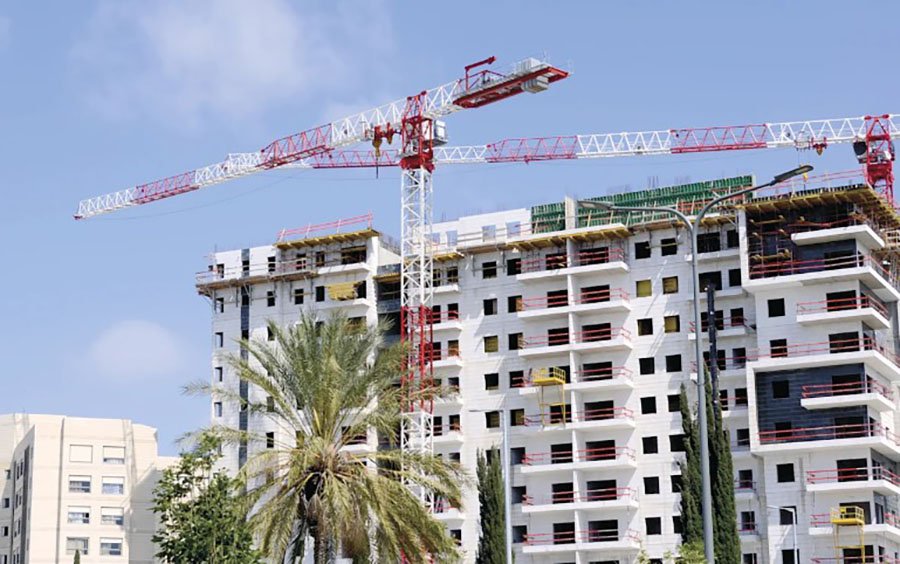
Photo: Globes
Israel’s real estate market continues to lose momentum at a rapid pace. October 2025 became one of the weakest months in terms of transaction volumes over the past two years, reports the Beer7 portal, citing data from the Ministry of Finance. The decline affected both the primary and secondary markets, as well as all key buyer groups — from investors to families purchasing their first home. The report points to a deepening stagnation and a lack of signs of a near-term recovery.
Lowest transaction volume in two years
During October 2025, a total of 4,518 apartment purchase-and-sale transactions were concluded in Israel, including deals under government support programs. This is 12% below the level of the same period in 2024 and the lowest figure since November 2023. The Ministry of Finance notes that the downturn looks particularly pronounced given the reduced number of working days in the reporting month.
Over the past 15 years, lower transaction volumes were recorded only in exceptional circumstances, notes Globes. In October 2011, this occurred amid expectations surrounding the implementation of socio-economic reforms following mass protests. In April 2020, the market came under pressure due to strict restrictions related to the coronavirus pandemic, while in autumn 2023 the situation sharply deteriorated with the outbreak of the “Iron Swords” war.
If transactions involving the state are excluded, the picture looks even more strained. On the free market, only 3,639 apartments were sold in October — 21% fewer than a year earlier and 40% fewer than in September. Long-term trends show that this volume is among the lowest since the early 2000s. A weaker result was observed only in October 2023, against the backdrop of the start of large-scale hostilities.
New Developments and Regions
The most pronounced decline was recorded in the primary market. Sales by developers fell by 14% year on year, to 1,917 units, including transactions with government subsidies under the “Dira Be-Hanaa” (“Apartment at a Discount”) program. On the free market, developers sold only 1,038 units — the lowest figure in two years. The Ministry of Finance notes that such weak results reflect not only falling demand but also the accumulation of a significant volume of unsold new housing.
The regional picture also remains unfavorable. Over the past two months, particularly sharp declines were recorded in the Be’er Sheva area, where annual sales fell by about 60%, from 844 to 361 units. In Ashkelon, 430 apartments were sold over ten months (–44%). In Ofakim, volumes declined by roughly 30%, to 560 units.
Of the eight key cities, growth in January–October 2025 was recorded only in Kiryat Gat, where transactions rose from 253 to 311. In Netivot, which remains the sales leader among southern cities, volumes declined by 2%, to 970 apartments. Overall, sales in the region fell by 29% over the first ten months of 2025.
The share of new apartments purchased at the construction stage stood at 60% in October. This is two percentage points higher than in September, but two points lower than in October 2024. Over the first ten months of the year, the most notable decline in the share of such purchases was recorded in the Tel Aviv District — down by 11 points. Nevertheless, the region still exceeds the national average in terms of the share of apartments bought at the construction stage: 65% in the Tel Aviv District versus 62% nationwide. The Ministry of Finance’s economic department attributes this trend, among other factors, to the accumulation of a large volume of unsold new developments.
Incentives and restrictions
Cash inflows to contractors from new home sales, calculated on the basis of VAT data, remain low — around 400 million shekels per month (approximately $125 million), comparable to September and more than 50% below the levels of September–October 2024. An analysis of discounts and financial incentives offered by developers shows that in five surveyed regions, incentive-based transactions accounted for 26% of total deals in October, in line with August levels. In September, this figure temporarily rose to 30%. Current levels, however, remain well below the March 2025 peak, when discounts were applied in roughly half of free-market transactions.
The reduction in the use of financial incentives is directly linked to restrictions introduced by the Bank of Israel. The new rules affected deferred-payment schemes, under which around 20% of the purchase price was paid upon signing the contract, with the remainder due closer to the handover of the property. The regulator deemed such models risky.
In addition, oversight of household debt burdens has been tightened, with banks instructed to more strictly assess the ratio of monthly repayments to income. Loans “for any purpose,” which had often supplemented new-home purchases, have also become harder to obtain. As a result, banks have become more cautious in supporting such transactions, and developers have scaled back the use of incentive schemes, especially in the free-market segment.
Secondary market and other segments
The slowdown also affected the secondary market, where 2,601 sales were recorded in Octobe r— the lowest figure since October 2023. On a year-on-year basis, the decline amounted to 10%, and compared with the previous month, 39%.
First-time buyers purchased 2,741 apartments in October, including transactions with government support. This is 4% less than a year earlier and 30% below the level of September 2025. If only the free market is considered, the number of such transactions fell to 1,862, representing a 21% year-on-year drop and a 38% month-on-month decline. The sharpest contraction was recorded in the Central District.
Transactions aimed at improving housing conditions also declined. In October, 1,018 such contracts were concluded — 29% fewer than a year earlier. After a brief uptick in August, demand in this segment has been falling for the second consecutive month.
According to Cursorinfo, the monetary volume of housing transactions in Israel in October 2025 fell by 7% compared with the same period in 2024, to around 6 billion shekels ($1.85 billion). Analysts attribute the more moderate decline in value terms to the fact that some contracts were signed earlier, with payments received only in October.
Investments and outlook
Investment activity continues to weaken. In October, investors purchased 759 apartments — the lowest figure since November 2023. This is 9% less than a year earlier and 36% less than in September. Net purchases by foreign buyers, taking into account properties they sold, declined to 65 apartments, 21% below the level of October 2024.
At the same time, since July, sales of property owned by foreigners in Israel have increased by 32% year on year, while their purchases have fallen by 29%. In October, investors sold 768 apartments — 14% fewer than a year earlier and 38% fewer than in the previous month.
Analysts at International Investment note that the overall set of data points to a continuing stagnation in the housing market and a lack of signs of a rapid recovery in the short term. Against this backdrop, investors, including those from Israel, are increasingly considering alternative markets with lower entry costs and higher returns.
The gross yield on residential property in Israel is estimated at around 2%, while in Georgia apartment yields exceed 7%. After accounting for maintenance costs, taxes, and marketing expenses, net returns in the first case may fall to zero, whereas in the second they remain at around 3%. In the segment of branded luxury-level hotels in Georgia, yields are estimated to range from 10% to 19%. It is this format — combining stable demand with a transparent income model — that is becoming one of the most attractive options for investors.