










London’s Luxury Housing Market Enters a Prolonged Downturn
Developers and brokers no longer believe in growth in the luxury property segment
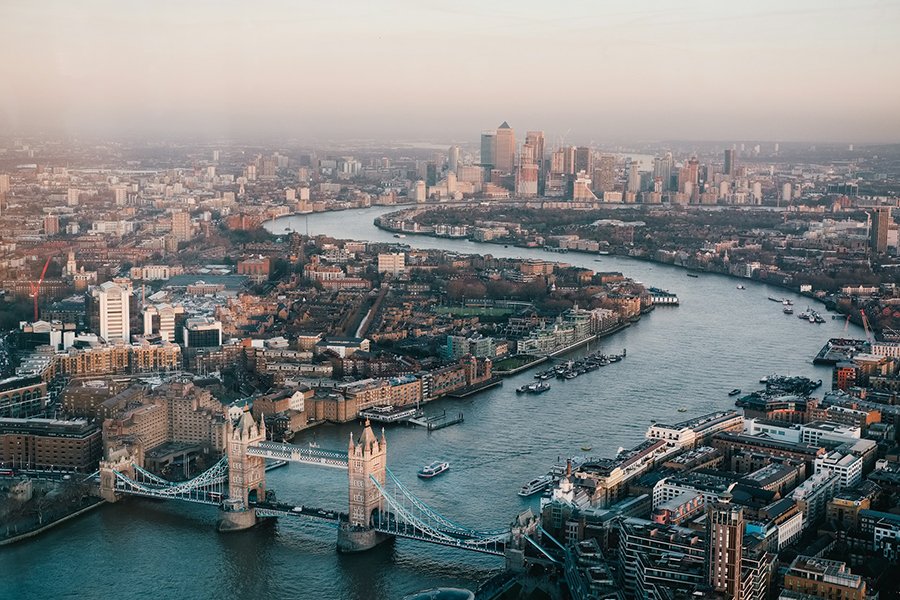
Photo: Unsplash
Leading brokers in London’s prime property market have downgraded their outlook for price dynamics in the city’s central districts, Bloomberg reports. Analysts expect further declines and see no reversal before 2027–2028. Pressure on the segment is being driven by changes to the tax regime for foreign residents and rising transaction costs.
Savills Signals a Shift in Expectations
One of the крупнейших brokers in London’s luxury property market, Savills, has acknowledged that its price forecasts for prestigious areas of the city have been systematically overstated. Over the 11 years through 2025, the company cumulatively overestimated growth in prime central London by 42.7 percentage points. Since the downturn began in 2015, Savills had projected cumulative growth of 18 percentage points, while in reality the market has fallen by 24.7.
In 2025, Savills had expected prices to decline by 4%, its most pessimistic forecast since the global financial crisis, but even that proved too optimistic. For 2026, the broker now expects a further drop of 2% and does not anticipate a return to growth before 2028. As a result, London’s luxury housing market is entering at least a three-year period of stagnation with negative price dynamics.
Among the factors behind this divergence, the broker cites a series of systemic shocks: Brexit, the coronavirus pandemic, and the war in Ukraine. Additional pressure has come from stricter transaction requirements and changes to the tax system.
Tax Changes
A key source of pressure on London’s luxury property market is the revision of the tax regime for wealthy buyers. Other market adjustments have also had a negative impact.
End of the non-dom regime
This refers primarily to the abolition of tax privileges for foreigners without tax residency status (non-domiciled), who for decades accounted for a significant share of demand in central London. According to Savills, the end of the non-dom regime has led to a sharp contraction in the pool of potential buyers and has intensified the structural downturn in the upper price segment.
Higher stamp duty
Additional pressure comes from rising transaction costs. Increases in stamp duty, as well as preparations for the introduction of a so-called “mansion tax” for properties valued above £2 million ($2.8 million), have significantly raised the cost of entering the market.
Additional Pressure Factors
London’s luxury housing market is also facing a range of additional risks that are increasing uncertainty and restraining buyer activity. Research firm LonRes points out that weak UK economic performance and uncertainty surrounding US foreign policy are creating an unfavourable backdrop for demand in the luxury segment. In this environment, even wealthy investors prefer to postpone major purchases, waiting for greater macroeconomic stability.
Short-term negative factors are compounded by operational disruptions. In early 2026, a cyberattack affected municipal systems in Westminster and Kensington and Chelsea — two of London’s most expensive administrative districts. As a result, thousands of transactions were put at risk, as mandatory property checks were disrupted, without which legal completion of sales is impossible.
According to market participants, delays in administrative processes are reinforcing an already high level of caution among buyers. Philip Eastwood, an agent at The Buying Solution, notes that higher taxes and ожидание budget decisions have already slowed transactions, while technical problems in municipal systems give clients more time to reconsider, increasing the risk of deals falling through at the final stage.
Price Correction and Collapse in Transactions
The scale of the downturn is already reflected in actual price dynamics. In 2025, housing in prestigious areas of London fell in value by 4.8%, while the cumulative decline from the 2014 peak reached 25%. As a result, the luxury segment has fully erased the growth accumulated over the previous decade and has returned to levels seen more than ten years ago.
Against the backdrop of weakening demand, owners are increasingly making significant concessions. In some cases, discounts over the past year reached 50%, which for the traditionally conservative prime central London market is considered an extraordinary level of price adjustment. This is not about isolated transactions, but a mass revision of pricing expectations amid a limited number of buyers.
Activity in the upper price range has also declined sharply. The number of sales of properties priced above £5 million fell by 18% in the first three quarters of 2025 compared with the same period a year earlier. According to Savills, the segment is heading for its lowest level since 2020, when the market was under pressure from the pandemic and lockdowns.
Cautious Outlook and Delayed Recovery
Savills notes a limited pickup in activity following the UK’s November budget: some buyers are returning to the market, guided by greater clarity on tax rules and already adjusted prices. These are tactical deals that do not change the overall trend or form a sustainable recovery.
In its base scenario, Savills expects prices in central London to rise by 8.1% over the next five years. Almost half of this growth, according to the broker, is expected to occur in 2030. Even more cautious forecasts from competitors do not suggest a rapid turnaround. Knight Frank expects prices in prime central London to remain flat in 2026 and return to growth only in 2027. This effectively points to prolonged stagnation and the absence of a full recovery in the medium term.
Analysts at International Investment note that international capital is becoming increasingly reluctant to invest in London’s luxury property under the current regulatory environment. For investors considering overseas real estate investment, the situation in London has become a telling case: the combination of tax changes and a shrinking buyer base effectively rules out a recovery scenario in the coming months. International real estate agencies are increasingly recording growing interest in alternative destinations, where property abroad remains more accessible for investment, regulatory risks are lower, and the tax burden is more transparent and predictable in the medium term.