







 Latvia’s Residence Permits for Real Estate to Be Abolished from September 15
 Egypt Prepares New Law for Property Developers
 Young Japanese Buyers Turn to 50-Year Mortgages
 Argentina Narrows Tourism Gap as Arrivals Rise
 Seattle Luxury Housing Loses Its Former Momentum
 The World’s Strongest Passports for Travel, Living and Investment
Greece Rebuilds Cities for Capital
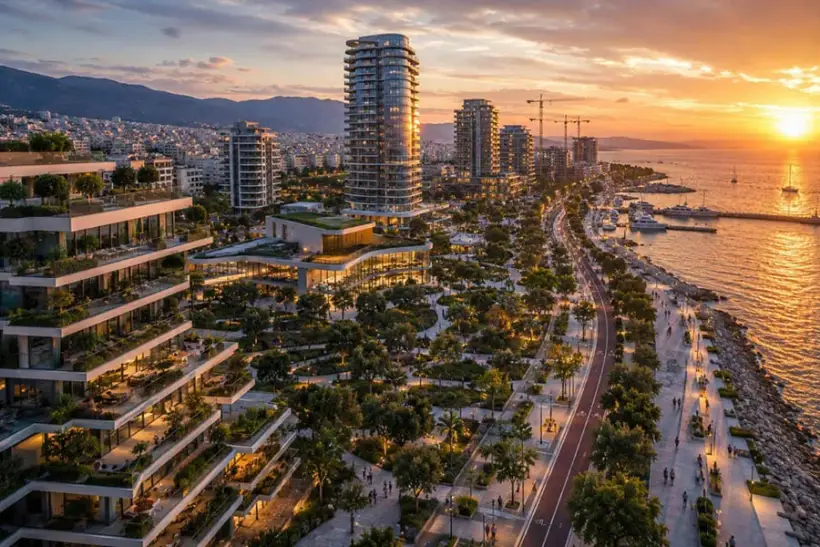
Greece is entering a new investment cycle as major urban projects in Athens, Thessaloniki and the islands coincide with a 7.8% rise in apartment prices in 2025, the launch of the Thessaloniki metro, the Ellinikon redevelopment on the Athens Riviera and record tourism demand, while overheating, seasonality and local affordability risks continue to build.
Urban redevelopment is becoming a property driver
Greek real estate is no longer only a post-crisis recovery story. The market has moved into a phase where prices are supported not just by tourism and foreign buyers, but also by large-scale changes in the urban environment. Athens, Thessaloniki, port zones and popular islands are gaining new transport, public-space and tourism infrastructure that is changing the value of surrounding districts.
Cyril Jarnias’ review of upcoming urban development projects in Greece identifies Athens, Thessaloniki and the island markets as the main transformation points. The article highlights the modernization of the Athens Riviera, pedestrian areas, historic-district renewal, the Thessaloniki metro, port upgrades and the shift of island real estate toward higher-end demand. For investors, this creates not one national market but several local scenarios: housing near new transit nodes, apartments for short-term rentals, premium seaside property and assets in regeneration districts.
The market is now less about “cheap Greece” and more about selecting a specific street, station, waterfront or tourism corridor. Investors are buying not just square meters, but future accessibility, infrastructure, tenant flows and the probability that an area becomes more valuable after a project is completed.
Apartment prices are still rising
The Bank of Greece said apartment prices rose by 7.6% year on year in nominal terms in the fourth quarter of 2025 and by 7.8% for the full year, after a 9.1% increase in 2024. Prices rose 5.9% in Athens, 8% in Thessaloniki, 10.5% in other cities and 8.6% in other areas of Greece. New apartments, meaning units up to five years old, increased by 7.4%, while older apartments rose by 8.1%.
The data show a slowdown from the peak, but not a reversal. The market is still rising, and price growth is no longer limited to Athens. Faster increases in Thessaloniki and other cities suggest capital is looking for new entry points after strong appreciation in central and coastal parts of the capital.
For buyers, this means tougher competition. Properties near metro lines, renovated waterfronts, universities, tourism clusters and business districts are receiving premiums. Older housing stock is rising almost as fast as new supply because some investors buy units for renovation and rental conversion.
Ellinikon is reshaping the Athens Riviera
The flagship of the new cycle is Ellinikon, the redevelopment of the former Athens airport. The developer presents it as Europe’s largest urban regeneration project and a new green smart district on the Athens Riviera. Official project materials refer to residential, hospitality, retail, office and leisure development, as well as the largest coastal park in the Mediterranean.
For Athens real estate, this is a systemic event. Ellinikon creates a new price anchor on the capital’s southern coast. Nearby districts gain from sea access, public spaces, retail, employment and transport links. That reinforces existing demand for Glyfada, Voula, Vouliagmeni, Alimos and Palaio Faliro.
The project also raises the risk of market segmentation. Premium infrastructure can lift surrounding prices faster than local incomes. As a result, the Athens Riviera is becoming a more international market, where prices are shaped not only by Greek purchasing power but also by capital from Europe, the Middle East, the United States and Asia.
Thessaloniki has reached a transit turning point
Thessaloniki has long had strong university, port and industrial potential, but weak transport infrastructure. The metro launch is therefore more important for property than a standard transport project. Elliniko Metro says the 9.6 km basic line with 13 stations entered revenue service on November 30, 2024, while the Kalamaria extension is expected to be commissioned in summer 2026.
The metro changes the city’s liquidity map. Areas near stations become more attractive for students, office workers, tourists and long-term tenants. Commercial premises close to transit nodes gain value for small businesses, while apartments benefit from a broader demand base as car dependence declines.
For Thessaloniki, this is especially important because of its dense center and long shortage of modern public transport. But the metro effect will not be uniform. Assets near stations may appreciate faster, while districts without convenient connections remain more affordable. Investors will therefore focus on the route, walking distance and surrounding urban quality, not just the city as a whole.
Tourism is strengthening rental demand
Urban projects are coinciding with a strong tourism cycle. Bank of Greece data cited by Greek City Times show that Greece’s travel receipts reached €23.62 billion in 2025, up 9.4% from 2024. That confirms that demand for short-term rentals in Athens, Thessaloniki and tourism regions remains strong, although its distribution depends on seasonality and transport access.
For property, tourism acts as an accelerator. A central Athens apartment, a unit near the metro in Thessaloniki, an island house or a port-side asset can earn income not only from long-term tenants but also from visitor flows. That increases housing’s investment appeal, but also reduces supply for local residents.
This is where the political sensitivity begins. If more apartments shift to short-term rentals, local tenants face higher rents and fewer options. For city authorities, the challenge is balancing tourism income with housing affordability.
Construction is recovering, but supply is selective
Greece is increasing construction activity, though new supply does not always match mass-market housing needs. ELSTAT data show that 2,717 building permits were issued in May 2025, up 31.6% from a year earlier; the permits covered 569,587 square meters of surface area and 2,598,199 cubic meters of volume.
More permits matter for the economy because they support employment, building materials, architects, banks and municipal revenues. For the housing market, however, the key question is not only how much is being built, but at what price and for whom. If construction is concentrated in expensive coastal districts, tourism locations and premium complexes, it does not ease pressure on affordable housing.
That is why construction growth can coexist with rising prices. Supply is coming, but often for investors and higher-income buyers rather than young Greek households looking for permanent homes.
Investment is supported by the economy and EU funds
The European Commission projects Greek economic growth of 1.8% in 2026 and 1.6% in 2027, still above the EU average. Its forecast says investment activity is supported by EU funds, while downside risks include possible energy pressure and vulnerability in services exports, especially tourism.
For real estate, the macro backdrop remains supportive, but less risk-free than headline price growth suggests. Urban regeneration projects often depend on a mix of private capital, public approvals, European funding and municipal coordination. Any delay in construction, permits or financing can change return timelines.
Greece also still carries the institutional memory of the 2010s debt crisis. Investors are increasingly looking not only at price growth, but also at income resilience, project governance and the market’s ability to absorb external shocks.
The Golden Visa is no longer cheap capital
Investment demand is also supported by the Golden Visa program, a residence permit route for non-EU investors. Greece’s Ministry of Migration and Asylum publishes the rules for permanent residence permits for investors, but the market is now operating under higher thresholds and a stricter approach to locations and asset types.
This changes the structure of demand. Higher thresholds reduce the appeal of low-cost purchases made only to obtain status and push part of the capital into larger transactions. In Athens, Thessaloniki, major islands and popular tourism areas, investors increasingly look for assets that combine residence planning, rental income and resale potential.
But this model carries overpricing risk. If a property is purchased primarily for residence status, yield may become secondary. That is especially dangerous in districts where prices have already risen faster than rents.
The islands are meeting growth limits
On the islands, urban development follows a different logic. Santorini, Mykonos, Rhodes, Crete and other destinations need ports, roads, water supply, energy systems and visitor-flow management. Yet these are also the places where building restrictions, environmental rules and heritage protections are most stringent.
Infrastructure projects can lift property values because they improve access and tourism quality. But islands are constrained by water, land, seasonal pressure, transport capacity and local social tolerance. The more expensive premium tourism becomes, the greater the risk that housing turns into an asset for external buyers rather than a resource for permanent residents.
That makes island investment more complex. A high villa price in Mykonos or Santorini does not automatically mean sustainable yield. Permits, operating costs, seasonality, taxes, short-term rental rules and resale liquidity all matter.
The main risk is growth without affordability
Greece’s urban projects create real economic value: new transport links, public spaces, commercial districts, tourism assets and jobs. But the housing market faces the classic regeneration dilemma. Better urban space raises property values, and higher values can displace the people the improvements are meant to benefit.
The most exposed groups are young buyers, tenants, tourism workers and families earning in euros but without access to external capital. They compete with investors, short-term rental operators and buyers for whom Greek property still looks cheaper than comparable assets in Italy, France, Spain or Cyprus.
As International Investment experts report, Greece’s new wave of urban development looks more fundamentally grounded than previous speculative cycles because it is based on real projects, transport, tourism and European funding. That is also what makes the risk less obvious: prices can rise not as a visible bubble, but as a “normal” revaluation of districts after infrastructure upgrades. Investors need to separate genuine regeneration from overpaying for expectations, while the state must ensure that Athens, Thessaloniki and the islands do not become markets where infrastructure is built for capital faster than housing is built for residents.
FAQ
Which urban projects are affecting Greek real estate the most?
The biggest influences are Ellinikon on the Athens Riviera, the Thessaloniki metro and its extension, waterfront renewals, historic-district upgrades, port projects and tourism-infrastructure modernization on the islands.
Why are Greek apartment prices still rising?
Prices are supported by tourism, foreign demand, the investor residence-permit program, economic recovery, limited quality supply and expectations that major infrastructure projects will raise district values.
Where are investors looking for property in Greece?
Investor interest remains strongest in Athens, the Athens Riviera, Thessaloniki, Crete, Rhodes, Mykonos, Santorini and areas close to new transport or tourism infrastructure.
What does urban regeneration mean for real estate?
Urban regeneration means renewing old or underused areas through transport, parks, housing, public spaces and commercial projects. It usually raises nearby property values, but can also reduce affordability for local residents.
What are the risks of investing in Greek urban projects?
The main risks are overpaying for expectations, construction delays, rental seasonality, island restrictions, tourism dependence, changes to short-term rental rules and a widening gap between prices and local incomes.