







 US Introduces Visa Bonds of Up to $20,000 for Tourists From 50 Countries
 Portugal Secures €1.5 Billion for Social Housing
 Mortgage Lending in Georgia Increased by Nearly 50%
 Irish Homes Are 17% Overvalued as Supply Lags
 Buses from Latvia to Russia and Belarus May Be Cancelled
 Egypt’s Economy Accelerates to 5.1%
Argentina Turns Away from Investor-Oriented Housing
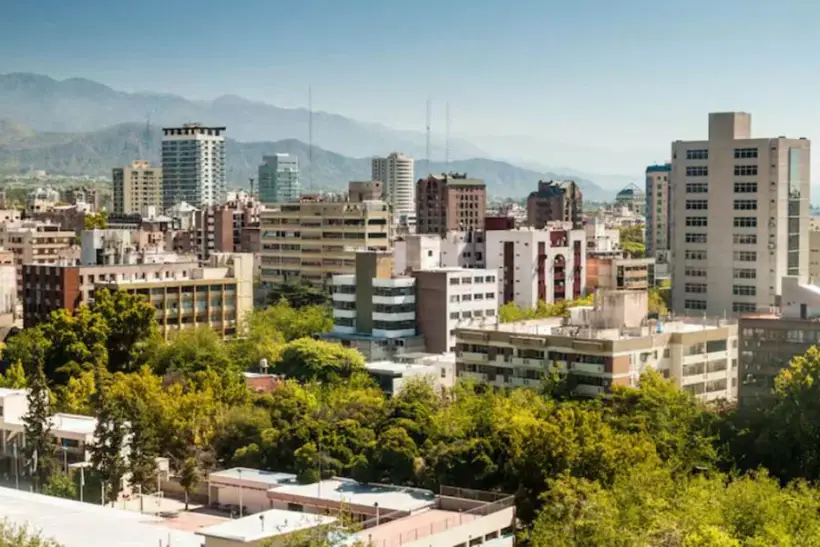
Argentina’s real estate market is shifting away from its traditional development model. High construction costs and weak mortgage lending are forcing developers to rethink both housing formats and their purpose. These issues became central topics at the Expo Construir industry congress in Buenos Aires, as reported by LA NACION.
Developers Seek Greater Efficiency
One of the key messages voiced during the Construction Congress held as part of Expo Construir at the Hilton Hotel in Buenos Aires was clear: the industry is going through a difficult phase, and a decline in construction costs appears unlikely in the near future.
Experts noted that Argentina’s cost structure is largely shaped domestically — from labor to essential materials such as steel and cement. Imported components account for only a small share and mainly concern finishing materials, meaning lower import costs are unlikely to significantly alter the broader picture.
As a result, the focus is shifting away from attempts to “cut prices” toward improving efficiency through shorter construction timelines, better planning, and process optimization already at the design stage.
The End of the Era of Tiny Investment Apartments
One of the most discussed topics was the changing type of product offered by the market. Developers are increasingly abandoning the model of extremely small apartments designed exclusively for investors.
Lucas Salvatore, president of Idero, said that Argentina’s real estate market is returning to housing aimed at end users. He criticized the previous format of properties informally referred to in the industry as ratoneras (“mouse traps” or “tiny boxes”). These overly compact units were popular among investors but were poorly suited for permanent living.
Gerardo Azcuy, co-founder of Azcuy, shared a similar view, noting that the traditional “neighborhood investor” has temporarily disappeared, shifting to other financial instruments. This has changed the demand structure and pushed developers to focus more on real buyers.
Sharp Decline in Mortgage Activity
Housing finance became another major topic of discussion. Forbes Argentina, citing data from the Buenos Aires College of Notaries, reported that mortgage-backed transactions in April 2026 fell by nearly 50% compared to the same period in 2024. At the same time, the overall market has remained relatively stable: 5,472 purchase and sale transactions were recorded in April — just one more than a year earlier.
The total transaction volume reached 861.1 billion pesos ($611 million), marking an 18.4% year-over-year increase. The average deal value stood at around 157.4 million pesos, or approximately $111,900. In U.S. dollar terms, however, the figure declined by 2.5%, reflecting the impact of currency fluctuations on the real value of property transactions.
Searching for a New Financing Model
Magdalena Tato, president of the Buenos Aires College of Notaries, believes the market has lost one of its key growth drivers due to limited access to credit. Alejandro Gawianski, CEO of HIT Group, said the company is already working with Banco Ciudad on projects where financing begins during the construction phase. These involve long-term mortgage schemes of around 20 years, with monthly payments comparable to rental costs.
Issel Kiperszmid, head of Dypsa Group, also called for broader financing options. In his view, capital markets and public investment mechanisms, including the FGS ANSES fund, could play a greater role in improving housing affordability. He stressed that demand for housing remains strong, while the banking system continues to face structural limitations in long-term lending.
Argentina’s Real Estate Market Is Changing
Industry experts say the old development model is gradually losing effectiveness. While inflation and rising property values previously fueled growth, productivity is now becoming the key factor. Developers are increasingly discussing modular construction, digital design, and BIM systems that help reduce costs and minimize errors at the planning stage.
Another noticeable trend is the shift in interest beyond Buenos Aires. The growth of industrial, energy, oil, and lithium projects is creating new centers of demand for housing and infrastructure in regional areas, gradually reshaping the geography of investment.
Analysts at International Investment believe the sector is entering a period of structural transformation, where companies capable of adapting quickly to changing conditions and responding to real demand will gain an advantage. These emerging trends may point not only to developers’ attempts to reshape the market, but also to growing caution among investors toward Argentine real estate amid the country’s ongoing political and economic instability.