







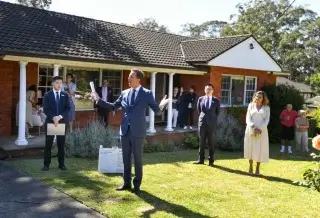
 Australia’s Spring Auctions Rise but Remain Well Below 2025
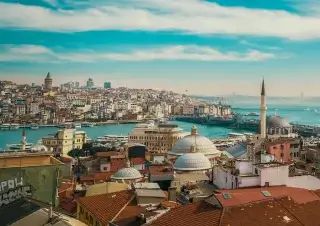 Number of Foreigners Holding Turkish Residence Permits Exceeds 1.27 Million
 Demand from Russian Tourists for Holidays in Georgia Rises by 20–25%
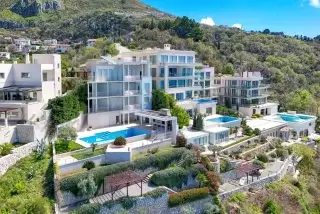 Montenegro Property Buying Costs in 2026
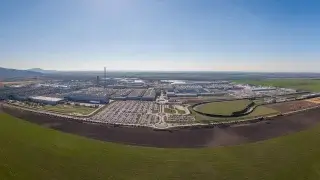 Four in Ten Companies Would Not Choose Slovakia
 Gulf Countries Prepare Unified Tourist Visa
House Prices in Russia’s Countryside Rise Slower Than Inflation
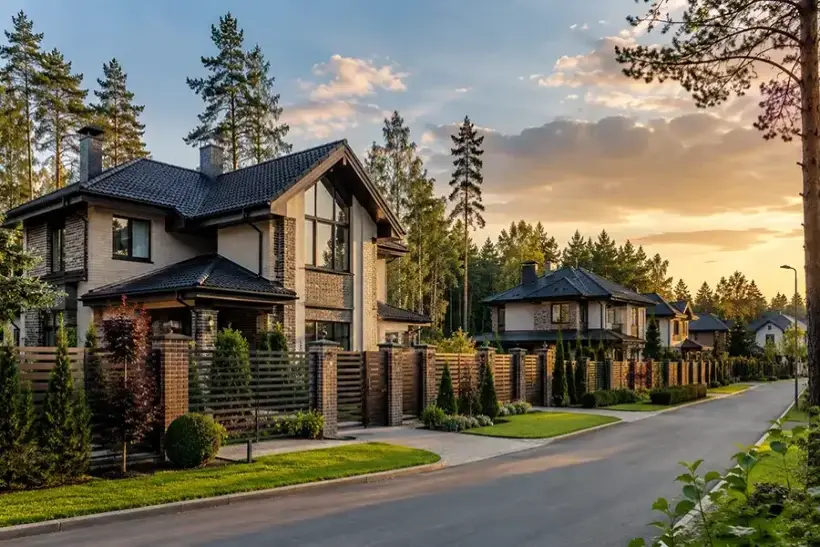
Average prices for countryside homes in Russia continue to increase, but growth remains weak due to limited demand. In the first half of 2026, the market was under pressure from high mortgage rates, changes to the family mortgage program, and adverse weather conditions, according to a study by CIAN.
Analysts reviewed data from 78 Russian regions, where at least 50 countryside homes and land plots were listed for sale. The analysis included only fully equipped year-round private houses with electricity, water supply, and gas specified in listings, as well as land plots designated for individual housing construction (IHC).
Russian Houses: Slowing Growth and Price Decline
The average price of a countryside house in Russia in May 2026 reached ₽14.1 million ($180,000). Since the beginning of the year, prices have increased by 2%, and over the past 12 months by 6%. This figure is below official inflation, meaning that in real terms countryside homes are effectively becoming cheaper.
The slowdown is especially visible in the country’s largest regions. In the Moscow region, the average house price rose by 9% to ₽25.4 million ($342,000). In the Rostov region, growth was 3% to ₽12.1 million ($163,000), and in Bashkortostan just 1% to ₽9.3 million ($125,000).
In many regions, prices declined. The sharpest drop was recorded in Ingushetia, where houses became 16% cheaper to ₽12.5 million ($168,000). In Karachay-Cherkessia, prices fell by 13% to ₽16.8 million ($226,000), and in Irkutsk Oblast by 12% to ₽6.7 million ($90,000). In Dagestan, prices declined by 11%, with an average house costing ₽19.2 million ($259,000), while in Ulyanovsk Oblast prices fell by 10% to ₽10.7 million ($144,000).
Negative dynamics were also observed in Primorsky Krai (-7%) and Karelia (-6%). In Krasnodar Krai, which previously attracted many investors and was popular for relocation, prices decreased by 4% to ₽19.1 million ($257,000).
At the same time, the market is gradually adjusting to new conditions. According to CIAN, 5% more countryside homes and 11% more land plots were sold in the first six months of the year compared to the previous year.
Land Prices in Russia Show Even Weaker Dynamics
The land market shows an even weaker trend. The average price per 100 square meters of land in Russia in May was ₽334,000 ($4,500). Over the year, it increased by only 1.5%. In several regions, however, notable declines were recorded. In the Yamalo-Nenets Autonomous Okrug, prices fell by 24% to ₽696,000 ($9,400). In Dagestan, the decline was 20% to ₽914,000 ($12,300), while in Kabardino-Balkaria, Ingushetia, and Khanty-Mansi Autonomous Okrug the drop reached 18%. In Lipetsk Oblast, prices fell by 17% to ₽124,000 ($1,700), and in Irkutsk Oblast by 13% to ₽310,000 ($4,200).
According to analysts, the land segment proved more resilient to mortgage constraints due to a lower entry threshold. At the same time, supply continues to grow. Many small developers have abandoned projects due to expensive project financing and a shift to escrow-based sales, releasing land assets from their portfolios. As a result, supply increased by 7% year-on-year, limiting price growth.
Where Property Prices Are Rising in Russia
House Market Dynamics
In some regions, property prices continue to rise significantly faster than the national average. In Udmurtia, house prices surged by 31% to ₽11.5 million ($155,000). In Komi, growth reached 22% to ₽10.9 million ($147,000). Other notable increases include:
Pskov Oblast (+21%) — ₽12.3 million ($166,000);
Astrakhan and Sakhalin regions (+20%) — ₽9.6 million ($129,000) and ₽17.1 million ($231,000);
Amur Oblast (+19%) — ₽15.4 million ($208,000).
Land Plots
The strongest growth in the land segment was recorded in the Kurgan region, where the average price per plot increased by 48% to ₽96,000 ($1,300). In Zabaykalsky Krai, prices rose by 37% to ₽230,000 ($3,100), in Yakutia by 30% to ₽419,000 ($5,600), in Amur Oblast by 29% to ₽494,000 ($6,700), and in Arkhangelsk Oblast by 28% to ₽154,000 ($2,100).
Such spikes are typically seen in regions with limited supply, where market structure has a stronger impact on average pricing.
The Most Expensive and Cheapest Markets in Russian Suburban Real Estate
House Prices in Russia
St. Petersburg remains the most expensive suburban real estate market. The average house price there reached ₽40.4 million ($546,000). In Moscow, the figure stands at ₽37.3 million ($504,000).
Other high-priced regions include Moscow Oblast — ₽25.4 million ($342,000), Altai Republic — ₽23.9 million ($322,000), and Leningrad Oblast — ₽22.9 million ($309,000).
The most affordable homes are found in Irkutsk Oblast, where the average price is ₽6.7 million ($90,000). This is followed by Kurgan Oblast — ₽7.5 million ($101,000), Kalmykia — ₽8.3 million ($112,000), Mordovia — ₽8.6 million ($116,000), Orenburg Oblast — ₽8.7 million ($117,000), and Bryansk Oblast — ₽8.8 million ($119,000).
Land Prices in Russia
St. Petersburg and Moscow also lead in land prices, with ₽1.465 million ($198,000) and ₽1.314 million ($177,000) per plot respectively.
Among regions, the most expensive land is in Dagestan — ₽914,000 ($12,300), Sevastopol — ₽900,000 ($12,100), Krasnodar Krai — ₽788,000 ($10,600), and Stavropol Krai — ₽708,000 ($9,500).
The lowest land prices are in Kurgan Oblast — ₽96,000 ($1,300) per plot. Other affordable regions include Mordovia — ₽108,000 ($1,500), Oryol Oblast — ₽118,000 ($1,600), Smolensk Oblast — ₽121,000 ($1,600), and Pskov Oblast — ₽123,000 ($1,700).
Market Outlook for 2026
CIAN’s lead analyst Elena Bobrovska expects demand to gradually recover in 2026, supported by potential key rate cuts and adaptation of the market to escrow-based transactions. A prolonged period of weak price growth is also likely to stimulate buyer activity. Overall price growth for countryside real estate is forecast at 4–6%, remaining below inflation. However, high mortgage costs remain the main constraint, and no strong additional drivers of demand are currently present.
Analysts at International Investment note that Russia continues to face a challenging economic and political environment. The most significant impact is seen in the new-build segment, but effects are gradually spreading across other real estate sectors. Even where nominal prices in rubles rise, dollar-denominated dynamics are significantly weaker due to currency fluctuations. Additional constraints include security risks and legal uncertainty, which reduce overall investment attractiveness.
At the same time, in neighboring Georgia, the real estate market shows a more stable performance. The economy demonstrates steady growth driven by active tourism and an influx of investment. The hospitality sector stands out in particular, including luxury and premium projects, where high profitability and sustained investor interest remain.