







read also
 China Nears a Decision on Fresh Stimulus
 Fines for Illegal Rentals in Spain Reach €800,000
 Australia’s Spring Auctions Rise but Remain Well Below 2025
 Number of Foreigners Holding Turkish Residence Permits Exceeds 1.27 Million
 Demand from Russian Tourists for Holidays in Georgia Rises by 20–25%
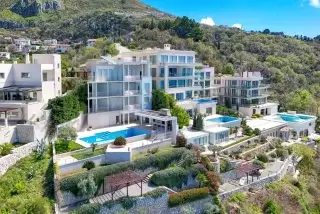 Montenegro Property Buying Costs in 2026
Portugal Property Keeps Rising

Unsplash
Portugal’s real estate market continues to grow despite high prices, limited supply and tougher attitudes toward foreign buyers in some cities. New-build standards are improving, international demand is expanding beyond Lisbon and Cascais, and buyers now need to move faster and more carefully: the market is no longer cheap, but it remains one of Southern Europe’s most resilient.
Portugal has moved beyond “cheap alternative” status
Portuguese real estate has undergone a deep transformation over the past decade. The country is no longer seen as an undervalued market on Europe’s edge, but as a full-scale destination for international buyers, developers, funds and family offices. The Portugal News notes that rising interest from overseas buyers has changed not only prices, but also construction standards: modern new homes are increasingly designed for wealthy and mobile purchasers.
This is no longer a market where buyers simply look for property cheaper than Spain, France or Italy. Portugal sells a combination of climate, safety, quality of life, legal clarity, European status and long-term liquidity. That mix continues to support demand even after Golden Visa reform, the end of the old NHR tax regime for new applicants and growing public debate about housing affordability.
But growth has a downside. The more mature the market becomes, the fewer simple deals remain. Prices have risen, the best locations are competitive, approval timelines remain long, and high-quality properties sell quickly. For buyers, that means Portugal can still be a strong market, but entering it requires professional due diligence, a precise budget and an understanding of regional differences.
Prices are rising faster than supply
The main reason for sustained growth is the imbalance between demand and supply. Portugal is building more than it did a few years ago, but still not enough for the scale of domestic and international demand. In popular locations, demand comes not only from local families, but also from foreign buyers, relocators, retirees, remote professionals, rental investors and funds working with new developments.
According to INE, the median bank appraisal value of housing reached €2,151 per square metre in March 2026, up 16.5% year on year. Bank appraisal value is not the same as the final transaction price, but it is an important indicator because it shows how banks value property for mortgage lending. If this measure rises quickly, price pressure is already visible not only in listings but also in the financial infrastructure of the market.
JLL says Portugal’s housing price index reached 280 by the fourth quarter of 2025, with an annual surge of 22.4%. That reflects intense buyer competition and a persistent shortage of available properties. Even an increase in building permits does not solve the problem immediately: years can pass between permission, construction and completed supply reaching the market.
New homes are becoming the main battleground
Market growth is especially visible in new homes. The Portugal News highlights that new projects in Portugal increasingly use premium materials, more sophisticated architecture and a level of finish that was much less common only a few years ago. This changes the structure of supply: buyers are looking not just for housing, but for a ready-made lifestyle product.
For international buyers, new builds are attractive for several reasons. They reduce renovation risk, often have better energy efficiency, meet modern layout standards, include parking, lifts, terraces, building management and sometimes service infrastructure. In a country where older housing stock can require complicated renovation and approvals, a high-quality new build is a more understandable asset.
That is also why new-home prices are rising. Developers face expensive land, high construction costs, bureaucracy and limited financing. If a project is located in Lisbon, Cascais, Comporta, the Algarve or the Silver Coast, buyer competition can be strong, but costs are rarely low. Buyers pay not only for square metres, but also for scarcity, timing, quality and reduced operating risk.
Lisbon and Cascais remain expensive, but demand is widening
Lisbon and Cascais remain the most recognisable destinations for international capital. Lisbon offers urban life, an airport, office infrastructure, universities, culture and liquidity. Cascais and Estoril provide coastal living near the capital, international schools, villas, gated condominiums and a more family-oriented profile.
But limited land and rising prices in these locations are gradually widening the demand map. The Portugal News points to growing interest in Porto and the Silver Coast, where there is more potential for new projects, infrastructure is improving and prices in many cases remain lower than in the most overheated parts of the capital and prime coast. These regions are not necessarily cheap, but they offer a different balance of price, space and growth prospects.
Porto is becoming a stronger market because of northern Portugal’s economic base, tourism, universities, airport and historic-building regeneration. The Silver Coast attracts buyers with coastline, proximity to Lisbon, a calmer environment and the possibility of larger projects. For investors, that means the most interesting opportunities may appear not in the already obvious locations, but where infrastructure and demand are still catching up with prices.
Foreign demand is strong, but more selective
International demand remains one of the key drivers. Buyers from the United States, the United Kingdom, other European countries, Brazil and wider markets continue to view Portugal as a place to live, retire, relocate, invest and preserve capital. Their motives differ: some buy for relocation, others for a seasonal villa, and others for a new-build asset intended for long-term rental or future resale.
After Golden Visa reform, demand became less dependent on direct property purchases for residence permits. That is an important shift. The market is gradually separating from the migration incentive and becoming more based on real use, quality of life and investment logic. For Portugal, that may be healthier, but for some projects previously marketed mainly through residence-by-investment demand, it changes the sales story.
Buyers are now more selective. They look not only at views and neighbourhoods, but also at developer quality, legal clarity of the site, completion deadlines, energy rating, condominium costs, rental rules, tax status and secondary-market liquidity. When prices are high, purchasing mistakes become more expensive.
Investment funds are playing a bigger role in new projects
Investment funds and institutional capital are becoming more visible in Portugal’s property market. They help finance new projects, structure larger developments and bring to market assets that would be harder to deliver through local developers alone. The Portugal News says such funds expand the range of options available to buyers and support sector growth.
For the market, this is positive because institutional capital brings discipline, reporting standards, risk-management experience and the ability to finance more complex projects. But there is also a downside: fund capital often focuses on higher-end segments where margins are stronger and buyer purchasing power is deeper. That can reinforce a bias toward premium property without solving the affordable-housing problem.
Portugal needs institutional investment to extend beyond luxury. The country needs build-to-rent, mid-market housing, affordable homes, student residences, senior living and old-stock regeneration. Without that expansion, prices will keep rising and social tension around housing will intensify.
Commercial property confirms capital interest
Growth is not limited to housing. Colliers estimated real estate investment in Portugal at €915 million in the first quarter of 2026, up 34% year on year. Hospitality and retail were especially strong, reflecting tourism recovery, limited supply of quality assets and stable demand for prime retail in Lisbon and Porto.
This matters for the residential market. When international capital sees resilience in hotels, retail and mixed-use projects, it treats Portugal as a more mature investment platform. Tourism supports demand for short-term rentals and second homes, retail reflects consumption strength in key locations, and hotels confirm the country’s appeal to international flows.
But this concentration of capital also creates a risk. If investment goes mainly into hotels, luxury homes and prime retail while mass-market housing remains underfinanced, the price gap widens. Portugal can be a successful market for investors and a difficult market for local buyers at the same time.
Affordability is the main constraint
The weakest element in Portugal’s real estate growth is affordability. Prices are rising faster than incomes, rents remain high in major cities, mortgages require stable income and large deposits, and new supply often comes to market at prices beyond the middle class. Property growth is therefore increasingly seen not only as an investment success, but as a social problem.
The Portugal News noted in a separate article that the market may be slowing in transaction volume, but prices continue to rise because the structural shortage has not been solved. Around 26,000 homes completed last year represent only a fraction of what the country produced two decades ago. Slow licensing, high construction costs and limited development finance prevent supply from expanding quickly enough.
For buyers, this means that expecting a sharp price decline simply because transactions temporarily slow is risky. If supply is limited and demand persists, the market may stabilise at a high level rather than enter a deep correction. But it also means returns and growth potential must be calculated more carefully: a high entry price reduces the margin of safety.
Buyers must look at regions, not “Portugal” on average
Average Portuguese statistics hide very different markets. Lisbon, Cascais, Porto, the Algarve, Comporta, the Silver Coast, Madeira, Alentejo and inland regions differ in liquidity, rental demand, seasonality, tax logic, airport access, healthcare quality, infrastructure and depth of demand.
For lifestyle buyers, the priorities are climate, safety, schools, healthcare, language, community, transport and daily comfort. For investors, the priorities are rent, tax structure, liquidity, property management and area potential. For new-build buyers, the key issues are developer reliability, payment schedule, guarantees, permits, material quality and resale potential.
The same price may be justified in Cascais and excessive in a weak secondary location. The same project may be good for family use and weak for rental income. The main advice for buyers is therefore not to buy “Portugal” as an abstract market, but to analyse the exact micro-location and asset.
Market growth does not remove legal risks
The faster a market grows, the greater the risk of mistakes. Buyers need to check ownership title, building permits, licences, energy certificates, condominium debts, rental restrictions, tax consequences, land status, municipal plans and developer reputation. For off-plan purchases, meaning homes bought during construction or before completion, payment schedules, bank guarantees and termination clauses are especially important.
Portugal has a clear legal system, but that does not make every transaction automatically safe. In popular areas, the number of brokers, marketing promises and closed offers rises quickly and requires independent review. International buyers need an independent lawyer, not only an adviser linked to the seller.
Rental rules deserve particular attention. In Lisbon, Porto and other municipalities, short-term rental can face restrictions, licensing and rule changes. If the yield model depends on Airbnb or seasonal rentals, the buyer should verify in advance whether that use is allowed and how durable the rules are.
What this means for buyers
For buyers, Portugal’s real estate growth means three things. First, waiting for prices in the best locations to return to levels from the previous decade is largely unrealistic: the market has become international and more mature. Second, buying now requires more caution because high prices reduce the room for error. Third, the best potential may lie not in the most obvious districts, but where infrastructure, demand and project quality are still catching up with prices.
Lifestyle buyers should calculate not only the purchase price, but also ownership costs, taxes, repairs, insurance, utilities, management, transport and healthcare. Investors should calculate not only expected capital growth, but also net yield after taxes, vacancy, management-company fees, maintenance and regulatory risk.
The main conclusion is that the market remains strong, but it now requires mature behaviour. Portugal still offers safety, climate, quality of life and long-term demand. But the simple logic of “buy anything because everything rises” no longer works. The more expensive the market becomes, the more important selection discipline is.
What this means for Portugal
For Portugal, property growth is both an opportunity and a challenge. It attracts capital, improves project quality, supports construction, tourism, services, banks and tax receipts. It helps renew old housing stock, develop new regions and strengthen the country’s international image.
But if growth does not translate into enough housing supply, it intensifies social pressure. Young families, the middle class, tourism workers, teachers, doctors, service-sector employees and students face a market increasingly oriented toward wealthier buyers. This creates political pressure on rents, foreign demand, tax regimes and local licensing.
Portugal needs more than price growth; it needs sustainable market development. That means faster licensing, a broader mid-market segment, rental supply, old-stock regeneration, transparent development and more precise regional policy. Otherwise, the country risks preserving investment success while losing housing affordability for its own economy.
As experts at International Investment report, Portugal’s property growth remains one of Southern Europe’s strongest cases, but its quality now matters more than its speed. The critical risk is that the market may keep rising because of scarcity rather than healthy supply expansion. For investors and buyers, the key question is not only where prices have risen, but where demand, infrastructure, legal clarity and liquidity can support asset values through the next cycle.
FAQ
Why does Portuguese real estate keep rising?
The main reason is strong demand combined with limited supply. International buyers, relocation, tourism and demand for quality new builds support prices, while construction has not expanded quickly enough to close the shortage.
Which Portuguese regions are most interesting for buyers?
Lisbon and Cascais remain key prime markets, but interest is growing in Porto, the Silver Coast, the Algarve, Comporta, Madeira and other areas where infrastructure is improving and new projects are more available.
What is happening with new builds in Portugal?
New builds are becoming higher quality, with better materials, modern architecture, stronger finishes and improved energy efficiency. This increases buyer appeal but also supports higher prices.
Should buyers wait for prices to fall?
Some segments may see negotiation or correction, but in the best locations a sharp decline is unlikely without a major increase in supply or a fall in demand. Housing shortage remains the main support for prices.
What risks do buyers face?
Key risks include high entry prices, legal mistakes, construction delays, short-term rental restrictions, tax issues, weak liquidity in secondary locations and buying without independent due diligence.