







 Vietnam Mortgage Surge Pushes Homes Out of Reach
 Lithuanian Apartment Prices Accelerate Across Major Cities
 London Flats Lose Value Ahead of Leasehold Reform
 Construction of the Batumi–Sarpi Highway Begins in Georgia
 Baltic Property Investment Accelerates in 2026
 Hong Kong and Singapore Renew Their Expat Rivalry
Real Estate Investment in Serbia: Kragujevac and Nis More Attractive Than Belgrade
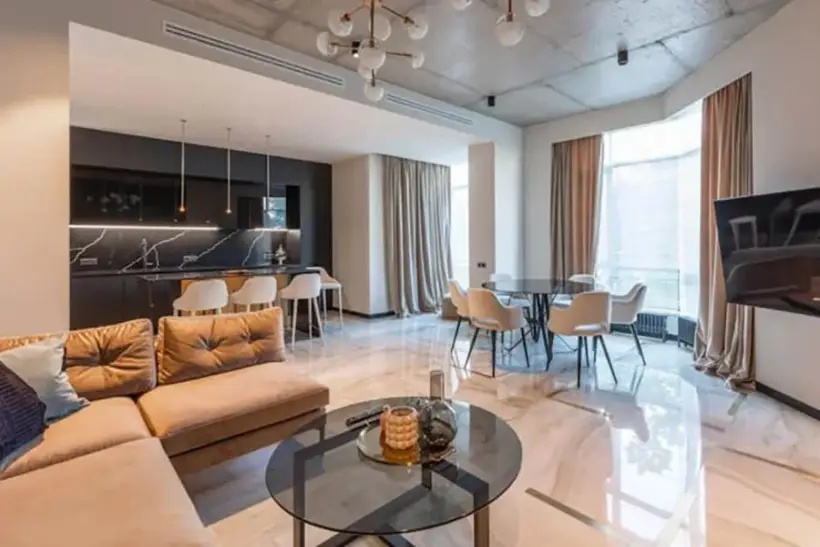
Investments in rental apartments in Serbia are gradually shifting from the largest cities to regional centers. Over the past two years, Kragujevac and Nis have shown a more attractive balance between property prices and rental yields compared with Belgrade and Novi Sad, Biznis.rs reports.
Belgrade: Property Prices Are Rising Faster Than Rental Rates
Changing Trends
Traditionally, Belgrade and Novi Sad have been considered the most attractive Serbian cities for buying apartments for subsequent rental income. However, recent data shows that the balance between property purchase prices and rental income has changed: in some regional centers, investments have become more profitable.
There are no official statistics on residential rental prices in Serbia, as landlords rarely sign formal rental agreements with tenants. This makes an accurate comparison of investment returns difficult, but data from real estate platforms makes it possible to assess rental price trends.
How Much Do Apartments Cost in Serbia
According to the Republic Geodetic Authority of Serbia (RGZ), apartment prices in Serbia increased by 5.7% in 2025 compared with 2024. In Belgrade, property prices rose by 6.3%, in Vojvodina by 5.8%, while in Kragujevac and Nis growth reached 9% and 6.2%, respectively.
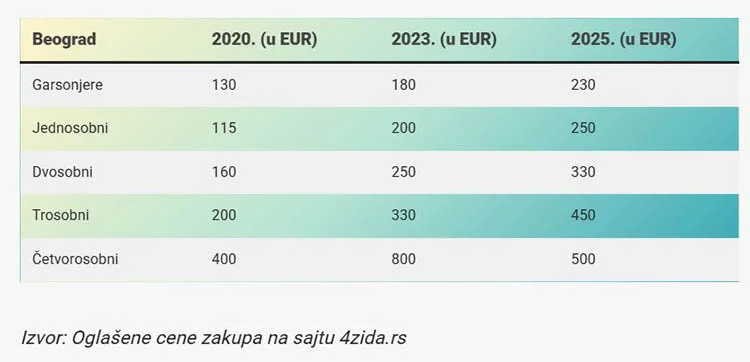
The increase in property purchase prices in Belgrade outpaced the growth of rental income. According to the 4zida.rs portal, at the end of 2020, a studio apartment in the Serbian capital was rented out for an average of €130 per month, while by 2025 the rate had increased to €230. One-bedroom apartments rose from €115 to €250, two-bedroom apartments from €160 to €330, and three-bedroom apartments from €200 to €450. At the same time, rental prices for four-bedroom properties increased from €400 in 2020 to €800 in 2023, before falling to €500 by 2025.
Investment Payback Period in Belgrade
At the end of 2020, a 30 sq. m studio apartment in Belgrade cost around €22,350 (based on the average secondary market price). With a monthly rental rate of €130, such an investment could be recovered in approximately 14 years.
By the end of 2025, the price of a similar apartment had increased significantly, while the rental rate had risen to €230 per month. As a result, the investment payback period increased to 21 years.
Kragujevac: A New Focus for Investors
Rental Rates
Over the past few years, rental rates in Kragujevac have increased across most housing categories. In 2023, studio apartments were rented out for an average of €180 per month, while by the end of 2025 the rate had risen to €230. One-bedroom apartments increased from €200 to €250. For one-and-a-half-bedroom apartments, the increase amounted to €50.
Rental prices for two-bedroom apartments rose from €250 to €330. Apartments with two and a half rooms increased from €325 to €400 per month. Larger apartments also became more expensive, although analysts note that data for these properties is less representative due to the limited number of listings on the market.
Property Prices
In 2025, the average apartment price in Kragujevac reached €1,446 per sq. m, increasing by almost 9% compared with 2024. Five years earlier, the figure on the secondary market was significantly lower at €745 per sq. m.
From January 2019 to January 2026, apartment prices in the older housing stock increased by 78%, while new-build prices rose by 42%. Overall, residential property in the Kragujevac region became 61% more expensive.
For comparison, during the same period average property prices in Serbia increased by 90%, in Vojvodina by 102%, in Belgrade by 99%, and in the Southern and Eastern Serbia region by 87%.
Investment Payback Period
At the end of 2020, the average price per square meter of older housing in Kragujevac was €745. A 30 sq. m studio apartment cost around €22,350. With a monthly rental income of €130, such an investment could be recovered in approximately 14 years.
By the end of 2025, the price of a similar studio apartment had increased to around €45,000. With a rental rate of €230 per month, the payback period extended to 16 years.
Nis: A Regional Market with Potential
Rental Market
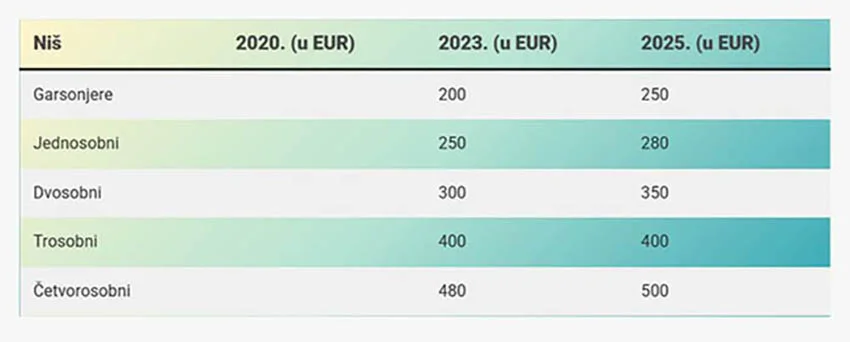
Rental rates in Nis have also increased. In 2023, studio apartments were rented out for an average of €200 per month, while by the end of 2025 the rate had reached €250. One-bedroom apartments increased from €250 to €280. Rental prices for two-bedroom apartments rose from €300 to €350.
At the same time, rental rates for three-bedroom apartments remained unchanged at €400 per month. The largest apartments increased in price by €20.
Five years earlier, rental rates in Nis were lower. In 2020, studios cost around €150 per month, one-bedroom apartments €180, and one- and two-bedroom apartments approximately €220. Rental prices for other apartment types ranged from €250–300 to €400.
Property Prices and Investment Payback
At the end of 2020, the average price per square meter of older housing in Nis was €791, while new-build apartments were sold at an average of €924 per sq. m. By the end of 2025, the average residential property price reached €1,604 per sq. m, an increase of 6.2%.
Over five years, the price of a 30 sq. m studio apartment on the secondary market increased from €23,730 to €48,120. At the same time, the rental rate rose from €150 to €250 per month, which extended the investment payback period from 13 to 16 years.
What This Means for Investors
Analysts at International Investment note that Serbia’s largest cities do not always provide the highest returns. In Belgrade, property purchase prices grew faster than rental income over the past five years: the payback period for a studio apartment increased from 14 to 21 years. This makes the capital less attractive for investors primarily focused on rental income.
Kragujevac and Nis offer a more balanced ratio between purchase prices and rental income. In both cities, property values continue to rise while rental rates are also increasing, helping maintain more attractive investment returns.
At the same time, regional markets have lower liquidity and fewer available properties. Investors should consider not only the current payback period but also rental demand, the city’s economic development, and the potential for further price growth.
Belgrade remains Serbia’s largest and most liquid real estate market, but at current price levels it is more suitable for strategies focused on capital preservation and long-term appreciation rather than maximizing rental returns.
Kragujevac and Nis may appeal to investors willing to work with regional markets in exchange for higher rental yields.