







 Poland Poised to Hold Rates at 3.75%
 Ljubljana's Million-Euro Deals Are Increasingly About Land
 Reform UK Reworks Its Offer to Wealthy Foreigners
 US Introduces Visa Bonds of Up to $20,000 for Tourists From 50 Countries
 Portugal Secures €1.5 Billion for Social Housing
 Mortgage Lending in Georgia Increased by Nearly 50%
Foreign Buyers Become More Active in Armenia’s Real Estate Market
Armenpress
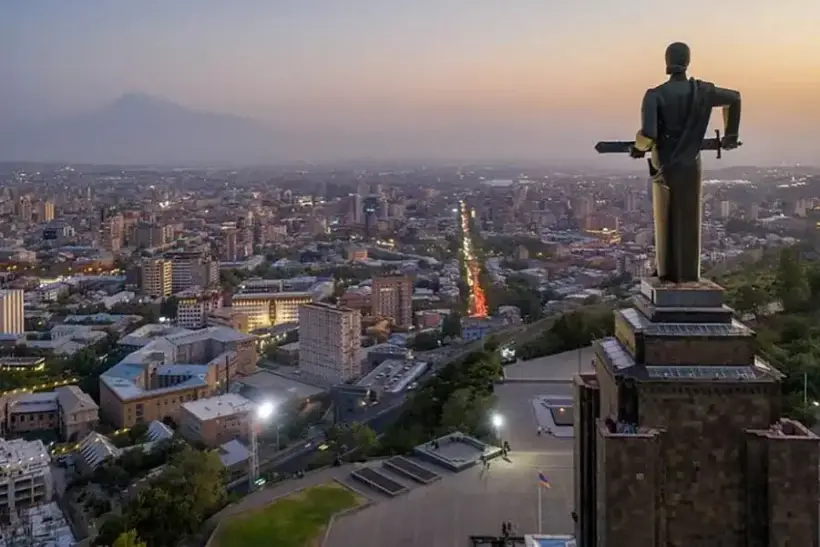
Foreign buyers are strengthening their presence in the Armenian real estate market. In 2025, the number of transactions involving foreign nationals increased by 13.4%, followed by a 32.3% rise in the first quarter of 2026. The authorities expect to support this demand by simplifying procedures and introducing new market tools, Armenpress reports.
Real Estate Transaction Trends in Armenia
The share of foreign nationals in Armenia’s real estate market increased from 6.7% in 2024 to 7.4% in 2025, according to the country’s Cadastre Committee. Last year, foreign buyers purchased 2,014 properties, more than half of them apartments. The number of purchase and sale transactions involving non-residents reached 4,413, up 13.4%.
A significant share of demand is concentrated in Yerevan. In October 2025, foreign nationals purchased 221 properties across Armenia, including 146 in the capital. Apartments accounted for 134 transactions nationwide that month.
Foreign buyer activity continued to increase at the beginning of 2026. In the first quarter, the number of transactions involving foreign nationals rose by 32.3% to 1,073. Over the three-month period, they purchased 525 properties, around 60% of them apartments.
Who Is Buying Property in Armenia
Prime Minister Nikol Pashinyan said that purchasing apartments in Yerevan is becoming increasingly popular among foreign nationals and Armenians living abroad. He noted that buying a home in the capital is turning into a kind of “trend.”
The most prominent foreign buyers in Armenia’s real estate market include citizens of Russia, the United States, Iran and European countries. The Armenian diaspora also generates separate demand, although its scale cannot be measured using official statistics. The Cadastre Committee records foreign buyers by citizenship but does not distinguish their ethnic origin, meaning they are classified simply as foreigners, without a separate category for the diaspora. Consequently, there are no precise figures for buyers representing individual countries and the Armenian diaspora.
Russians Push Up Rental Rates in Yerevan
Rental rates in Yerevan have increased by 30% over the past three months. Real estate agents link this trend to a new influx of Russian citizens who have already moved to Armenia or are planning to relocate in late summer and early autumn. According to one market participant, around 80% of current inquiries come from this group. The situation was different in 2024–2025, when a substantial share of clients were Russians already living in Armenia who were simply looking for another property.
Activity began to pick up after the May holidays and continues to grow. Dozens of requests for long-term apartment and house rentals appear every day in specialized Telegram channels. Families with children, couples and single tenants are looking for housing, while some users are seeking roommates. The authors of the “Metry v dramakh” channel note that few high-quality properties remain available on the market.
Search Interest Approaches 2022 Levels
Internet search statistics also confirm stronger demand from Russians. According to Yandex Wordstat, the query “apartments in Yerevan” generated 5,200 searches between July 13 and 19, 2026. This was slightly above the level recorded in the first week of March 2022, when the figure approached 5,000.
Current levels remain below the all-time peak recorded in autumn 2022. Between September 19 and 25, during Russia’s partial mobilization, the number of similar searches approached 10,000. Google Trends also shows that Russian interest in Yerevan housing in summer 2026 is comparable with some of the peak periods of 2022.
Armenia remains a convenient relocation destination for Russians because they can enter using a Russian domestic passport and legalize their stay relatively easily. However, suggestions that the current increase in demand is linked to fears of a new mobilization have not been officially confirmed. Russian authorities have not announced preparations for another mobilization campaign.
Armenia Prepares Changes for the Real Estate Market
The Armenian government plans to simplify real estate transactions without reducing the reliability of the existing system. Nikol Pashinyan stressed that the new mechanisms should make procedures easier while also strengthening confidence in them.
Suren Tovmasyan, head of the Cadastre Committee, said the agency is preparing a package of initiatives aimed at further developing the market. The changes will cover real estate management, spatial data infrastructure and tools used to analyze market conditions.
The new measures are expected to be presented in the near future. They are intended to expand data-processing capabilities, improve property management efficiency and create a more modern framework for assessing market developments.
At the same time, Armenia plans to strengthen cooperation with foreign cadastral and related agencies. In March 2027, the country is expected to host an international meeting attended by representatives from around 40 countries. The authorities see the event as an opportunity to strengthen professional ties, expand international cooperation and raise Armenia’s profile among foreign partners.
What This Means for Investors
International Investment analysts note that the current situation makes Yerevan more attractive to investors, particularly from the perspective of the rental market. The influx of foreigners is supporting demand, reducing the supply of high-quality apartments and pushing rental rates higher. At the same time, stronger activity among overseas buyers may support property prices and improve liquidity in the capital’s most sought-after districts.
Additional potential is linked to Armenia’s course toward closer integration with the EU. If this leads to a better business environment, greater market transparency and stronger international ties, the country’s property sector could attract a broader range of foreign investors. However, the market’s heavy dependence on migration flows, especially from Russia, remains the main risk: if these flows weaken, growth in rents and property prices could slow significantly.