







 Immigration Slowdown Reshapes the US Sun Belt
 Slovakia Reforms Building Rules as Housing Starts Slide
 EU Proposes New Restrictions on Short-Term Housing Rentals
 Canada Fast-Tracks Tax Rulings for C$1 Billion Investments
 China Nears a Decision on Fresh Stimulus
 Fines for Illegal Rentals in Spain Reach €800,000
Housing Prices in Israel Fell 1.5% Year-on-Year
The Times of Israel
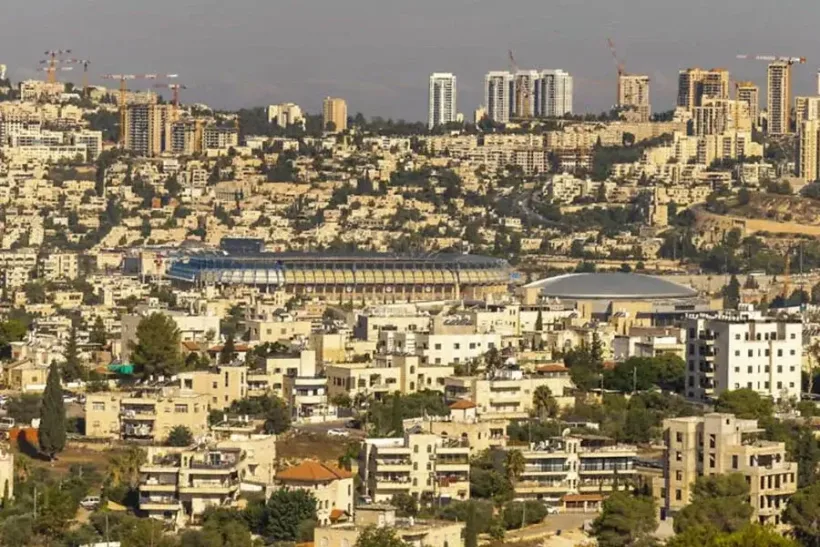
Housing prices in Israel have begun to decline, while demand is gradually recovering. In June, apartment sales increased by 50% year-on-year, with growth recorded in both the primary and secondary markets. The number of transactions involving investors rose by 64%, The Times of Israel reports, citing data from the Central Bureau of Statistics.
How Much Does Housing Cost in Israel?
In June 2026, 8,757 apartments were sold in Israel, 50% more than in the same period of 2024 and 6% above the May level. The primary market accounted for 3,593 transactions (+84%), including subsidized housing. A total of 5,164 properties were sold on the secondary market (+33%).
In May-June 2026, the Israeli housing market generally stabilized after the previous decline. Property prices in the central region fell by 1%, while in Tel Aviv they decreased by 0.7%. At the same time, prices rose by 1.8% in Jerusalem and 1.5% in Haifa, while the northern and southern regions recorded increases of 0.9% and 0.7%, respectively.
Year-on-year, the sharpest decline was recorded in the central region, at 4.1%. Prices in Haifa and Tel Aviv fell by 1.8% and 1.7%, respectively. Jerusalem, the north and the south continued to show positive dynamics, with increases of 1.8%, 1.6% and 0.1%.
In Tel Aviv, the average purchase price was NIS 3.58 million ($1.197 million). An 83-sq.-m., three-room property in a building completed in 2018 sold for NIS 3.05 million ($1.02 million), while a 64-sq.-m. apartment in a 2024 building cost NIS 3.1 million ($1.037 million). A larger 147-sq.-m., four-room apartment on the 39th floor of a newly built high-rise sold for NIS 5.05 million ($1.689 million).
In Jerusalem, the average price was NIS 2.91 million ($973,244). A 73-sq.-m., three-room apartment in a building dating from 1950 sold for NIS 3.33 million ($1.115 million). A similarly sized property — 71 sq. m. with three rooms in a 2018 building — cost NIS 2.45 million ($819,000). A five-room, 111-sq.-m. apartment in a 1970 building was purchased for NIS 4.65 million ($1.555 million).
In the central region, the average price was NIS 2.73 million ($913,043). In Beit Shemesh, a 100-sq.-m., four-room property in a 2023 building sold for NIS 2.21 million ($739,000). Another apartment, measuring 120 sq. m. with five rooms in a 2019 building, cost NIS 2.95 million ($987,000).
In Haifa, the average housing price was NIS 1.93 million ($645,485). Among the registered transactions was a five-room, 98-sq.-m. apartment in a 2009 building, which sold for NIS 2.1 million ($702,000). The average price was NIS 1.66 million ($555,184) in the south and NIS 1.52 million ($508,361) in the north.
Rental Housing in Israel
Rental rates vary considerably depending on the city and property characteristics. In Tel Aviv, a 120-sq.-m. house in Revivim with a garden, two renovated bathrooms, three toilets, a storage room and a protected room is offered for NIS 13,000 ($4,348) per month. A 90-sq.-m., four-room apartment in the Old North is available for the same monthly rent.
In Jerusalem, housing is cheaper. A 75-sq.-m., 3.5-room apartment on King George Street rents for NIS 8,500 ($2,843) per month. In French Hill, an 89-sq.-m., four-room property is offered for NIS 7,800 ($2,609).
The lowest of the listed rental rates are in Haifa. A 100-sq.-m., four-room apartment can be rented for NIS 4,800 ($1,605) per month. The difference from Tel Aviv rental rates shows how strongly location affects rental costs even for properties of a similar size.
Investor Activity and Housing Yields in Israel
Investors purchased 1,392 apartments in June 2026. The figure was 64% higher than in the same period of 2025 and increased by 5% over the month. The rise in purchases was one of the most notable changes in the structure of transactions. At the same time, investor sales also increased, by 40% year-on-year and 6% month-on-month, reaching 1,487 properties. Thus, the increase in investors’ sales was greater than the rise in their purchases.
Global Property Guide estimated the average gross rental yield on residential property in Israel at 3.05% in the third quarter of 2026. In January-March, the figure was slightly higher at 3.15%. Among the three largest cities, Haifa had the highest yield at 3.16%, followed by Jerusalem at 3.06% and Tel Aviv at 2.94%. These figures represent gross yields before taxes, maintenance costs, agent commissions and other expenses. Net yields are typically 1.5-2 percentage points lower. With periods of vacancy, the return may be even lower and could even turn negative.
Analysts at International Investment note that falling prices, a high entry threshold and low gross yields limit the appeal of the Israeli property market for investors. Local businesspeople are increasingly considering overseas destinations where property purchases are less expensive and potential returns are higher. Georgia is among these options, with Israeli citizens already ranking among the leading foreign buyers in the country.