







 Covivio Hotels Revenue Grows 4.7% as European Markets Split
 Lithuanian Apartment Prices Accelerate Across Major Cities
 Georgia's Tourism Revenue Hits Record High
 Norway's Sovereign Fund Commits €1.5bn to European Warehouses
 Market Rout of October 2026: Can Branded Hotels Protect Capital?
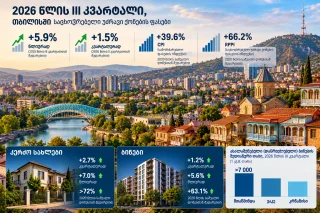 Residential Property Prices in Tbilisi Rise by 5.9% Year-on-Year
Vienna Rents Rise as Housing Supply Expands
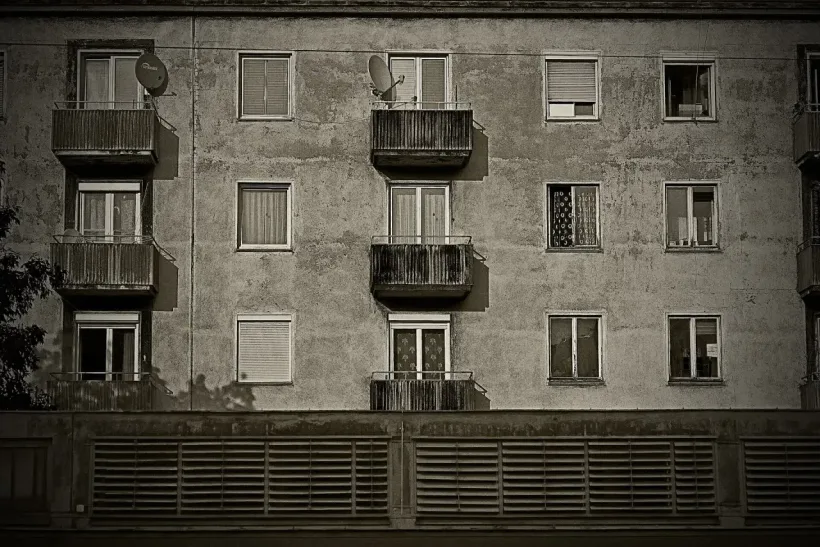
Vienna's rental market is getting more expensive even as the number of homes offered for rent increases. Median asking rents reached €22.41 per square metre a month in the first quarter of 2026, including taxes and operating costs, the highest level among Austria's federal states. When regional capitals are compared, Vienna ranks behind Innsbruck but remains one of the country's most expensive rental cities. A vast regulated and social sector provides a counterweight: the city owns about 220,000 homes and roughly another 200,000 are co-operative apartments.
Vienna Asking Rents Move Above €22 Per Square Metre
A September 16 article published on Stellantis Hub describes finding a Vienna apartment as a difficult process for newcomers, citing limited availability, substantial upfront costs and Austria's complex tenancy rules. Some of its specific claims, including a citywide vacancy rate of about 1%, dozens of applicants for every property and broad landlord preferences for particular tenant groups, are not supported by official citywide data and should not be treated as representative statistics for Vienna as a whole.
Verified market data nevertheless show that Vienna is expensive. Median asking rents for houses and apartments reached €22.41 per square metre in the first quarter of 2026, about 10% more than a year earlier. The measure includes net rent, taxes and operating costs but excludes heating and electricity. The Austrian average was about €16 per square metre. Vienna ranked highest among the federal states, followed by Salzburg at €21.23 and Tyrol at €21.13. At the same time, the number of Vienna rental listings increased 10% year over year, while measured demand on the platform fell 4%. The analysis covered more than 95,000 listings.
The increase in available properties has therefore not yet translated into lower advertised rents. More homes are reaching the market than during the contraction in supply seen in 2024 and 2025, but they are being offered at higher prices.
Innsbruck Remains More Expensive Than Vienna
A comparison of Austria's regional capitals produces a slightly different ranking. Between January and April 2026, Vienna's median gross asking rent for apartments reached €22.45 per square metre, up 10% from a year earlier.
Innsbruck remained the most expensive regional capital at €24.23 per square metre even after a 6% annual decline. Salzburg stood at €21.96, Graz at €15.15, Klagenfurt at €16.99, Linz at €15.51, Eisenstadt at €14.59 and St. Pölten at €13.35. The study covered 35,330 listings.
Vienna therefore should not be described without qualification as Austria's most expensive city for tenants. It led the federal-state comparison in the first quarter, while Innsbruck had a higher median asking rent in the regional-capital dataset covering the first four months of the year.
Vienna Rent Varies Sharply by District
The citywide average also conceals a wide range of prices inside Vienna. For a 70-square-metre apartment, median gross asking rent in the first quarter of 2026 ranged from about €1,320 in Liesing, District 23, to €1,790 in Innere Stadt, District 1.
Moving outside the city can cut that bill substantially. A comparable apartment was offered for about €660 in Melk, €750 in Amstetten and €850 in Hollabrunn. Closer commuter towns were more expensive, at roughly €1,030 in both Klosterneuburg and Tulln and €1,370 in Mödling. The estimates are based on median listings recorded from January through March.
For households able to commute, widening the search beyond Vienna can therefore save several hundred euros a month, with travel time and transport dependence as the trade-off.
Vienna's Most Popular Rentals Are Shrinking
Housing affordability is also reshaping the properties that attract the most interest. Among the 10% of Vienna rental listings receiving the most inquiries between January and May 2026, the average apartment measured 56 square metres and cost €944 a month.
A year earlier, the comparable rent was €877. Across Austria, the average size of the most sought-after rentals fell from 60 to 57 square metres, while the average monthly rent increased from €818 to €859. The analysis was based on 10,500 data points and measured gross rents excluding heating and electricity.
The figures suggest that some households are responding to higher rents by compromising on floor space rather than simply increasing their monthly housing budget.
Existing Tenants Pay Much Less Than New Listings Suggest
Asking rents cannot be compared directly with the average amount paid under existing leases. In the second quarter of 2026, average rent in Austria including operating costs was €694.70 per dwelling, or €10.50 per square metre, up 3.3% from a year earlier.
Net rent excluding operating costs averaged €520.80 per apartment, or €7.90 per square metre. Operating costs averaged €176.50 per dwelling and €2.70 per square metre. Statistics Austria derives these figures from household survey data, meaning the dataset includes leases of different ages and legal types.
That methodology explains much of the difference between the national €10.50 figure and Vienna asking rents above €22. The first measures what existing tenants across Austria actually pay; the second measures the price faced by someone entering Vienna's open rental market in 2026.
Rent Regulation Covers Part of Vienna's Older Housing
Vienna does not have one rent ceiling applying to every apartment. The permitted rent depends on the age and legal status of the building, ownership structure, history of the property and the type of tenancy.
From April 1, 2026, Vienna's statutory benchmark rent is €6.74 per square metre a month, up from €6.67. The increase was capped at 1%. The benchmark is not the final rent for every older apartment: it forms a base used in calculations that can include legally permitted additions and deductions.
The Tenancy Act applies in full to several categories of older housing. These include many rental properties in buildings with more than two units constructed before July 1, 1953, while rented condominium apartments have a separate key construction date of May 9, 1945. There are exceptions, including certain later attic conversions and newly created units. Vienna's Chamber of Labour notes that the benchmark system commonly applies to qualifying older apartments but not automatically to every unit in a historic building.
The €6.74 benchmark therefore cannot be compared directly with an asking rent of more than €22. It is a component in determining the main rent for specific regulated tenancies rather than an all-inclusive citywide price.
More Than 400,000 Homes Sit Outside the Conventional Private Market
A defining feature of Vienna is the scale of housing outside the standard private rental market. The city owns approximately 220,000 municipal apartments, while about 200,000 additional homes are in the co-operative sector.
Applicants for municipal or subsidised housing must satisfy the requirements for a Wiener Wohn-Ticket. Basic conditions include age, income, residence status and at least two continuous years of primary residence in Vienna. Additional residence requirements apply to third-country nationals. Co-operative apartments can also require an upfront financing contribution, part of which is refundable when the tenant moves out after annual depreciation.
This structure helps explain why private asking rents faced by newcomers can be far above the housing costs paid by many long-term Vienna residents.
Vienna Changes Its Social Housing Allocation System
A new allocation system for municipal and subsidised housing took effect on September 22, 2026, after pre-registration opened on July 14.
The previous set of fixed need categories has been replaced by a points system. It takes account of housing-cost pressure, overcrowding, threatened loss of housing, single parenthood, education, moving into a first independent home, health needs and caring responsibilities. Long-term residence in Vienna can carry a substantial advantage: at least six uninterrupted years of primary residence can provide up to 45 points, while a long unsuccessful search can also be worth up to 45 points.
The timing is relevant to the September 16 source article because Vienna introduced the new allocation model six days after it was published.
Fixed-Term Rental Rules Changed in 2026
Austria also changed rules for fixed-term residential leases from January 1, 2026. The minimum term for many new and renewed fixed leases in the commercial rental sector increased from three to five years, with an exception for small private landlords.
In the regulated segment, indexation of benchmark and category rents was suspended in 2025, capped at 1% in 2026 and is due to be capped at 2% in 2027. From 2028, a different formula applies when annual inflation exceeds 3%. The measures form part of Austria's package aimed at limiting rent increases.
These rules do not amount to a freeze on every private Vienna rent. Their effect depends on the legal category of the property and the indexation terms in the individual tenancy agreement.
Rental Deposits Are Not Universally Capped at Three Months
The widespread claim that Austrian law sets a universal three-month maximum deposit is incorrect.
Deposit size is generally a matter of agreement. Three gross monthly rents are customary, but up to six gross monthly rents can also be permissible. A higher amount requires a particular security interest on the landlord's side. If the deposit is paid in cash, the landlord must keep it separately in an appropriate interest-bearing form that protects it from the landlord's other assets.
For a home costing €1,500 a month, a conventional three-month deposit represents €4,500 upfront. A six-month deposit would raise that amount to €9,000.
Tenants Usually Do Not Pay the Estate Agent
Austria has applied the ordering-party principle to residential rentals since July 1, 2023. The party that first commissions the real-estate agent is responsible for the commission.
In a conventional advertised letting, the landlord has usually hired the agent first, meaning the tenant cannot be charged the brokerage fee. A tenant may have to pay when they independently commission an agent to find a property. Attempts to shift the landlord's commission onto the tenant in circumvention of the rules are prohibited.
The reform removed one major upfront expense for many private-market tenants, although deposits, the first rent payment and potential co-operative financing contributions remain.
A New Address Must Be Registered Within Three Days
Anyone actually moving into a new home in Vienna generally has to register the address within three days. The rule does not apply only to foreigners; it also covers people moving between homes within Austria.
Registering a new primary residence can simultaneously deregister the previous primary address. Foreign nationals may face additional immigration formalities depending on citizenship and residence status, but those requirements are separate from the tenancy agreement itself.
International Investment experts report that Vienna's rental market cannot be understood through a single average price. The central divide is between the open private market, where newly advertised housing costs more than €22 per square metre, and the regulated, municipal and co-operative sectors that keep housing costs substantially lower for many established residents. A larger number of listings has not yet stopped asking rents from rising. For investors, the legal status of an apartment can be as important as its purchase price because it can affect permissible rent and future indexation. For new tenants, the crucial distinction is between the advertised rent, the full monthly cost and whether they can access regulated or subsidised housing.
FAQ: Renting an Apartment in Vienna
How much does it cost to rent in Vienna in 2026?
Median gross asking rent was €22.41 per square metre in the first quarter of 2026 for houses and apartments combined. For apartment listings alone between January and April, the median was €22.45.
Is Vienna Austria's most expensive rental city?
Not under every comparison. Vienna had the highest asking rents among the federal states in the first-quarter dataset, but Innsbruck was the most expensive regional capital between January and April at €24.23 per square metre, compared with €22.45 in Vienna.
Why is Austria's official average rent so much lower than €22?
Official statistics include existing leases across Austria, including older and regulated contracts. Property portals measure the homes currently being offered to new tenants, which produces a much higher figure in Vienna.
How much does a 70-square-metre apartment cost in Vienna?
Early-2026 asking rents ranged from roughly €1,320 in Liesing to €1,790 in Innere Stadt. The final price varies by district, building, condition and tenancy regime.
Does Vienna have rent control?
Part of the housing stock is regulated. Vienna's benchmark rent has been €6.74 per square metre since April 1, 2026, but this is a calculation base for qualifying tenancies rather than a universal final rent.
How large can a rental deposit be?
Three gross monthly rents are customary, but deposits of up to six months can also be permissible. Higher amounts require specific justification.
Does a tenant have to pay an estate-agent commission?
Usually not when the landlord first hired the agent. Since July 2023, the party that first commissions the broker generally pays the fee.
How much social housing does Vienna have?
The city owns around 220,000 municipal homes and about 200,000 additional apartments are in the co-operative sector.
Can a newcomer immediately qualify for a municipal apartment?
Usually not. The Wiener Wohn-Ticket has basic requirements that include two continuous years of primary residence in Vienna, as well as income and citizenship or residence-status conditions.
How soon must a new Vienna address be registered?
The address generally has to be registered within three days of moving in.