







 Covivio Hotels Revenue Grows 4.7% as European Markets Split
 Lithuanian Apartment Prices Accelerate Across Major Cities
 Georgia's Tourism Revenue Hits Record High
 Norway's Sovereign Fund Commits €1.5bn to European Warehouses
 Market Rout of October 2026: Can Branded Hotels Protect Capital?
 Residential Property Prices in Tbilisi Rise by 5.9% Year-on-Year
Number of Land Plots for New Housing in Israel Halves
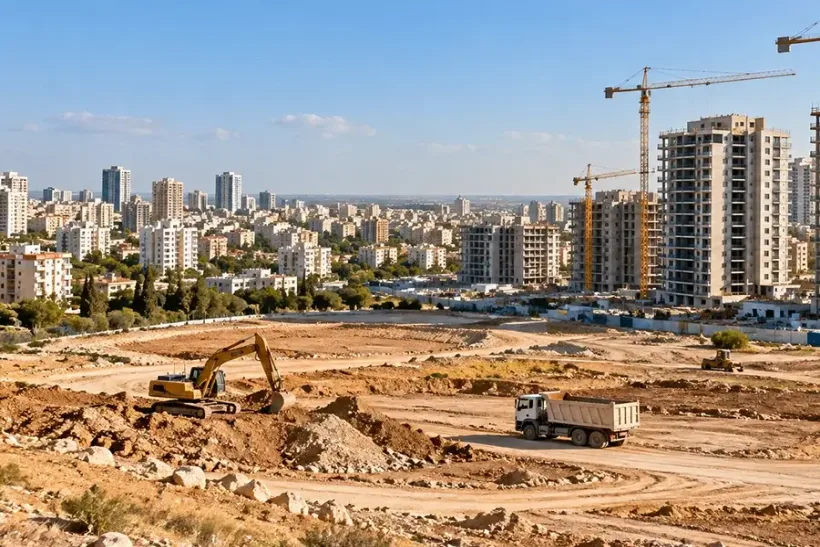
The pace at which state-owned land is being allocated for residential construction in Israel has fallen sharply, Globes reports. By the end of September, the figures were significantly below last year’s levels, while the authorities expect to accelerate tenders during the remaining months. The slowdown has not yet created a housing shortage but could affect the market over the longer term.
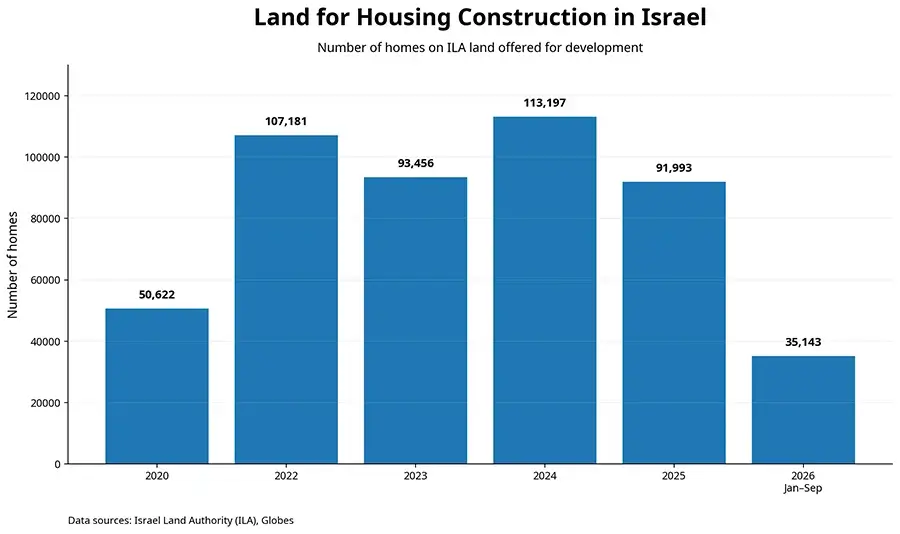
Land for Housing Construction in Israel
The amount of state-owned land made available for new housing in Israel remained high for several years. In 2022, the Israel Land Authority (ILA) offered sites for the construction of more than 107,000 homes. The figure stood at 93,456 in 2023 before rising to 113,197 in 2024.
The scale began to decline in 2025 but remained substantial. Land for 91,993 homes was brought to market. Most state-owned sites are allocated to developers through ILA tenders.
The decline became much more pronounced in 2026. From January through the end of September, the authority offered sites for 35,143 homes. This is less than half the total recorded for the whole of last year. The current figure is even below the pandemic year of 2020, when land for 50,622 homes was offered.
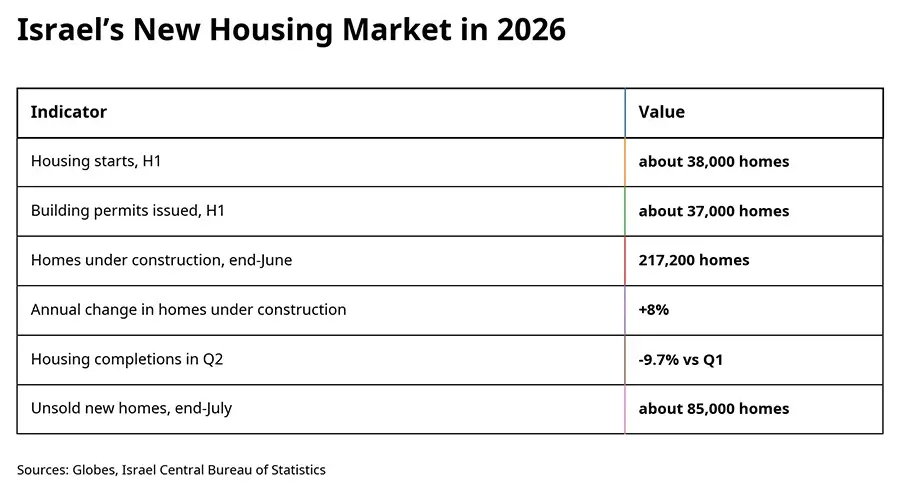
New Housing Construction and Sales in Israel
The reduction in state-owned land allocations has not yet been accompanied by a slowdown in construction activity. Around 38,000 homes were started across the country in the first half of 2026, while permits were issued for approximately another 37,000. By the end of June, 217,200 homes were under construction — 8% more than a year earlier and a record level for Israel.
At the same time, housing completions have slowed. The number of completed homes fell by 9.7% in the second quarter compared with the first three months of the year. As a result, the number of properties at various stages of construction continues to grow.
Demand is failing to keep pace with supply. According to Israel’s Central Bureau of Statistics, around 85,000 new homes remained unsold at the end of July. Tel Aviv, Kiryat Gat and Haifa recorded the largest numbers of new-home purchases in May–July, but the accumulated inventory remains substantial.
Reasons for the Decline in Israel’s Land Market
The large inventory of unsold new homes is reducing developers’ need for additional sites. With sales remaining weak, companies are more cautious about launching new projects, particularly amid high financing costs. As a result, demand for land offered by the ILA for future development remains limited.
Military developments and political uncertainty have also affected the market. Globes points to management changes at the Israel Land Authority that have affected its operations. Together, these factors have slowed preparations for bringing new sites to developers.
Another issue involves municipalities. Local authorities are not always ready to approve large residential developments quickly because population growth requires additional spending on roads, schools, kindergartens and other infrastructure. As a result, preparations for opening new areas to development can take longer.
Outlook for Israel’s Housing Market
The figures could still rise before the end of 2026. The ILA traditionally steps up activity in the final months of the year. In December 2025, for example, 61 land tenders covering almost 30,000 homes were completed. The authority’s schedule lists 422 procedures for the remainder of this year, although only 70 are currently open for bids. These cover the construction of 9,187 homes.
Even a significant acceleration toward the end of the year is unlikely to change market conditions immediately. There is currently no shortage of new housing: a record number of homes are under construction, while the inventory of unsold properties remains high. The effects of reduced land supply may become more apparent later, once projects launched in previous years are completed and new sites are needed for the next wave of development.
The ILA expects to increase the amount of land available for development in 2027. Agreements with municipalities on the development of large residential districts are expected to support this process. International Investment analysts note that the key issue for the market will be the gap between today’s large inventory of new homes and future supply. If the pace of new land allocations remains low, it could constrain construction volumes over the next several years and increase pressure on housing prices.