







 Covivio Hotels Revenue Grows 4.7% as European Markets Split
 Lithuanian Apartment Prices Accelerate Across Major Cities
 Georgia's Tourism Revenue Hits Record High
 Norway's Sovereign Fund Commits €1.5bn to European Warehouses
 Market Rout of October 2026: Can Branded Hotels Protect Capital?
 Residential Property Prices in Tbilisi Rise by 5.9% Year-on-Year
Romania property market splits as foreign capital grows
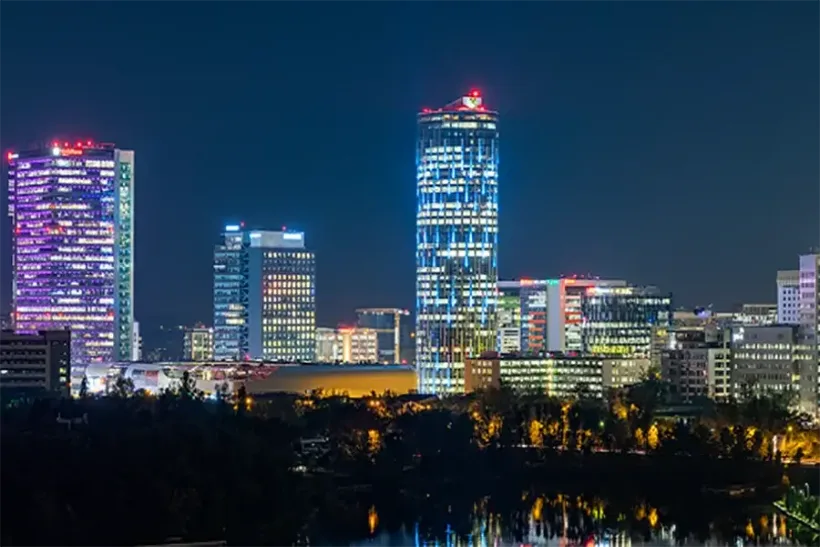
Romania's real estate market is sending two different signals in 2026. Foreign direct investment stock in the real estate transactions sector reached €22.1 billion, making it the second-largest destination for foreign capital after manufacturing. The apartment market is much less uniform: the national average asking price barely moved in September, Bucharest and Cluj-Napoca rose, Brasov corrected sharply and time on market increased across all seven cities in the PropGenius study.
These figures describe different parts of the market. FDI stock reflects accumulated foreign capital in the real estate sector as a whole; it is not the value of apartments bought by foreign individuals. For residential investors, local pricing, transaction volumes, future supply and liquidity matter more.
Real estate is Romania's second-largest FDI destination
At the end of 2025, FDI stock in the real estate transactions sector reached about €22.1 billion, or 16.4% of Romania's total FDI stock, up from 16% a year earlier. Manufacturing remained the largest destination at €35.7 billion and 26.5%.
Net FDI inflows into real estate transactions were more moderate at €479 million in 2025, down from €593 million in 2024. The numbers therefore point to a large accumulated foreign-capital presence rather than a new investment boom.
September revealed six different housing markets
PropGenius put the national average asking price at €1,972 per square metre in September, almost unchanged from €1,973 a month earlier. City-level movements were far more pronounced.
Bucharest rose 6.5% month on month to €2,214 per square metre and Cluj-Napoca gained 2.8% to €2,930. Iasi rose 1.9%, Constanta 0.7%, while Timisoara fell 1.2% and Brasov dropped 10% from €2,379 to €2,142.
The Brasov move should be read carefully. It is a result from one asking-price dataset rather than evidence that every apartment in the city lost a tenth of its value in one month. Other listing databases show much milder September movements.
|
City |
Sept. asking price / m² |
Monthly change |
Liquidity / transactions |
|
Bucharest |
€2,214 |
+6.5% |
44 days; H1 deals −2% |
|
Cluj-Napoca |
€2,930 |
+2.8% |
50 days; H1 deals −16% |
|
Brasov |
€2,142 |
−10.0% |
44 days; monthly index volatile |
|
Timisoara |
€1,963 |
−1.2% |
31 days; H1 deals +3% |
|
Constanta |
€1,935 |
+0.7% |
47 days; strong seasonality |
|
Iasi |
€1,951 |
+1.9% |
53 days; H1 deals −11% |
Liquidity is becoming a separate indicator
Time on market increased in all seven cities. Iasi reached 53 days, Cluj-Napoca 50 and Constanta 47. Bucharest and Brasov were both at 44 days. Timisoara remained the fastest market at around 31 days.
A longer selling period means sellers have less ability to obtain their asking price quickly. That matters most in cities where asking prices continue to rise.
Cluj remains the most expensive, but transactions are down
Cluj-Napoca remains Romania's most expensive major housing market. Apartment transactions nevertheless fell by around 16% year on year in the first half of 2026. Iasi was down about 11% and Bucharest only 2%.
Timisoara moved in the opposite direction, with apartment transactions up around 3%. Nationwide, sales fell by about 9%.
The divergence shows why price per square metre is no longer enough to compare Romanian cities. Investors also need to know how quickly an asset can be resold and whether buyer activity is expanding or contracting.
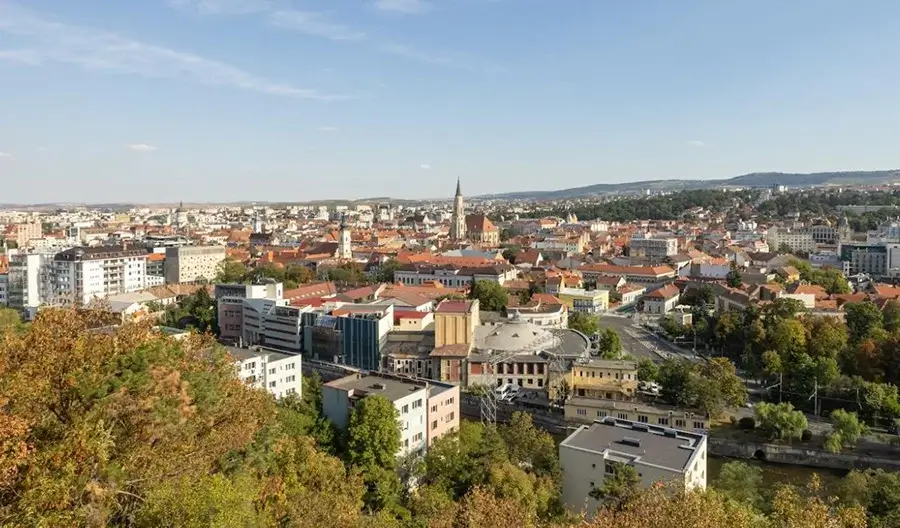
Bucharest is preparing more future supply
Housing supply remains constrained. Around 59,000 homes were completed nationwide in 2025, the lowest level since 2017, while residential building permits fell by roughly 9–10% in the first half of 2026.
Bucharest stands out. The net residential floor area authorised in the first five months of 2026 increased 3.6-fold, the strongest pace in five years. Permits do not translate immediately into completions, but they point to a stronger supply pipeline over the next two to five years.
Timisoara looks more liquid than Cluj and Iasi
Timisoara combines a lower entry price with rising transaction activity and the shortest time on market in the PropGenius comparison. September asking prices were around €1,963 per square metre and average exposure was 31 days.
Iasi shows a different pattern: asking prices rose to €1,951 per square metre, while first-half apartment transactions fell 11% and time on market increased to 53 days.
Constanta needs a seasonal lens
Constanta is a separate case because of the Black Sea coast. September asking prices were around €1,935 per square metre and average time on market reached 47 days.
Investors need to separate permanent urban demand from the coastal holiday market. Rental demand, seasonality and resale liquidity can differ sharply by neighbourhood and property type.
Can foreigners buy property in Romania?
EU and EEA citizens can acquire land in Romania under the same general conditions as Romanian citizens. Buyers from third countries are subject to international treaties and reciprocity rules for land ownership.
That distinction matters when a house or an apartment includes a share of the underlying land. Non-EU buyers should verify the ownership structure before signing.
Buying property does not automatically grant permanent residence in Romania.
What changes for investors
Romania's 2026 property story is not simply rising or falling prices. The market is becoming less uniform.
Bucharest combines the country's deepest capital base, relatively resilient transactions and a stronger construction pipeline. Cluj remains the most expensive but is losing transactions. Timisoara currently shows the strongest liquidity signal. Iasi is becoming slower even as asking prices rise. Brasov demonstrates the volatility of monthly asking-price indices, while Constanta requires a seasonal view.
For a country hub, that is more useful than a single national average. Buyers need to compare individual cities by entry price, transaction activity, new supply and liquidity.
FAQ
How much does housing cost in Bucharest?
PropGenius put the September average asking price at €2,214 per square metre. Other platforms publish different levels because their samples and methodologies differ.
Is Cluj more expensive than Bucharest?
Yes. PropGenius put Cluj-Napoca at €2,930 per square metre in September, compared with €2,214 in Bucharest.
Which major city currently looks most liquid?
By average time on market, Timisoara stands out at around 31 days. That is a market-level indicator, not a guarantee for an individual property.
Can foreigners buy property in Romania?
Yes, but land ownership rules depend on citizenship. EU and EEA buyers generally have the same land ownership rights as Romanian citizens; third-country buyers need to check treaty and reciprocity rules.
Is Romania building more housing?
Construction continues, but supply remains constrained nationwide. Bucharest is the main exception, with a sharp increase in authorised residential floor area in 2026.