







 Australia’s Spring Auctions Rise but Remain Well Below 2025
 Number of Foreigners Holding Turkish Residence Permits Exceeds 1.27 Million
 Demand from Russian Tourists for Holidays in Georgia Rises by 20–25%
 Montenegro Property Buying Costs in 2026
 Four in Ten Companies Would Not Choose Slovakia
 Gulf Countries Prepare Unified Tourist Visa
Slovenia’s Rents Fall as Home Prices Rise
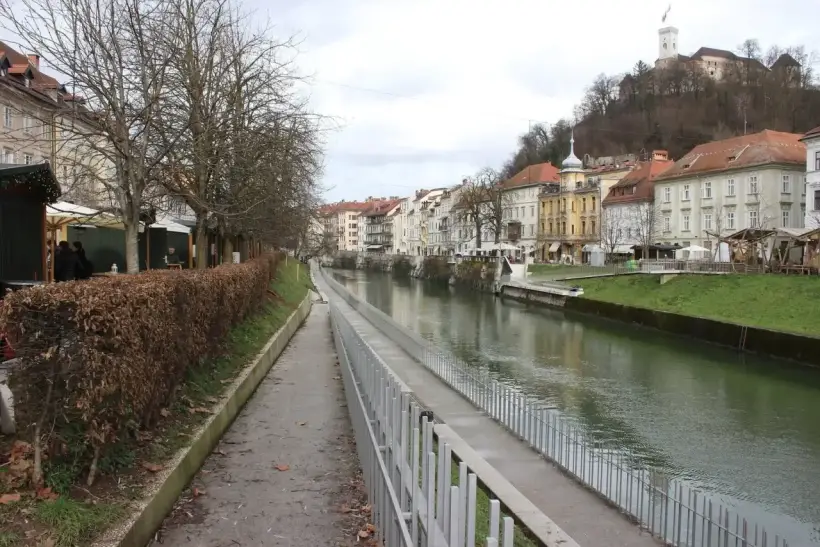
Slovenia has become the only EU country where rents fell at the start of 2026, even as home prices kept rising faster than the European Union average. The split makes the market unusual: ownership is becoming more expensive, rental yields are being compressed, and housing affordability is not improving despite a formal decline in rents.
Slovenia diverges from the EU housing trend
Real Estate Si21 reports that Slovenia became the only European Union country where rents fell in the first quarter of 2026 while house prices kept rising. The portal cites new Eurostat data and highlights the market’s central paradox: rents fell by 0.9%, while house prices rose 9.3% year on year.
Eurostat confirmed the broader European picture. Between the 2025 annual average and the first quarter of 2026, house prices in the EU rose by 2.9%, while rents increased by 1.8%. Rents rose in almost every EU country; the exceptions were Slovenia, where they fell by 0.9%, and Finland, where they remained unchanged.
Against that backdrop, Slovenia’s data stand out. In most countries, purchase prices and rents move in the same direction: homes become more expensive as assets, and rents rise as a household service. In Slovenia, purchase prices continued to climb while rents temporarily moved lower. That may not signal improved affordability, but rather a divergence between investment demand, constrained for-sale supply and a more sensitive rental market.
Slovenian home prices continued to rise
Slovenia’s Statistical Office reported that average residential property prices rose 3% from the previous quarter and 9.3% year on year in the first quarter of 2026. The office said residential property prices continue to rise.
Quarterly data show that the increase was broad. Existing dwellings became 2.3% more expensive from the previous quarter. Prices of existing flats rose 3.2%, while existing family houses increased 0.9%. Existing flat prices rose the most in Maribor, up 5.5%, followed by the rest of Slovenia at about 4%.
This shows that price growth is not limited to Ljubljana. The capital remains the country’s most mature and expensive market, but some demand is shifting to more affordable cities and regions. For buyers, this means that the search for a cheaper alternative is becoming harder as growth reaches secondary locations.
The split changes investor math
Falling rents while purchase prices rise matter for investors because the relationship between asset cost and rental income weakens. If an apartment becomes more expensive while the rental stream falls or stagnates, the yield on a buy-to-let purchase declines.
That is especially relevant in Slovenia because the supply of quality housing remains constrained. Global Property Guide notes that Slovenian housing prices continued to rise in 2025, supported by recovering market activity, easing borrowing conditions, resilient household fundamentals and a persistent shortage of available housing in the most sought-after locations.
In such a market, investors are not only buying current income; they are also buying expected future capital growth. That logic works as long as prices keep rising. But if rents do not validate purchase prices, the market becomes more exposed to interest-rate changes, taxation, short-term rental rules and shifts in buyer sentiment.
Lower rents do not solve affordability
A 0.9% decline in rents is positive for tenants at the margin, but it does not transform Slovenia’s housing picture. As in other small EU markets, affordability depends not only on the average rent index, but also on the number of suitable homes, location, housing quality, utility costs and competition for apartments in Ljubljana, Maribor, coastal areas and tourist regions.
If purchase prices rise faster than incomes, more households remain renters for longer. That supports demand for rental housing even when average rents temporarily correct. If new supply is limited, any decline may be short-lived and uneven, appearing in weaker units but not necessarily in good apartments in strong districts.
For young families and first-time buyers, the problem is double-sided. Buying is becoming harder because prices are rising. Renting may be slightly cheaper in the index, but the supply of quality homes in the right location remains limited.
Slovenia differs from Croatia and Bulgaria
The contrast with other regional markets is clear. Eurostat reported that the largest rental increase in the EU was in Croatia, up 21.9%, followed by Bulgaria at 6.4% and Greece at 5%. Bulgaria recorded strong growth in both house prices and rents, while Slovenia saw house prices rise and rents fall.
Croatia looks like a market where rental demand has strengthened sharply, likely reflecting tourism pressure, limited supply and competition between long-term and short-term rentals. Bulgaria shows broader housing-cost inflation. Slovenia, by contrast, presents a more nuanced picture: assets are appreciating, but the rental market is not yet confirming the same momentum.
That makes Slovenia harder to value. For owner-occupiers, higher purchase prices are a direct burden. For investors, falling rents require a fresh yield calculation. For tenants, lower rent is short-term relief, not a guarantee of durable affordability.
Europe’s housing market is still getting more expensive
The broader EU backdrop remains inflationary for housing. In the first quarter of 2026, EU house prices rose 5.1% year on year, while rents increased 3%. Compared with the fourth quarter of 2025, house prices were up 1.2% and rents rose 0.7%.
On an annual basis, house prices rose in 25 EU countries and fell only in Finland. The strongest increases were recorded in Portugal at 17.8%, Bulgaria at 14.8% and Slovakia at 14.4%. Spain also ranked among the most strained markets: El País, citing Eurostat, reported that Spanish house prices rose 12.8% year on year at the start of 2026, more than twice the EU average.
In that context, Slovenia does not look weak. Its peculiarity is not falling home values, but the widening gap between purchase prices and rents. That gap often makes a market harder to read: price data point to scarcity and strong demand for assets, while rents point to softer current tenant affordability.
Why rents may have fallen
The published data do not provide a single explanation. The most likely cause is a combination of factors. Parts of the rental market may have hit an affordability ceiling: tenants may be unwilling or unable to accept further increases after a period of rising housing and utility costs. In some segments, supply may have increased, including homes temporarily shifted away from short-term rentals or properties that owners could not sell at desired prices.
Another factor is the difference between indexes. The house price index reflects purchase transactions by households, while the rent index tracks changes in rental costs. These markets overlap but are not the same. A buyer may pay for expected future capital growth, scarcity and wealth preservation. A tenant evaluates the monthly payment here and now.
In a small market, even a moderate change in supply or demand can move the rental index. A 0.9% decline should not be treated as a long-term trend without confirmation in future quarters. It is already enough, however, to show that Slovenia has entered a phase of divergence.
What this means for buyers and developers
For owner-occupiers, the message is clear: lower rents do not mean lower purchase prices. Households planning to buy still face a rising market where quality assets are appreciating faster than the European average.
For investors, the signal is different. Buying a rental apartment now requires more careful math. Entry price, taxes, renovation, maintenance, vacancy risk, short-term rental regulation and the actual achievable rent matter more than the broad statement that Slovenia has a housing shortage.
For developers, the environment remains favorable only in high-quality projects. If purchase prices rise while rents lag or fall, the market will distinguish more sharply between homes for owner-occupation, investment flats and weaker projects in less liquid locations.
As International Investment experts report, Slovenia’s 2026 housing data do not show relief from the housing problem, but a more complicated split between asset values and household income. A 0.9% drop in rents does not cancel out a 9.3% rise in home prices and does not make the market affordable. The critical risk is that buyers keep paying for scarcity and capital-growth expectations while renters are already showing the limits of affordability. If that gap persists, the market will become even more selective: strong assets will keep rising, while investment purchases without real rental yield will start to lose their logic.