







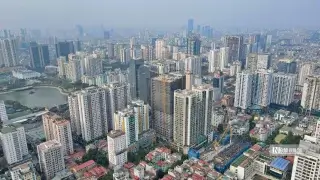
 Vietnam Mortgage Surge Pushes Homes Out of Reach
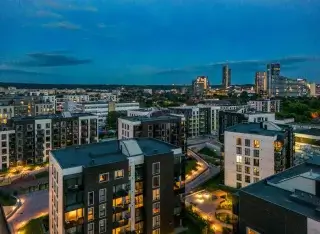 Lithuanian Apartment Prices Accelerate Across Major Cities
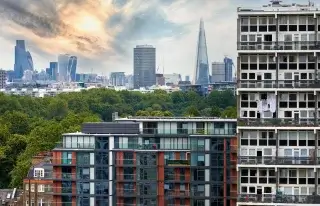 London Flats Lose Value Ahead of Leasehold Reform
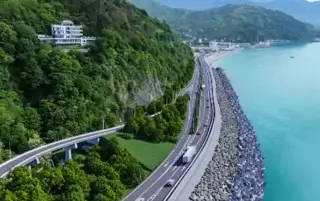 Construction of the Batumi–Sarpi Highway Begins in Georgia
 Baltic Property Investment Accelerates in 2026
 Hong Kong and Singapore Renew Their Expat Rivalry
Ljubljana Builds Housing, Shortage Persists
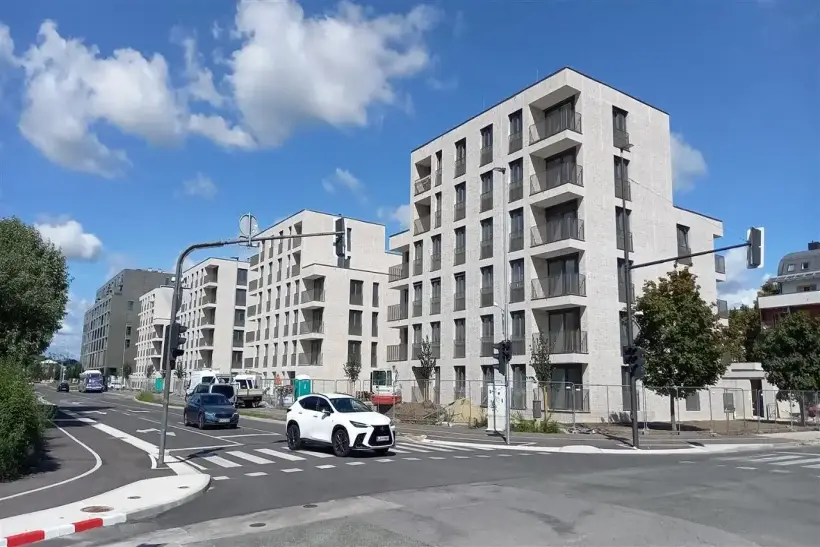
Ljubljana has opened a new municipal housing estate with 87 public rental apartments, but for Slovenia’s capital this is targeted relief rather than a solution to the housing shortage. The city is adding affordable homes, the government has promised long-term public-housing funding, and prices continue to rise because supply remains tight in the most sought-after locations.
A new Ljubljana neighbourhood adds 87 apartments
Slovenia Times reports that a new residential neighbourhood has opened in Ljubljana, but the city’s housing shortage still looms. The project is located on Zvezna Street in Zelena jama and includes four buildings, 87 public rental apartments, a shared communal area and landscaped park space. Public rental housing is built or financed by public housing funds and is usually offered below market rent to households that cannot buy or rent suitable homes on commercial terms.
The Slovenian government presented the neighbourhood as one of the first visible results of its housing reform. At the opening ceremony, Prime Minister Robert Golob said new homes were needed not only in Ljubljana but across the country, and that housing should primarily serve young people, young families and public-sector staff. The project was developed by the Public Housing Fund of the Municipality of Ljubljana.
For the city, the project is important but small. Ljubljana remains Slovenia’s main demand centre, drawing students, young professionals, families, public workers and private-sector employees. The 87 apartments will help specific tenants, but they do not change the overall balance of a market where the shortage has built up over years.
The state promises long-term funding for public rentals
The issue extends well beyond one neighbourhood. In 2024, the government announced a financing system that would provide €1 billion over 10 years for the construction of public rental housing. The plan provides for up to €100 million a year for projects by the national housing fund and local housing funds, including municipal programmes.
For Slovenia, this is an attempt to move from individual projects to a permanent construction cycle. Public rental housing is especially important in expensive cities where market rents and purchase prices have moved too far from household incomes. Unlike demand subsidies, which can push prices higher, new public apartments add supply and reduce pressure on vulnerable groups.
The main risk is speed. Even with funding, new neighbourhoods require land, design work, permits, contractors, infrastructure and construction time. The housing shortage has accumulated faster than the public sector has brought new homes to market.
Prices are rising faster than new supply
Statistics show why one new estate does not remove the pressure. In the first quarter of 2026, average residential property prices in Slovenia rose 3% from the previous quarter and 9.3% year on year. Nearly all main segments became more expensive, including new family houses, existing flats, existing houses and new flats.
The growth has come without a surge in transactions. In the first quarter, 2,512 existing dwellings were sold, broadly in line with last year’s average. The total value of housing transactions reached €499.4 million, with nearly all of it coming from existing homes. That means the market is being driven mainly by resale housing, while the new-build segment remains narrow.
Global Property Guide puts the average apartment price in Ljubljana at about €4,500 per square metre and says prices in 2025 were supported by recovering demand, easing borrowing conditions, resilient household fundamentals and a persistent shortage of available housing in the most sought-after locations.
Ljubljana has hit an affordability wall
Ljubljana remains the country’s most expensive property market. In 2025, the median price of second-hand apartments in the city reached €5,050 per square metre, up 11.97% from a year earlier. At those levels, buying a home is difficult even for households with stable income, while rental pressure remains high in districts with good transport, schools and jobs.
The problem is especially hard for younger residents. They often do not own a property to sell, depend more heavily on mortgage conditions and compete with investors, capital-rich buyers and families receiving support from relatives. Even lower borrowing costs do not solve the issue if the entry price is already too high.
Public housing closes part of that gap, but waiting lists and demand usually exceed new supply. That is why every new project becomes politically visible even when its market impact is limited.
Slovenia is building, but scale is still limited
Housing Europe notes that the Housing Fund of the Republic of Slovenia has already added about 5,000 public rental homes to the country’s housing stock and is working on more. It cites the Brdo housing estate in Ljubljana, where more than 1,300 apartments have been built with green areas, playgrounds and a range of housing types.
This shows that Slovenia is not starting from zero. The country already has an institutional base: a national housing fund, municipal funds, experience with large neighbourhoods and projects designed for families, older people and residents with special needs. Demand, however, still exceeds supply, especially in the capital region.
Public housing also faces the same constraints as the private market: land, permitting, construction costs, contractor capacity and infrastructure requirements. If public projects move slowly, they cannot offset price growth in the private sector.
One neighbourhood cannot cool the market
The Zvezna Street project has a real social effect: 87 households receive more affordable and stable housing. For individual families, that can mean staying in the city, living closer to work, schools and public transport. For the municipality, it helps retain the people needed by the urban economy and public services.
For the market as a whole, the effect is limited. The capital needs not dozens but hundreds and thousands of affordable apartments delivered regularly. If new projects arrive in small batches, they reduce part of the waiting list but do not change expectations among buyers, sellers and landlords. Market prices will keep rising as long as demand exceeds supply in liquid districts.
The type of housing also matters. One neighbourhood can be well designed and modern, but the shortage affects different groups: young families, students, single renters, older residents, service workers and people with special needs. Each group needs different unit sizes, rent terms and locations.
Housing policy is becoming economic policy
In Slovenia, housing is no longer only a social-policy issue. The shortage of apartments affects the labour market, worker mobility, demographics, household spending and Ljubljana’s attractiveness for business. If young professionals cannot rent or buy homes near jobs, the city loses competitiveness.
For investors, this supports the value of quality assets. For the state, it creates budget pressure and a need to build faster. For residents, it widens the gap between those who already own property and those who remain renters.
As International Investment experts report, the new Ljubljana neighbourhood shows that Slovenia has started addressing its housing shortage, but it is still moving more slowly than the market. The 87 apartments matter for the families who will live there, but they cannot change the capital’s supply-demand balance. The critical risk is that public housing will arrive project by project while prices rise systemically. If the €1 billion funding plan does not become a continuous construction pipeline, Ljubljana will get a series of well-designed openings on a market that remains unaffordable.