







 Vietnam Mortgage Surge Pushes Homes Out of Reach
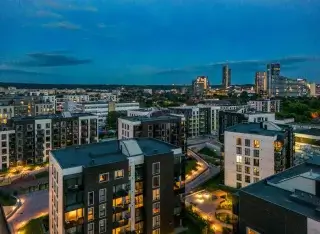 Lithuanian Apartment Prices Accelerate Across Major Cities
 London Flats Lose Value Ahead of Leasehold Reform
 Construction of the Batumi–Sarpi Highway Begins in Georgia
 Baltic Property Investment Accelerates in 2026
 Hong Kong and Singapore Renew Their Expat Rivalry
Spain’s Luxury Property Market in 2026

Structural Decoupling of the Prime Segment
In the first quarter of 2026, Spain’s property market is increasingly defined by segmentation. While the mainstream housing sector faces slower transaction volumes amid stabilized interest rates and weaker household liquidity, the Prime and Super-Prime segments operate under a distinct set of dynamics.
Rather than a speculative bubble, the market reflects structural decoupling. High-end properties have consolidated their role as safe-haven assets for international capital, particularly against the backdrop of global geopolitical uncertainty. Scarcity of irreplaceable locations and limited high-quality stock continues to push prices upward, largely insulated from traditional macroeconomic constraints.
Luxury Outlook 2026: Data and Forecasts
According to the Luxury Outlook 2026 report by Spain Sotheby’s International Realty, Spain ranks as the fourth most preferred destination globally for Ultra-High Net Worth Individuals, following Italy, France, and the United Arab Emirates.
Prime residential assets are projected to appreciate between 5% and 10% annually in 2026. International buyers account for more than 70% of transactions above €2 million. A growing share of demand is driven by Millennials and Gen Z investors, who prioritize liquidity, sustainability, and digital infrastructure.
Approximately 60% of Prime transactions are completed without bank financing, shielding the segment from interest rate volatility and reinforcing its equity-driven structure.
The Golden Triangle and Estepona’s Price Breakthrough
The Golden Triangle comprising Marbella, Benahavís, and Estepona remains the epicenter of Spain’s luxury property growth. Urban planning restrictions and limited developable land create a structurally constrained supply environment.
As of January 2026, new-build prices in Estepona have surpassed €7,000 per square meter, reaching an average of €7,200, with year-end projections of approximately 11.5% growth.
In Marbella’s Golden Mile, average prices stand at €9,500 per square meter, with an expected 8.2% annual increase. In Madrid’s Salamanca district, values average €12,400 per square meter, with projected growth of 6.4%.
Project absorption rates in Estepona approach 80% before completion, underscoring persistent international demand.
Structural Supply Constraints
A limited pipeline of ready-to-build land in prime districts of Madrid and Barcelona remains a critical bottleneck. Elevated construction costs and a shortage of specialized labor for high-end finishes further restrict new supply.
The replacement cost dynamic reinforces price stability. In 2026, the total cost of acquiring prime land, securing permits, and constructing luxury residences often exceeds current resale prices, establishing a natural pricing floor.
The 2026 Luxury Investor Profile
The dominant buyer profile in 2026 is internationally mobile. Investors from the United States, Canada, and Mexico are particularly active, drawn by legal stability and lifestyle factors.
American buyers favor branded residences with hotel-level services, while European investors emphasize energy efficiency and ESG compliance. Around 40% of new acquisitions include audited sustainability criteria, directly influencing secondary market liquidity.
Debt Strategies and Distressed Luxury Assets
In the debt acquisition and foreclosure segment, judicial appraisals frequently lag behind actual 2026 market values. Advanced investors focus on projected market-based Loan-to-Value ratios rather than conservative banking valuations.
Due diligence includes reviewing outstanding property taxes, homeowners’ association debts, and potential administrative encumbrances. A holding period of approximately 18 months is commonly factored into ROI calculations. Rehabilitation strategies for aging Prime assets continue to generate some of the highest returns within the segment.
Outlook for the Second Half of 2026
The divergence between mainstream and Prime markets is expected to widen further. Structural supply shortages and sustained international capital inflows support continued moderate price growth across key luxury hubs.
As reported by experts at International Investment, Spain’s luxury real estate market in 2026 remains fundamentally supported by global demand and constrained supply, creating conditions for continued resilience and steady appreciation in core Prime locations.