










Sweden Urges Citizens to Hold Cash for Emergencies
Central bank warns of risks to payment systems
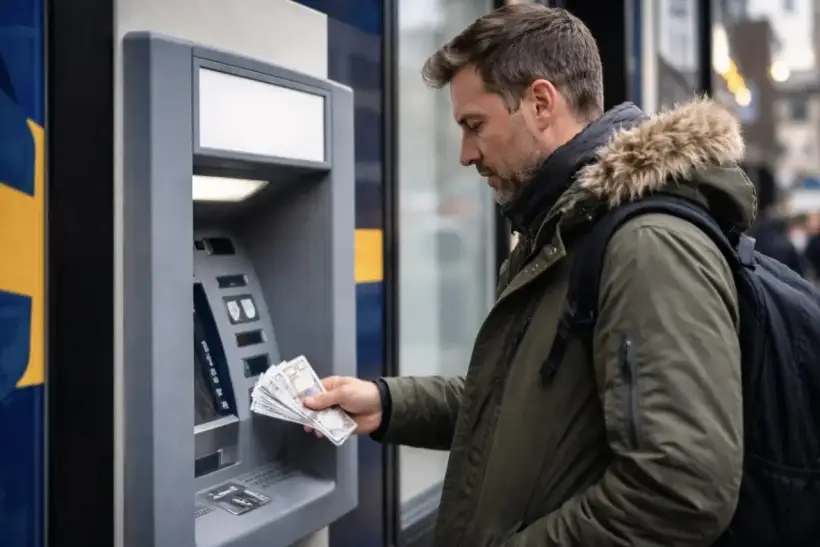
Sweden’s central bank, Sveriges Riksbank, has issued new guidance advising citizens to keep cash at home to ensure access to essential goods in case of war, cyberattacks, or other major crises.
According to the bank’s recommendation, every adult should store around 1,000 Swedish kronor, equivalent to roughly $110. The amount is intended to cover basic purchases such as food, medicine, and essential supplies if digital payment systems become temporarily unavailable.
The Riksbank emphasized that the public plays a crucial role in Sweden’s total defense and national resilience. Access to multiple payment methods helps ensure that citizens can continue making transactions even during severe disruptions.
Highly digital economy increases vulnerability
Sweden is one of the most digitally advanced economies in the world, with cash usage significantly lower than in most European countries. Currently, only about one in ten transactions in Sweden is made using physical cash.
While digital payments provide convenience and efficiency, they also create potential vulnerabilities. Cyberattacks, power outages, or military conflicts could disrupt electronic payment systems, online banking, and point-of-sale terminals.
To mitigate these risks, the central bank recommends that citizens diversify their payment options. In addition to holding cash, Swedes are encouraged to maintain bank cards from different financial institutions and use Swish, the country’s widely used instant payment platform.
National preparedness strategy expands
The Riksbank’s guidance forms part of a broader national preparedness strategy aimed at strengthening resilience in the face of geopolitical uncertainty.
Swedish authorities have increased civil defense measures in recent years amid rising security concerns in Northern Europe. Officials have cited growing regional tensions and potential threats related to military or hybrid attacks.
Earlier, the government distributed a national preparedness brochure to every household explaining how citizens should prepare for crises. The document includes advice on storing drinking water, maintaining access to news during power outages, and ensuring basic supplies at home.
Debate continues over protecting cash
For several years the Riksbank has called for legislation to protect the status of cash as a guaranteed payment method. However, such a law has not yet been introduced.
The central bank has also proposed that offline card payments for essential goods such as food and medicine should remain possible even if digital networks fail. Authorities aim to implement such a system by July 1.
Nordic countries strengthen financial resilience
Sweden is not alone in preparing its population for potential disruptions. Central banks in Finland and Norway, both countries sharing borders with Russia, have already advised citizens to keep cash reserves and multiple bank cards.
These recommendations are part of broader efforts across Northern Europe to strengthen financial infrastructure resilience against cyber threats and geopolitical risks.