







 Egypt Prepares New Law for Property Developers
 Young Japanese Buyers Turn to 50-Year Mortgages
 Argentina Narrows Tourism Gap as Arrivals Rise
 Seattle Luxury Housing Loses Its Former Momentum
 The World’s Strongest Passports for Travel, Living and Investment
 Russian Developers’ Debt Nearly Doubled in a Year
Switzerland Rejects Population Cap
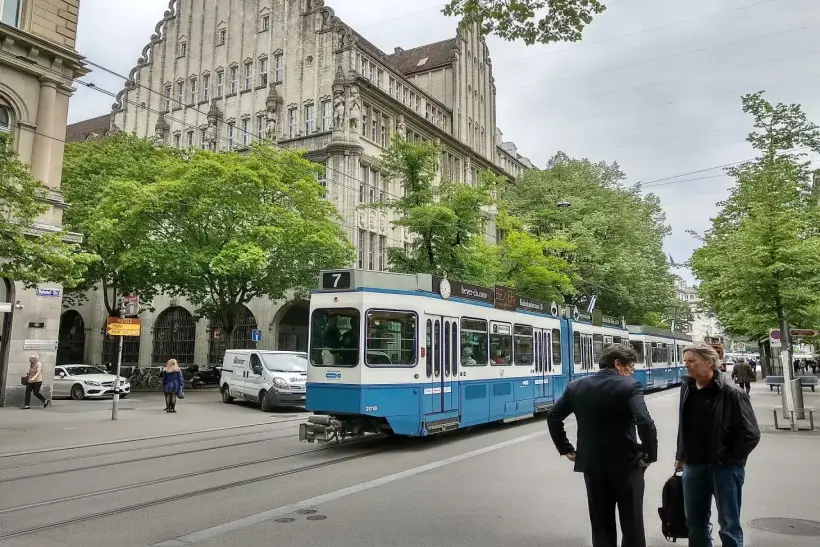
Swiss voters, according to early projections, rejected an initiative to cap the country’s population at 10 million until 2050. The vote became one of the sharpest tests of Switzerland’s migration model: a country of about 9.1 million people remains dependent on foreign workers, while facing growing pressure on housing, transport, infrastructure and public services.
The referendum exposed the limits of anti-immigration politics
Switzerland rejected a proposal to impose a hard population ceiling, according to a projection by public broadcaster SRF after polls closed on June 14, 2026. The early estimate showed about 55% voting against the measure and 45% in favor. Associated Press later reported that early results also pointed to defeat, with nearly 54% voting no and turnout above 57%.
The initiative was promoted by the Swiss People’s Party, the country’s largest right-wing party, and was framed around preventing Switzerland from reaching 10 million residents. Formally, it was presented as a sustainability measure. Politically, it became a vote on immigration, the labor market and relations with the European Union.
Bloomberg described the vote as one of the most radical attempts among wealthy countries to impose strict limits on immigration. Had it passed, Switzerland could have become a rare example of a state where a population ceiling was written into policy through a direct popular vote.
What the 10 million initiative proposed
According to Switzerland’s federal government, the initiative required the country’s permanent resident population to remain below 10 million until 2050. Permanent resident population refers to people living in the country on a long-term basis, including citizens, foreign nationals with residence permits and some other categories of residents.
The mechanism had two stages. If the population approached 9.5 million, the authorities would have had to take measures to restrict immigration. These could have included tougher asylum rules, reduced family reunification and tighter residence permits.
If the population exceeded 10 million, the initiative would have created the risk of Switzerland leaving its free movement agreement with the European Union. Free movement of persons is the framework that allows EU and Swiss citizens to live, work and study in each other’s territories under established rules.
Migration is central to Switzerland’s labor market
Switzerland is one of Europe’s richest economies and also depends heavily on incoming labor. The Federal Statistical Office says more than a quarter of the country’s residents are foreign nationals, most of them European citizens.
That dependence is particularly visible in healthcare, elderly care, construction, hospitality, restaurants, pharmaceuticals, technology and financial services. Swiss companies and public institutions recruit workers from the EU because domestic labor supply is often not enough.
For the economy, this is not only a growth issue but a question of basic resilience. Population aging increases demand for medical and care workers. High-technology industries compete for engineers, researchers and digital specialists. Tight restrictions on migration could have hit the sectors where labor shortages have already become structural.
Housing and infrastructure drove support for the cap
Supporters of the initiative built their campaign around the argument that rapid population growth is overloading the country. Their core concerns were expensive rents, housing shortages, traffic congestion, pressure on schools, hospitals, transport and natural resources.
These problems are real in many cantons. A canton is a Swiss administrative unit with broad powers, similar to a region or state. In Zurich, Geneva, Vaud and Zug, housing demand remains high, while supply is constrained by geography, regulation, expensive land and complex planning procedures.
Opponents argued, however, that a demographic cap would not directly solve the housing problem. Switzerland’s high property costs are linked not only to migration, but also to limited construction, investment demand, scarce land, high incomes and local planning restrictions.
EU relations were the main economic risk
The Guardian noted that, if accepted, the initiative could have threatened key agreements between Switzerland and the European Union. For a country outside the EU but deeply integrated into the European market, the risk went far beyond ordinary migration policy.
The European Union is Switzerland’s main trading partner. Access to the European market matters for industry, pharmaceuticals, banking services, research programs, transport and labor supply. Undermining the free movement agreement could have affected not just migration rules, but the broader architecture of bilateral relations.
That is why the government, parliament, business associations and many economists opposed the proposal. Their argument was that a hard population cap might send a political signal, but would create legal uncertainty for companies and the labor market.
Why the vote was still close
Even the projected defeat of the initiative does not close the issue. The margin was meaningful, but support of around 45% shows a high level of public frustration over migration and the cost of living.
Switzerland remains a country with a strong economy, low unemployment and high wages, but these advantages attract more people. As a result, the population grows, cities become denser, rental markets tighten and infrastructure pressure becomes a political factor.
A key feature of Switzerland is direct democracy. Citizens can bring major issues to a vote through popular initiatives if they gather the required number of signatures. That means migration repeatedly returns to the national agenda even when federal authorities and business groups consider strict limits dangerous.
Switzerland chose the economy over a symbolic barrier
The New Yorker wrote before the vote that the proposal could have made Switzerland the first country to set a formal population ceiling through a referendum. The preliminary rejection shows that most voters are not yet willing to trade access to labor and stable EU relations for a hard demographic barrier.
The decision does not remove pressure from domestic politics. The authorities will still have to address the issues that made the initiative popular: housing affordability, infrastructure, migrant integration, pressure on schools and perceptions of cultural change.
For business, the result is a relief. It reduces the risk of a sharp conflict with the EU, preserves predictability in foreign hiring and supports Switzerland’s open labor-market model. But for the government, it is not an unconditional victory: almost half of voters signaled that they want more managed population growth.
What the result means for Swiss migration policy
Rejecting the population cap preserves the current model, but does not automatically make it sustainable. Switzerland will have to find a compromise between the economy’s need for workers and citizens’ demand for control over urban growth.
In practice, this may mean more investment in housing, transport, digital public services, schools and healthcare. A sharper political debate is also likely over which categories of migration are considered economically necessary and which create the most social pressure.
For investors and the real estate market, the result means continued demographic demand. If migration remains high, demand for rental and owner-occupied housing in major cities will remain supported. But political risk for developers and property owners will also persist: the more expensive housing becomes, the more likely new initiatives on growth control or market regulation become.
As reported by International Investment experts, the Swiss referendum showed not a rejection of migration control, but a rejection of an excessively blunt instrument. The country’s economy needs foreign workers, but the authorities do not have a political mandate for endlessly rising housing costs and overloaded infrastructure. If Bern cannot connect migration-led growth with more housing, transport and social services, the next initiative may be more precise and therefore more dangerous for Switzerland’s open model.
FAQ: Switzerland’s population cap referendum
What happened in Switzerland’s June 14, 2026 referendum?
Swiss voters, according to early projections and preliminary results, rejected an initiative to cap the country’s population at 10 million until 2050.
Who proposed the population cap?
The initiative was promoted by the Swiss People’s Party, a right-wing party that has long called for tighter migration control.
What would have happened at 9.5 million residents?
The authorities would have had to introduce measures to restrict immigration, potentially including tougher asylum rules, reduced family reunification and tighter residence permits.
Why was the cap risky for relations with the EU?
If the population exceeded 10 million, Switzerland could have been forced to withdraw from the free movement agreement with the EU. That would have put the wider package of bilateral agreements at risk.
Why did some voters support the initiative?
Supporters linked population growth to expensive housing, congestion, pressure on schools, hospitals, transport and natural resources.
Why did the majority oppose it?
Opponents feared labor shortages, economic damage, weaker EU relations and legal uncertainty for businesses.