







read also
 Australia’s Spring Auctions Rise but Remain Well Below 2025
 Number of Foreigners Holding Turkish Residence Permits Exceeds 1.27 Million
 Demand from Russian Tourists for Holidays in Georgia Rises by 20–25%
 Montenegro Property Buying Costs in 2026
 Four in Ten Companies Would Not Choose Slovakia
 Gulf Countries Prepare Unified Tourist Visa
Tourism & hospitality / Reviews / News / Analytics / Sweden / Denmark / Belgium / Netherlands / Spain 29.12.2025
Headline: Safer City Travel in Europe 2026: no-go areas
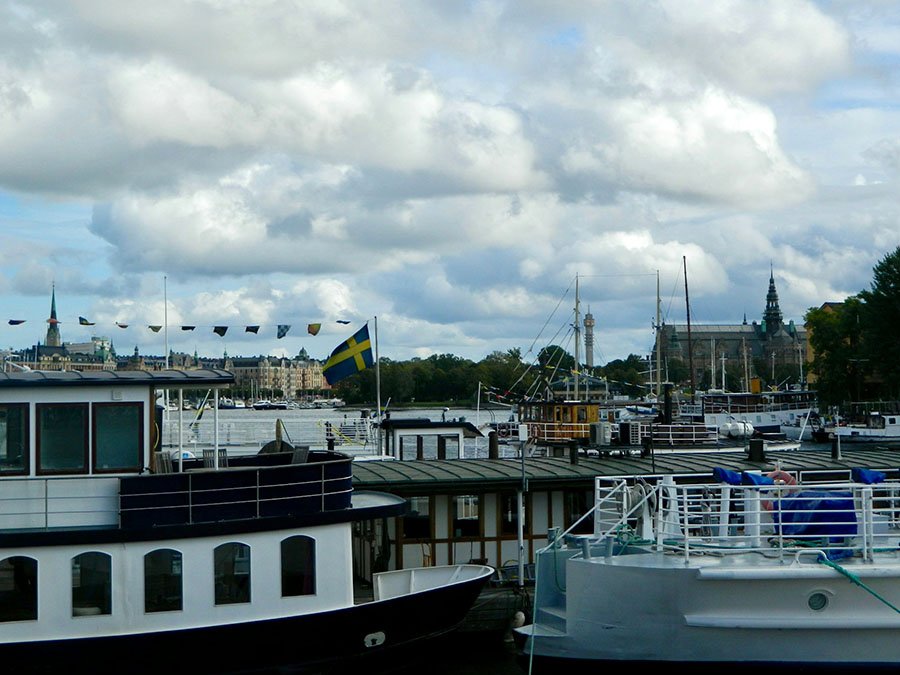
Photo: Unsplash
Late-2025 headlines revived the idea that European governments are publishing “no-go neighbourhoods” for tourists. In practice, official guidance rarely labels districts as off limits. What you actually get are targeted safety notes in state travel advisories: warnings about organised-crime violence that can flare in specific places, and evergreen risks such as pickpocketing and scams in high-traffic tourist zones. For 2026, the most useful way to read the updates around Sweden, Denmark, Belgium, the Netherlands and Spain is as a practical map of where to be more alert, not a reason to write off entire cities.
Sweden: temporary security zones and stronger policing tools
Sweden has expanded policing measures aimed at preventing shootings and explosions linked to criminal networks. A 2024 law enables police to establish temporary security zones in areas where there is a significant risk of serious violence; within those zones, search powers are broadened and the measure is time-limited.
UK travel advice also flags that gang-related incidents, including shootings and explosions, have been reported in major cities such as Stockholm, Malmö and Gothenburg, and urges visitors to steer clear of districts experiencing active gang violence.
The key point is operational, not sensational: if a zone is activated, you may encounter checkpoints, heavier police presence and restricted movement in that specific area for that specific period.
Denmark: generally low risk, with specific cautions
Denmark remains one of Europe’s safer destinations overall, yet UK travel advice explicitly says to take extra care in Christiania and Nørrebro in Copenhagen, particularly late at night, due to instances of gang violence.
Canadian guidance adds detailed context for Christiania, including reference to a fatal shooting linked to gang violence and the drug trade, and warns that tourists have been assaulted and robbed after taking photographs, with a strict no-photography norm in the area.
The practical takeaway is simple: don’t seek out open drug-trade spots as a tourist experience, and don’t turn them into a photo location.
Belgium and the Netherlands: organised crime spillovers and street-level scams
UK travel advice for Belgium warns about regular incidents of violent crime among organised gangs involved in drug trafficking, particularly in Brussels and Antwerp, noting confrontations that have included shootings, stabbings and homemade explosives, while stressing the risk of being “in the wrong place at the wrong time.”
For the Netherlands, UK guidance combines petty-crime cautions with specific scam patterns, including criminals impersonating police officers to trick tourists into handing over cash and cards.
In other words, the tourist risk is less about “dangerous cities” and more about avoiding suspicious situations and verifying identity calmly and consistently.
Spain: theft hotspots, not widespread violent risk
Spain remains a top-tier destination, but high visitor density makes petty crime a constant in certain locations. Canadian travel advice lists recurring pickpocketing hotspots in Barcelona such as Las Ramblas, Plaça de Catalunya, Plaça Reial and the Sagrada Família area, and in Madrid around Puerta del Sol, Plaza Mayor, Atocha station and Gran Vía.
The same guidance also describes roadside scam scenarios where thieves simulate a breakdown or offer “help” and then steal vehicles or belongings, recommending caution and reliance on uniformed police for assistance.
How to use these updates before you travel
Stripped of clickbait, the 2026 picture is straightforward. Sweden may deploy temporary security zones in specific districts when the risk of serious violence rises.
Denmark highlights a small number of Copenhagen areas for extra caution at night.
Belgium and the Netherlands warn that drug-trade networks can trigger violent incidents while also feeding theft and impersonation scams.
Spain focuses on well-known theft hotspots and road-side schemes in tourist magnets.
The safest planning habit for 2026 is to check official advisories shortly before departure and to avoid treating “edgy neighbourhood tourism” as entertainment.
As International Investment experts report, Europe’s 2026 travel-safety trend is not blanket danger but increasingly granular risk management: temporary policing measures, targeted warnings and highly predictable theft patterns in tourist corridors. Travellers who plan routes consciously, verify information through official advisories and avoid criminal “spectator zones” can reduce risk without sacrificing the trip.