







read also
 Australia’s Spring Auctions Rise but Remain Well Below 2025
 Number of Foreigners Holding Turkish Residence Permits Exceeds 1.27 Million
 Demand from Russian Tourists for Holidays in Georgia Rises by 20–25%
 Montenegro Property Buying Costs in 2026
 Four in Ten Companies Would Not Choose Slovakia
 Gulf Countries Prepare Unified Tourist Visa
US winter disruption: flights, hubs, and what to do
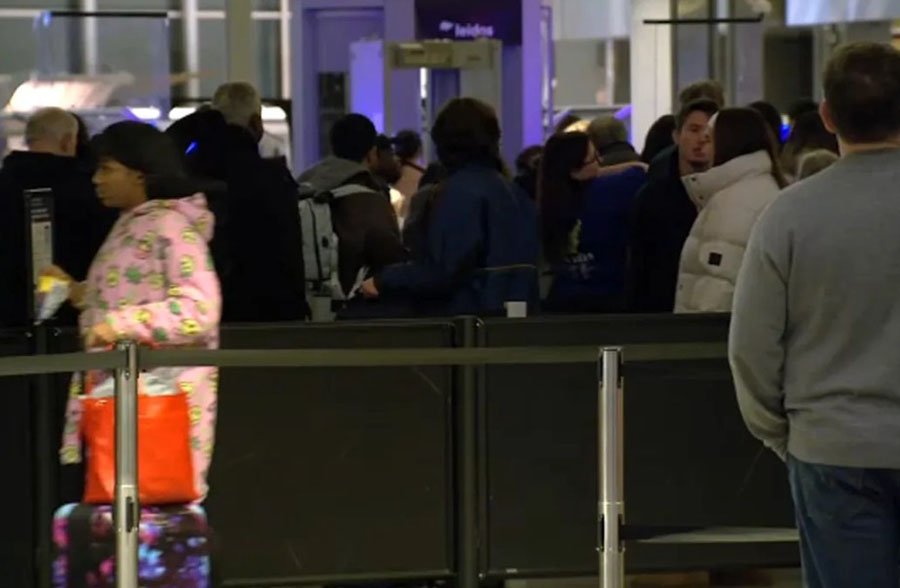
Photo: Yahoo
As the United States heads into 2026, severe winter weather has triggered widespread flight disruption, with cancellations and delays cascading through major hubs. This is the kind of network shock that rarely stays local: when a few key airports lose capacity due to snow, wind, icing and low visibility, aircraft and crew rotations break, missed connections multiply, and the entire schedule becomes fragile. In late December 2025, nationwide disruption was measured in the thousands, according to major reporting and flight-tracking summaries.
Why the disruption spread so fast
The operational problem is not just snowfall. The most disruptive combination is wind, icing, low visibility and extreme cold, which slows de-icing, reduces runway throughput and forces air-traffic flow restrictions. The FAA’s traffic management tools and airport programs are designed to prevent gridlock, but they also translate into long queues, gate holds and ripple effects across multiple regions.
How to read “60 canceled and 3,358 delayed” claims
Headlines citing figures such as “60 canceled and 3,358 delayed” often describe a limited snapshot, a subset of airlines, or a specific time window. That does not necessarily represent the nationwide scale. In the same period, broader reporting and tracking summaries indicated far higher totals across the U.S., which is consistent with a multi-region winter storm affecting both the Northeast and Midwest. The safest interpretation is that such numbers may be true for a narrow slice, but not as a market-wide total.
Why hubs matter more than destinations
Major hubs amplify disruption because they concentrate connections. Once a hub loses capacity, aircraft and crews end up out of position, and the next wave of departures collapses. Cities such as Boston and Buffalo can be hit hard by wind and visibility constraints, while Orlando’s impact can be driven by broken inbound rotations and missed connections rather than local weather alone.
What travelers should do and what they’re owed
If your flight is canceled, U.S. carriers must provide a refund for the unused portion of your ticket, including fees for services you did not receive. Weather-driven delays generally do not trigger cash compensation, but waivers, free rebooking options and insurance or credit-card protections can reduce the cost of disruption. Checking airline apps for rebooking, proactively shifting to earlier or later departures, and avoiding tight connections is often more effective than waiting at the gate.
What this signals for 2026 travel planning
Late-December weather shocks increasingly behave like predictable seasonal risk, not a rare surprise. The practical implication for 2026 is that resilient travel planning will favor buffer time, flexible fares, and realistic connection strategy through winter-prone hubs. The tourism impact is also immediate: short-term demand drops in affected cities, followed by rebooking waves and destination substitution toward more weather-stable regions.
As International Investment experts report, the late-December 2025 aviation disruption is a clear reminder that extreme weather is becoming a budgeting variable for travel. In 2026, the winners will be travelers and businesses that plan with redundancy, flexible change rules, and rapid rebooking tactics rather than assuming schedules will hold.