







 Australia’s Spring Auctions Rise but Remain Well Below 2025
 Number of Foreigners Holding Turkish Residence Permits Exceeds 1.27 Million
 Demand from Russian Tourists for Holidays in Georgia Rises by 20–25%
 Montenegro Property Buying Costs in 2026
 Four in Ten Companies Would Not Choose Slovakia
 Gulf Countries Prepare Unified Tourist Visa
Heavy Snowstorm in New York: State of Emergency Declared
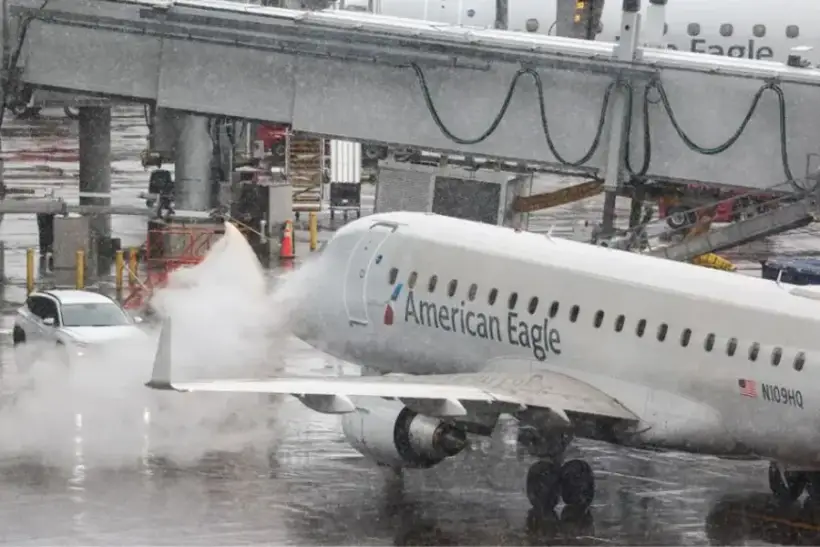
Roads Closed, Trains Halted, Flights Canceled
A state of emergency has been declared in New York City as a powerful winter storm has already led to road closures, suspended commuter rail services, and widespread flight cancellations. Up to 28 inches of snow are expected in some areas, while wind gusts could reach 80 km/h, increasing the risk of coastal flooding. Authorities are urging residents to avoid all nonessential travel and stay home during the peak of the storm, Bloomberg reports.
New York Mayor Urges Residents to Stay Home
New York City Mayor Zohran Mamdani declared a state of emergency and ordered the closure of streets, highways, and bridges to most traffic from 9:00 p.m. Sunday through noon Monday. The restrictions apply to cars, trucks, e-bikes, and scooters, with exemptions only for emergency services and critical infrastructure workers.
“We are asking New Yorkers to avoid all nonessential travel. For your safety, stay home and stay off the roads,” the mayor said at a press conference. According to Mamdani, the city has not faced a storm of this magnitude in about a decade. Additional high-water rescue teams have been activated in case flooding becomes severe.
Storm Intensifies: Winds Up to 80 km/h
According to City Hall, the mix of snow and rain observed during the day is expected to turn into full blizzard conditions overnight. Wind gusts in the city may reach 50 miles per hour, with coastal areas seeing gusts up to 70 mph. Moderate coastal flooding is forecast.
Public schools have been closed, with officials declaring a full snow day instead of switching to remote learning, as was done during the previous storm in January. The mayor also addressed children directly, urging them to wait until the worst of the weather has passed before going outside to play in the snow.
Airports and Railways: Widespread Cancellations
Flight cancellations are mounting across the city’s three major airports, including LaGuardia Airport. The Staten Island Ferry has moved to a modified schedule.
The Long Island Rail Road has fully suspended service starting at 1:00 a.m., while Metro-North Railroad trains are operating on a weekend schedule. Most express subway lines run by the Metropolitan Transportation Authority have been switched to local service, making all stops. The C train was fully suspended in both directions on Sunday evening.
New York Governor Kathy Hochul warned of possible disruptions: “Expect some service interruptions. The MTA will do its very best to maintain operations to the extent possible.”
Restrictions in New Jersey Suburbs
Difficulties have also affected commuters traveling from neighboring New Jersey. New Jersey Transit suspended bus and light rail services after 6:00 p.m. Sunday, and rail service is expected to stop by 9:00 p.m. Private bus operator Boxcar canceled all routes on Monday.
In New Jersey, travel has been restricted from 9:00 p.m. Sunday until 7:00 a.m. Monday. Driving is permitted only on the New Jersey Turnpike. The restrictions do not apply to emergency vehicles, utility crews, healthcare workers, and public transportation personnel.
Delivery Services Suspended
DoorDash announced it would suspend operations 30 minutes before the travel ban took effect. The company said the decision was made to ensure the safety of its drivers. “We are closely monitoring conditions and will resume operations as soon as it is safe to do so,” a spokesperson said.
Officials say the coming hours will be critical. The city is preparing for prolonged snowfall, strong winds, and potential flooding, with residents effectively advised to remain indoors.
Meteorologists’ Forecasts
AP News reports that blizzard warnings have been issued from Maryland to Maine. Snow began falling Sunday as the storm moved northward. The National Weather Service warned that many areas could see between 30 and 60 centimeters of snowfall, along with poor visibility. Officials in several states urged residents to stay home.
National Weather Service meteorologist Frank Pereira stressed that conditions could change rapidly as the storm continues to develop and strengthen. As it moves north, weather conditions are expected to deteriorate quickly. Atmospheric pressure could drop by at least 24 millibars within 24 hours. “There is a high likelihood that this storm will meet the definition of a bomb cyclone,” Pereira said.
“Such winds combined with heavy, wet snow could lead to tree damage and prolonged power outages,” said Bryce Williams, a meteorologist with the Boston office of the weather service.
Conclusion
Analysts at International Investment note that extreme weather events have been striking various regions of the United States with increasing frequency in recent months — from blizzards in the Northeast to floods and tornadoes in other states. Each episode brings widespread flight cancellations and delays, rail disruptions, and highway closures, destabilizing the country’s transportation system.
Frequent interruptions to air travel are negatively affecting tourism and business travel, as companies postpone meetings, tourists delay trips, and airlines face mounting costs. As a result, weather-related risks are increasingly impacting not only daily life in major metropolitan areas but also broader economic activity, adding uncertainty for businesses and the travel industry.