







 Vietnam Mortgage Surge Pushes Homes Out of Reach
 Lithuanian Apartment Prices Accelerate Across Major Cities
 London Flats Lose Value Ahead of Leasehold Reform
 Construction of the Batumi–Sarpi Highway Begins in Georgia
 Baltic Property Investment Accelerates in 2026
 Hong Kong and Singapore Renew Their Expat Rivalry
Air Travel in Europe Disrupted: Nearly 800 Flights Delayed
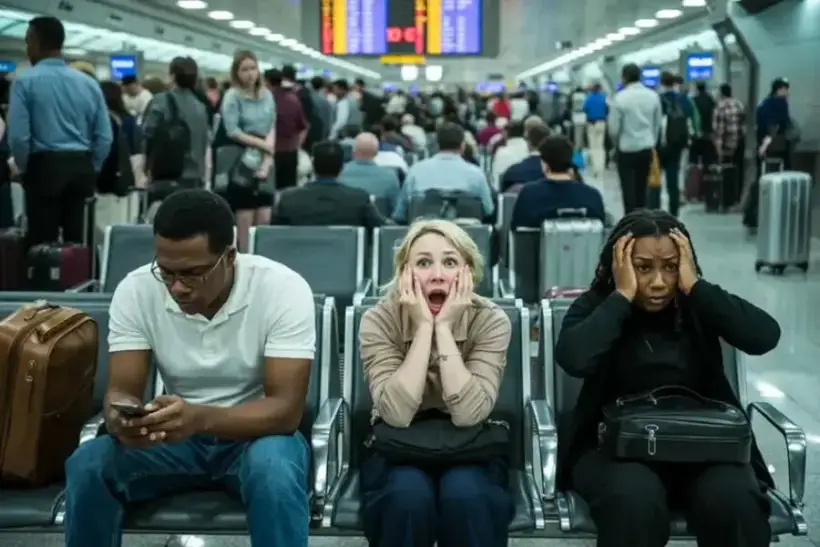
Disruptions reported at major airports in several countries
Thousands of travelers across Europe found themselves stranded due to widespread disruptions at key airports in the United Kingdom, Spain, the Netherlands, and Germany. In a single day, 781 flights were delayed and 180 were canceled. Major airlines were affected, with the most serious disruptions on popular routes including Dubai, Munich, Edinburgh, Nice, and Helsinki, reports Travel and Tour World.
London: Heathrow at the Epicenter of Disruptions
London Heathrow, Europe’s main air gateway, took the brunt of the impact. There were 106 flight delays and 70 cancellations—figures unusual for periods without major strikes or severe weather. According to airline statistics at Heathrow, British Airways experienced the highest number of schedule disruptions, exceeding 60. Emirates canceled all 14 of its flights.
Significant issues were also reported for Qatar Airways, El Al, Etihad Airways, and Air India. Flights to the Middle East were particularly affected: 11 flights to Dubai were canceled, 7 to Doha, and 3 to Tel Aviv.
Madrid-Barajas: Spanish Hub Under Pressure
Madrid-Barajas Airport recorded 158 delays and 17 cancellations. Short- and medium-haul flights, as well as carriers from the Middle East region, were most affected. Emirates and Qatar Airways experienced complete cancellations of their flights. Ryanair delayed 24 aircraft, accounting for a fifth of its schedule. Disruptions included canceled flights to Doha, Dubai, and Boston.
Amsterdam Schiphol: Problems in the Netherlands
Amsterdam Schiphol reported 125 delays and 37 cancellations. The national carrier KLM had the highest number of schedule changes with 57 disruptions. Emirates canceled all six flights, and Qatar Airways canceled four.
Frankfurt am Main: German Cancellations
Germany’s largest airport, Frankfurt am Main, was also heavily affected, recording 129 delays and 20 cancellations. Flagship carrier Lufthansa experienced 56 schedule changes. Emirates canceled six flights, and many flights to Doha and Abu Dhabi did not operate.
Barcelona-El Prat: Chaos in Spain
Barcelona-El Prat, Spain’s second-largest airport, also faced operational chaos with 130 delays and 21 cancellations. Emirates canceled 8 flights, and Qatar Airways 5. Low-cost carriers Ryanair and Vueling faced significant schedule disruptions on short-haul routes.
Airline Performance
The worst cancellations were by Emirates, which fully suspended its flight programs from several European hubs, and Qatar Airways, which had multiple schedule changes in London, Madrid, Amsterdam, and Frankfurt. Many flights by Etihad Airways, El Al, and Gulf Air were also canceled.
By the number of delays, British Airways and KLM led. The Lufthansa Group, including Lufthansa and Air Dolomiti, faced widespread delays in Germany. The low-cost carrier segment experienced network collapses across budget airlines.
Causes of the Collapse
The massive flight delays and cancellations in Europe on March 3 were a direct consequence of the geopolitical crisis in the Middle East. The escalation of the conflict between the US, Israel, and Iran led to an unprecedented closure of airspace in the region. Major transit hubs—Dubai, Abu Dhabi, Doha, Bahrain, and Kuwait—suspended commercial operations, and airlines canceled thousands of flights.
The paralysis of Middle Eastern hubs disrupted global routes, as the region serves as a key corridor between Europe, Asia, and Africa. Leading global carriers, including British Airways, Lufthansa, Air France, and Indian airlines, suspended flights to the Middle East. This collapse triggered chaos in Europe, compounded by adverse weather conditions and technical issues.
Instructions for Passengers
In case of flight delays or cancellations, passengers are advised to follow a specific procedure. First, monitor flight status via airline apps and websites to receive real-time updates. For quick rebooking, contact the airline through its hotline or support chat, avoiding queues at the airport.
It is important to know passenger rights. In Europe, EC Regulation 261/2004 applies: for delays over two to three hours, passengers are entitled to meals and drinks. For long waits, the airline must provide accommodation and transfers. In case of flight cancellation, passengers can demand a full refund, an alternative route, and compensation ranging from 250 to 600 euros.
Airport infrastructure can also help: information and support desks assist travelers in crisis situations. If the flight is clearly postponed to the next day, it is recommended to book a hotel in advance, keeping receipts for later reimbursement by the airline.
Conclusion
International Investment analysts note that the geopolitical crisis in the Middle East was another stress test for European aviation. Major airports and airlines suffered significant losses for passengers: thousands were stranded due to a domino effect, when the closure of airspace in one region paralyzed global routes.
This case confirms that the modern air transport system is so interconnected that a disruption in any link immediately spreads across the network. For airlines, the crisis highlighted the need to revise operational strategies and develop more flexible crew and route management. For passengers, it served as a reminder of the importance of travel insurance, knowing their rights under European law, and being prepared for unexpected situations while traveling.