







 Australia’s Spring Auctions Rise but Remain Well Below 2025
 Number of Foreigners Holding Turkish Residence Permits Exceeds 1.27 Million
 Demand from Russian Tourists for Holidays in Georgia Rises by 20–25%
 Montenegro Property Buying Costs in 2026
 Four in Ten Companies Would Not Choose Slovakia
 Gulf Countries Prepare Unified Tourist Visa
Russia Evacuated All Package Tourists from the UAE
Some Travelers Chose to Extend Their Stay
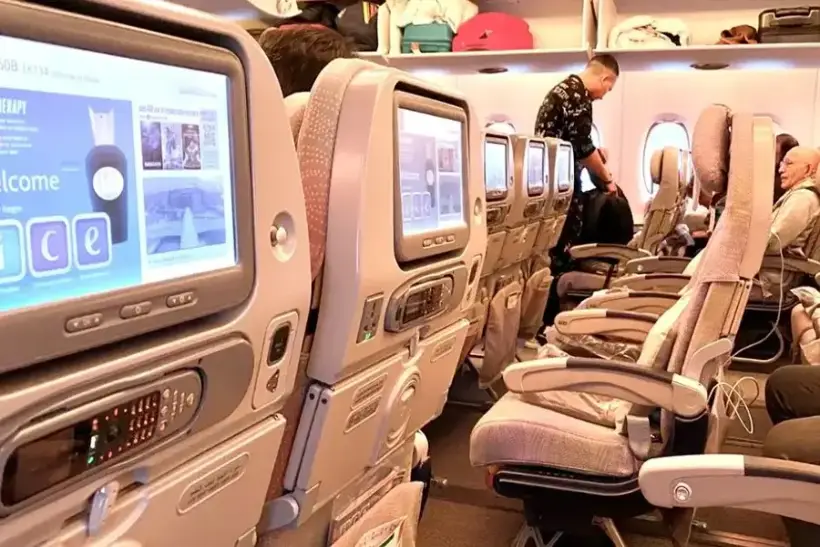
Russia has returned all tourists who were visiting the UAE on package tours. Some travelers, for personal reasons, chose to stay in the Emirates or rebooked their flights. The evacuation process was completed on March 15, according to ATOR. Some tour operators completed the evacuation a few days earlier.
How the Evacuation from the UAE Took Place
At the time of the escalation on February 28, there were approximately 50,000 Russian tourists in the UAE. About half of them (around 23,000) arrived on organized package tours, and roughly another 7,000 booked only hotels through tour operators, purchasing flights independently.
For two and a half weeks, airlines and tour operators worked around the clock to return their clients home. Evacuation flights included both scheduled and additional commercial services, as the airports in Dubai, Abu Dhabi, and other Emirates resumed operations.
Some travelers who had booked only hotels through a tour operator (“Hotel Only”) and purchased their flights independently chose to stay in the Emirates or rebooked flights. Airlines subsequently canceled some of these tickets. Tour operators are not responsible for such travelers.
One company noted: “We had tourists who extended their stay. They wanted to change their flights to later dates themselves. But the vast majority — 99% — we evacuated.” Intourist also confirmed that some of their clients chose to remain in the Emirates.
Russian companies have suspended sales of tours and individual travel services to the UAE and other Middle Eastern countries. The official recommendation from the Ministry of Foreign Affairs and the Ministry of Economic Development prohibits selling tours to six countries in the region, including the UAE. Airspace over the Emirates remains partially closed, and a significant number of flights are still not operating.
How UAE Hotels Responded to the Crisis
Disruptions in air traffic in the Middle East caused widespread flight delays and disrupted the plans of thousands of tourists in the UAE. Authorities called on hotels to extend the stay of guests who could not leave the country on time. In Ras Al Khaimah, accommodation costs for up to three nights were reimbursed upon confirmation of a lack of funds. The Abu Dhabi Department of Culture and Tourism sent official notifications to hotels to extend stays and cover additional nights. These measures applied to about 20,200 people.
In Dubai and Sharjah, hotels often ignored the recommendations and refused to extend stays free of charge. The Russian Association of Tour Operators recorded specific cases in hotels such as Hilton Dubai Jumeirah, Marriott Downtown, and Ramada Plaza. Guests in areas such as Sheikh Zayed Road and Jumeirah Beach reported being relocated to smaller rooms with limited services that did not match their original bookings. Accommodation prices rose sharply: in one hotel, the cost of two nights increased from 46,000 to 62,000 rubles ($595–802).
Independent Attempts to Leave the UAE
Some tourists attempted to leave via the Oman border on private planes. Charter flights to Istanbul cost around €85,000, while flights to Moscow were €20,000. Additionally, travelers were targeted by scammers offering transfers to other Gulf countries through social media and messaging apps. Prices started at $260 per seat (around ₽20,000). The exact total was not disclosed upfront, and a prepayment of up to 70% of the minimum stated amount was required for booking.
Some “premium” options with private plane transfers cost €20,000 (approximately ₽1.8 million). In all cases, the result was the same — no services provided and the disappearance of the “helpers,” notes Turprom.
Support from companies does not extend to independent travelers who did not purchase tours. As a result, many of them are still in the Emirates despite the difficult situation: drone and missile attacks were recorded, affecting hotels, airports, shopping, and financial centers. Since March 16, Dubai Airport has gradually resumed operations after another temporary suspension due to a drone incident, but it is too early to speak of a full normalization.
Conclusion
Analysts at International Investment note that the Middle East, including the UAE, has become a high-risk zone for tourists and business. Even major infrastructure — airports, hotels, and transport hubs — is vulnerable to external threats and geopolitical tensions.
For tourists, this means the need to account for instability and prepare for additional expenses and disruptions. For companies, operational and insurance risks are heightened. In the context of an ongoing conflict, traditional models of travel planning and business operations are insufficient, and any incident can instantly affect international flows and the region’s reputation.