







 Vietnam Mortgage Surge Pushes Homes Out of Reach
 Lithuanian Apartment Prices Accelerate Across Major Cities
 London Flats Lose Value Ahead of Leasehold Reform
 Construction of the Batumi–Sarpi Highway Begins in Georgia
 Baltic Property Investment Accelerates in 2026
 Hong Kong and Singapore Renew Their Expat Rivalry
Passengers of Hurghada — St. Petersburg Flight Diverted to Helsinki Due to Drone Attacks
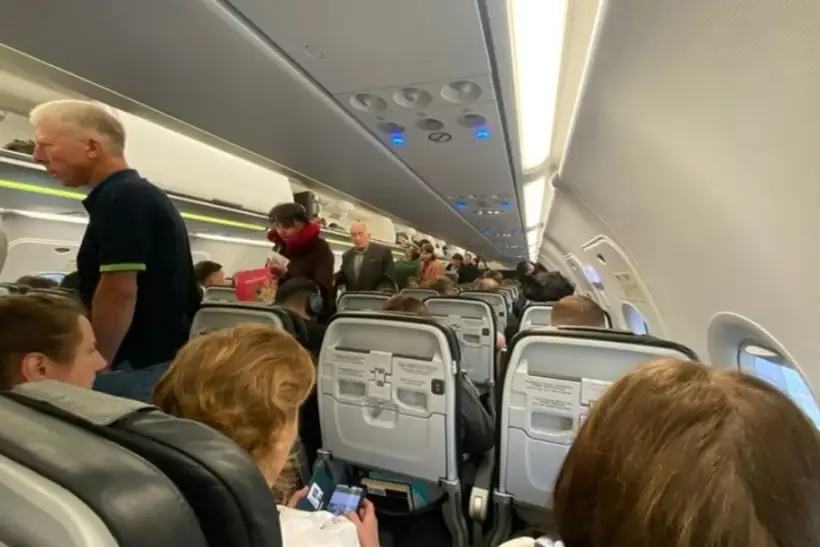
A night flight from Egypt to St. Petersburg turned into a prolonged wait in a foreign airport for the passengers of flight NE-690. The plane, which was supposed to land at Pulkovo Airport, was diverted to Helsinki because of drone attacks. Passengers were effectively trapped in the transit area for several hours, reports Fontanka.
Why the Plane Went to Finland
The Nesma Airlines flight from Hurghada to St. Petersburg was unable to complete its journey due to restrictions at Pulkovo Airport, which were introduced on the evening of March 24 and then again around 1 a.m. on March 25. More than 20 departures were canceled, 27 planes were sent to alternate airports, and 54 flights were delayed by over two hours.
Over Leningrad Oblast, 56 drones were shot down, and an attack was also repelled in Kronstadt, where the windows of several houses and cars were damaged. In the morning, Rosaviatsiya reported that the airport had resumed normal operations.
As a result, the aircraft had to change course and landed at Helsinki-Vantaa Airport at approximately 1:35 a.m., carrying around 176 passengers. Initially, the restrictions were expected to be lifted on March 25, but by midday they were reintroduced. Departures and arrivals were conducted only “with approval from the relevant authorities,” according to Rosaviatsiya.
Four Hours on the Plane and a Cold Terminal
After landing, the situation worsened for passengers on the night flight. They reported being kept on board for about four hours and were only moved to a backup terminal in the morning. The terminal had no heating, and there were insufficient resting areas. Only water (two kettles for 200 people) and dry snacks were available. Many passengers, including children, slept on the floor and on tables.
Later, airport staff provided blankets, covers, mattresses, and hygiene items, and set up a children’s area. The space gradually warmed up — likely due to slow heating. One Russian passenger noted that the reception at Helsinki Airport was well-organized: sandwiches and muesli bars were first provided, followed by buns and DIY sandwich sets with tomatoes, cucumbers, and cheese, all in individually sealed packages. Water was freely available. By 11 a.m., a full breakfast with three options was served, and separate meals were provided for children under two. Toothbrushes, wet wipes, and diapers for small children were also supplied.
Systemic Aviation Disruptions in Russia
A series of drone attacks has led to recurring airport restrictions and increasingly frequent flight schedule disruptions. On the night of March 21, 283 drones were shot down over 15 regions of Russia, and on March 22, 25 more drones were intercepted over nine regions and the Black Sea.
One of the most significant disruptions occurred at Pulkovo on the night of March 23. Restrictions lasted about 18 hours: over 80 flights were delayed, 62 were canceled, and 45 planes were sent to alternate airports. Across various Russian regions, 249 drones were shot down within 24 hours.
Such incidents are becoming less exceptional and are increasingly regarded as the new normal. Previously, Moscow experienced the most severe disruptions. Now, interruptions are regularly reported in St. Petersburg, Sochi, and other major transportation hubs. Passengers are increasingly allowing extra hours or even an entire day for travel, and some tourists and business travelers are opting to avoid flying altogether.
According to analysts at International Investment, frequent schedule disruptions and safety risks are directly affecting tourism, business travel, and cargo transportation. For airlines, this means not only reputational damage but also substantial financial losses.