







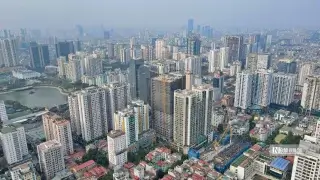
 Vietnam Mortgage Surge Pushes Homes Out of Reach
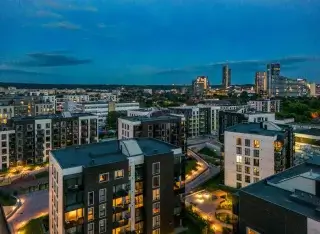 Lithuanian Apartment Prices Accelerate Across Major Cities
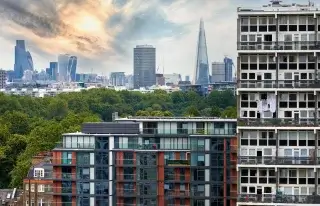 London Flats Lose Value Ahead of Leasehold Reform
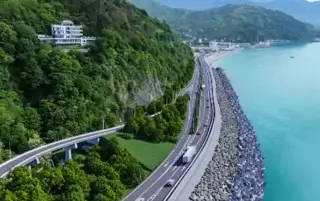 Construction of the Batumi–Sarpi Highway Begins in Georgia
 Baltic Property Investment Accelerates in 2026
 Hong Kong and Singapore Renew Their Expat Rivalry
Morocco Speeds Hotel Investment Before World Cup 2030
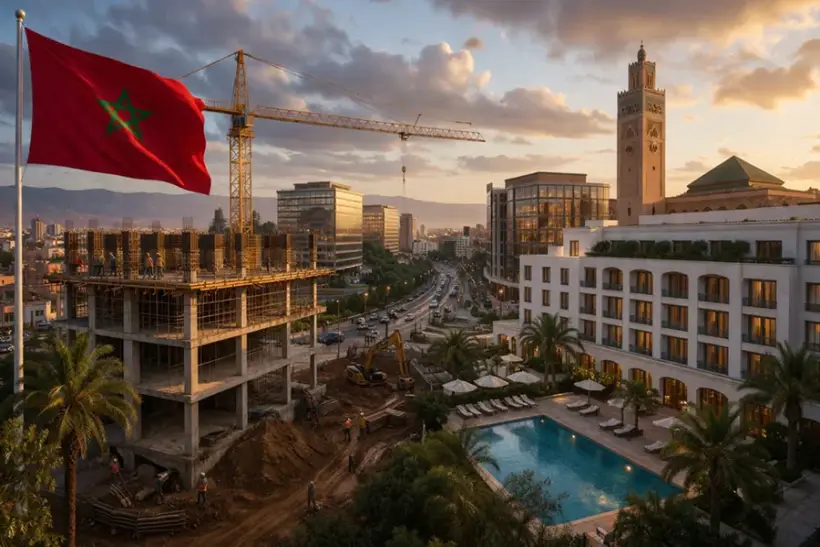
Morocco’s tourism surge is lifting hotel demand
Morocco is accelerating hotel investment ahead of the 2030 FIFA World Cup, which it will co-host with Spain and Portugal. The push is not driven by football alone. It is also backed by a sharp rise in tourist arrivals and a broader government strategy to expand the country’s tourism economy well before the tournament begins. FIFA formally confirmed Morocco, Portugal and Spain as 2030 hosts at an Extraordinary Congress on December 11, 2024.
Morocco’s government launched its 2023–2026 tourism roadmap with a budget of more than 6 billion dirhams, aiming to improve air connectivity, digital services, accommodation supply and entertainment infrastructure. The same policy framework targets 26 million visitors by 2030, turning the World Cup into a deadline for a much broader tourism expansion plan.
Cap Hospitality has become the core financing tool
A central part of the hotel upgrade drive is Cap Hospitality, a financing mechanism run through SMIT, the Moroccan Agency for Tourism Development. The French acronym stands for Société Marocaine d’Ingénierie Touristique. The scheme is designed for classified tourist accommodation establishments and covers hotel upgrades, extensions, takeovers of inactive properties with refurbishment plans, and energy-efficiency works.
Under the official terms, eligible loans range from 3 million to 100 million Moroccan dirhams, can run for as long as 12 years, and may include a grace period of up to two years. The state reimburses normal interest costs on a quarterly basis. The total ceiling for cumulative loans eligible under the mechanism is set at 4 billion dirhams. That distinction matters because some English-language summaries frame Morocco’s hotel story as a multi-billion-dollar boom. The officially confirmed size of the Cap Hospitality support envelope itself is 4 billion dirhams, not $4 billion.
Tourism data show why new supply is needed
Morocco is entering the 2030 cycle with strong momentum already in place. UN Tourism said the country welcomed 17.4 million tourists in 2024, making it Africa’s leading destination by international arrivals. Growth continued in 2025. The tourism ministry said arrivals reached 11.6 million by the end of July and 15 million by the end of September, up 14% from a year earlier over the same period. Tourism receipts reached 67 billion dirhams in the first seven months of 2025.
Those numbers help explain why Morocco is focusing not just on a handful of flagship resorts but on a wider increase in room quality and capacity. According to figures published with reference to the tourism ministry, the hotel sector attracted about 4 billion dirhams in investment in the first half of 2024, while 135 new hotel units began operations in 2023 with roughly 8 billion dirhams in total investment.
Global hotel groups are scaling up in Moroccan cities
International operators are already moving. Radisson Hotel Group said in March 2024 that it wanted to grow its portfolio in Morocco from 11 hotels in operation and under development to 25 by 2030. The group identified Casablanca, Marrakech, Rabat, Tangier, Agadir and Fez as priority cities, linking its expansion plan directly to Morocco’s long-term tourism strategy and the coming World Cup.
Hilton has also accelerated. The company said it had signed nine hotels across seven brands in Morocco, adding more than 1,300 rooms and positioning the country as a market where it expects to operate more than 20 hotels in the coming years. Its new pipeline includes Waldorf Astoria, LXR Hotels & Resorts, Curio Collection and Hampton by Hilton, showing that Morocco is attracting both luxury and mainstream development.
IHG Hotels & Resorts, the group behind InterContinental and Kimpton, announced in December 2025 the signing of the first Kimpton in Marrakech, calling it the company’s third hotel signing in Morocco. Marriott has also mapped out a larger presence, saying it plans to introduce five new brands and seven new properties in the country by the end of 2027.
World Cup preparation is broader than hotels alone
Government and industry materials point to a wider effort to improve accessibility, diversify tourism products and spread benefits beyond the country’s best-known hubs. Tourism Minister Fatim-Zahra Ammor has previously warned about the risk of overtourism and argued that planning should not focus only on the six World Cup-linked cities.
That makes the current cycle more than a simple pre-event construction rush. Official SMIT documentation shows part of the policy is aimed at upgrading existing inventory, not just adding new buildings. For the market, that matters because refurbishment can deliver usable room stock faster than a full ground-up development cycle, which is critical when the deadline is fixed at 2030.
As International Investment experts report, Morocco is entering the 2030 World Cup cycle from a stronger base than many event-driven hotel markets. The core story is not only the tournament itself, but the combination of sustained tourism growth, subsidized hotel modernization and visible commitment from major global operators. That gives investors a longer growth runway, although execution risks remain tied to delivery timelines, workforce training and Morocco’s ability to spread demand beyond its most established destinations.
FAQ
Why is Morocco’s hotel market drawing so much attention now?
Because the country is preparing for the 2030 FIFA World Cup while already posting strong tourism growth, which is increasing pressure on accommodation capacity and quality.
What is Cap Hospitality?
It is a state-backed financing mechanism run through SMIT to support hotel upgrades, extensions, reactivation of inactive properties and energy-efficiency projects.
What is the officially confirmed size of the support mechanism?
The official ceiling for cumulative loans eligible under Cap Hospitality is 4 billion Moroccan dirhams.
How strong is Morocco’s tourism growth?
UN Tourism said Morocco welcomed 17.4 million tourists in 2024, and the ministry reported 15 million arrivals by the end of September 2025.
Which major hotel groups are expanding in Morocco?
Radisson, Hilton, IHG and Marriott have all announced expansion plans, covering business, luxury, lifestyle and mainstream hotel segments.
Why does refurbishment matter as much as new construction?
Because upgrading existing hotels can improve usable room supply faster than building entirely new projects, which is a major advantage ahead of a fixed 2030 deadline.