







 Latvia’s Residence Permits for Real Estate to Be Abolished from September 15
 Egypt Prepares New Law for Property Developers
 Young Japanese Buyers Turn to 50-Year Mortgages
 Argentina Narrows Tourism Gap as Arrivals Rise
 Seattle Luxury Housing Loses Its Former Momentum
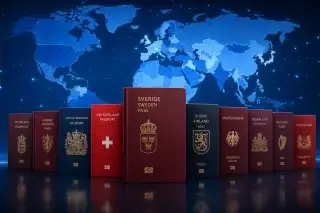 The World’s Strongest Passports for Travel, Living and Investment
How to Travel Safely With Valuables

Travellers are increasingly crossing borders with more than passports and bank cards: laptops, smartphones, watches, jewellery, medication and work documents now make personal security a central part of trip planning. A mistake in packing, insurance or customs preparation can cost more than the ticket itself.
Valuables Have Become a Core Travel Risk
International travel has become more digital, more expensive and more dependent on portable assets. A leisure or business traveller may now carry several categories of valuable items at once: passport, payment cards, phone, laptop, camera, watch, jewellery, prescription medication, corporate access devices and sometimes professional equipment. Travel Daily News, in a practical guide to travelling with valuables, stresses that the main mistake is treating such items like ordinary luggage when their loss can mean financial damage, disrupted travel, blocked payments, data exposure or document problems.
The main rule is simple: anything that cannot be quickly replaced abroad should not go into checked baggage. That applies not only to jewellery but also to passports, visas, medication, laptops, phones, external drives, work credentials, bank cards and family heirlooms. A lost suitcase can often be traced or partly compensated. A lost passport, stolen phone with banking access or irreplaceable medicine can become a crisis within hours.
Airlines Warn Against Checking Valuables
The International Air Transport Association advises passengers not to place valuable or irreplaceable items in checked baggage. It also recommends putting identification both outside and inside the bag, because external labels can be damaged or detached during handling. For passengers, this means a suitcase should be treated as storage for replaceable items, not as a mobile safe.
This matters most on connecting routes. The more airports, airlines and ground handlers involved, the higher the chance of delay, mishandling or damage. Even where an airline accepts liability for lost baggage, compensation is usually limited by carriage rules and may not reflect the real value of jewellery, electronics, documents or emotionally significant objects.
Carry-On Baggage Is Not Enough
Many travellers assume that putting valuables in carry-on baggage solves the problem. It is safer than checking them, but it is not complete protection. Carry-on suitcases may be gate-checked when cabin space runs out, especially on short-haul European flights, budget airlines and full aircraft. The most important items should therefore be in a small personal bag that fits under the seat and stays with the traveller throughout the flight.
That bag should contain a passport, wallet, phone, charger, medication, keys, essential documents, one bank card, insurance details, valuable jewellery and work devices if the trip depends on them. A suitcase in the overhead bin can be out of sight. A personal bag under the seat reduces the risk of theft, accidental swap or forced check-in.
Insurance Requires Reading, Not Just Buying
Travel insurance is often treated as a formality, but its wording determines whether valuables are actually covered. The UK government’s foreign travel insurance guidance advises travellers to read the small print and understand exclusions, since cover may not apply to certain destinations, activities or categories of property.
The most important details are the single-item limit and the overall baggage limit. A policy may appear adequate until a stolen watch, camera or laptop is capped at an amount far below replacement value. Travellers should also check whether cash, jewellery, professional equipment, electronics, documents and items left unattended in cars, hotel rooms or on beaches are covered.
Proof of Value Should Be Prepared Before Departure
Insurance claims usually require evidence. Travellers should keep photographs of valuables, serial numbers for electronics, receipts, warranty documents, insurance policy details, copies of passports and visas, and emergency contact numbers for banks, insurers and consulates. These records should not exist only on a phone that may itself be stolen. A secure cloud folder or encrypted storage is safer.
Expensive jewellery and watches may require a separate valuation or specialist extension to a policy. If an item has high market value, standard travel insurance may not be enough. The same logic applies to business travel: laptops, prototypes, cameras, medical equipment and professional tools should be covered by corporate insurance or a clearly defined personal policy.
Digital Valuables Matter as Much as Jewellery
The most expensive travel loss today is often not the device itself, but access to data. A smartphone may contain banking apps, tickets, identity documents, work chats, photos, crypto wallets and two-factor authentication. Before travel, passengers should enable a strong passcode or biometrics, remote locking, backup and alternative access to essential accounts.
Backups should not become another vulnerability. Passport scans, bank-card photos and visa documents should not sit in an open photo gallery. They are safer in encrypted storage, a password manager or a protected folder. Travellers should also avoid automatic connections to unknown wireless networks and avoid financial transactions over open networks without additional protection.
Jewellery and Watches Should Not Be Displayed
The safest rule for expensive jewellery is strict: do not take what is not needed. If an item is not required for a specific event, it is safer at home or in a bank safe. Luxury watches, large diamonds, visible chains and branded bags increase the risk of theft and may attract attention in airports, taxis, restaurants and hotel lobbies.
If jewellery is necessary, it should travel in a personal bag, not in a suitcase. It should not be removed during screening unless required, and all items should not be kept in one place. A hotel safe reduces risk but does not eliminate it. Travellers should still keep photographs and know whether their policy covers theft from a room or safe.
Customs Rules Can Create a Separate Risk
Travelling with valuables is not only about theft. Watches, jewellery, art, cash and professional equipment may raise customs questions. Different countries have thresholds for cash declarations, temporary import rules, restrictions on cultural property and requirements to prove origin.
For travellers, this means expensive items bought before departure may need supporting documents. Otherwise, customs officials may ask whether the item was purchased abroad and whether duties are due. Extra care is needed with luxury goods, antiques, gemstones, art and professional equipment.
A Hotel Room Is Not a Bank Vault
Many travel thefts happen because of routine mistakes: a bag left on a chair, a phone placed near a window, a passport kept in an outer backpack pocket, or a laptop left visible in a room. A hotel safe is useful, but it is not a full guarantee. It can hold a passport, spare card, some cash and jewellery, but the traveller should not leave all access to money or communication in one place.
The strongest strategy is separation. Money, cards and documents should not all sit in one wallet. The main phone should not be the only device with access to tickets and banking. One card can be in a wallet, another in luggage or a safe, and some cash kept separately. If one bag is stolen, the trip should not collapse.
Airports Remain High-Risk Zones
Airports feel secure because of cameras and screening, but they are also places where travellers are tired, rushed and distracted. Valuables are especially exposed at security checkpoints, where people place phones, watches, belts, laptops and bags into trays. The US Transportation Security Administration notes that the final decision on whether an item is allowed through a checkpoint rests with the security officer, which means travellers should check rules for uncertain items before arriving at the airport.
The practical lesson is to avoid rushing through security. Trays should be collected immediately, passports and phones should not be placed separately from bags, and laptops and wallets should return to the same location each time. On connecting journeys, travellers should check for passport, phone and wallet after leaving the aircraft, after screening, before boarding and when arriving at the hotel.
Security Starts Before Leaving Home
Protecting valuables begins at the packing stage. Travellers should decide which items are truly necessary, which can be replaced, which need insurance, which may need customs documentation, which cannot be checked and which must stay on their person. The fewer valuables taken abroad, the easier the trip is to control and the lower the potential loss.
For business travellers, separation of personal and corporate data also matters. A work laptop should not contain unnecessary personal documents, and a personal phone should not be the only route into corporate email. In some cases, a clean device, temporary payment card and minimal document set are safer than travelling with a full digital and financial archive.
Losses Must Be Reported Quickly
If valuables are lost or stolen, time matters. Travellers should block bank cards and devices, change passwords for key accounts, report the incident to police, obtain an official report, notify the airline, hotel or transport provider, contact the insurer and, if necessary, approach the consulate. Without a police report or carrier documentation, an insurance claim may be delayed or rejected.
A lost passport requires especially fast action. A consulate may issue an emergency travel document, but that takes time, photographs, proof of identity and usually a police report. Copies of passports, a spare card and access to email should be available even if the main phone and bag are gone.
As reported by International Investment experts, the main traveller mistake is judging risk by the probability of theft rather than by the consequences of loss. A passport, phone, medication, bank card or work laptop may cost less than a luxury watch, but losing it can stop the journey, derail a business meeting, block money and create legal problems. A rational strategy is not to treat luggage as a safe, not to take unnecessary valuables, to arrange insurance before departure and to structure the trip so that losing one bag does not mean losing control of the entire journey.
FAQ: Travelling With Valuables
Can valuables be placed in checked baggage?
Valuable and irreplaceable items should not be placed in checked baggage. Passports, money, cards, medication, jewellery, laptops, phones and important documents should remain in a personal bag with the traveller.
What counts as a valuable item when travelling?
Valuables include not only jewellery and watches, but also passports, visas, bank cards, phones, laptops, medication, keys, work documents, cameras, external drives and emotionally significant objects.
Does travel insurance cover stolen jewellery or electronics?
Not always. Travellers must check single-item limits, total baggage limits, exclusions, storage rules and proof-of-value requirements. Expensive watches, jewellery and professional equipment may need extra cover.
How should documents be protected abroad?
A passport should be kept in a secure inner bag or hotel safe when the original is not needed. Copies of passports, visas, insurance and tickets should be stored securely online and separately from the main phone.
Do expensive items need to be declared at customs?
It depends on the country, value and type of item. Watches, jewellery, cash, art and professional equipment may require declaration or documents proving origin and temporary import.
What should travellers do if valuables are stolen abroad?
They should block cards and devices, change passwords, report the theft to police, obtain an official report, notify the insurer, airline or hotel, and contact the consulate if identity documents are lost.