







 China Nears a Decision on Fresh Stimulus
 Fines for Illegal Rentals in Spain Reach €800,000
 Australia’s Spring Auctions Rise but Remain Well Below 2025
 Number of Foreigners Holding Turkish Residence Permits Exceeds 1.27 Million
 Demand from Russian Tourists for Holidays in Georgia Rises by 20–25%
 Montenegro Property Buying Costs in 2026
EU to simplify refunds for cancelled flights
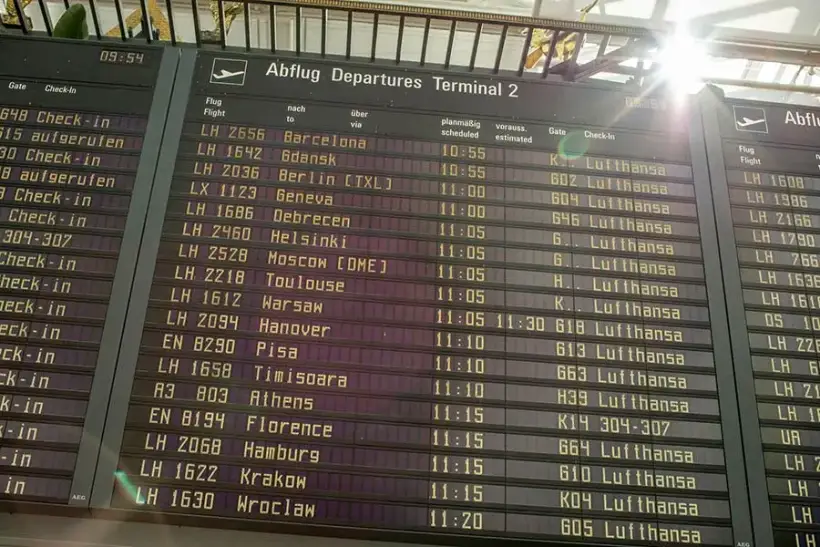
The European Union has reached a provisional agreement on a reform of passenger protection rules for travellers who purchase tickets online. The new rules introduce a unified procedure for refunds for cancelled flights, set payment deadlines and establish new obligations for airlines and intermediaries, Euro Weekly News reports.
How the new rules will work
The reform applies to passengers who buy airline tickets through online travel agencies, aggregators and other booking platforms. Currently, when a flight is cancelled, the refund process often takes a long time, as airlines and intermediaries may shift responsibility to each other.
Under the new rules, passengers will be entitled to a full refund for a cancelled flight, including booking fees and service charges paid at the time of purchase. In most cases, travellers should receive their money within seven days.
If an intermediary has paid the airline for the ticket using its own funds, the refund period may be extended to 14 days. The new procedure is intended to eliminate uncertainty over refunds and reduce waiting times for payments.
Requirements for airlines and intermediaries
The document introduces additional requirements for informing passengers. Online platforms and travel agencies will have to explain before the purchase how refunds will be handled if a flight is cancelled.
Airlines, in turn, will have to state whether they cooperate with intermediaries in the refund process. This will allow passengers to understand in advance who is responsible for handling their claim.
Small travel agencies classified as microenterprises will receive a limited exemption. However, such companies will still have to inform customers in advance about the specific refund arrangements that apply.
The reform also provides additional guarantees for passengers with disabilities or reduced mobility. If an airline cannot provide the necessary assistance itself, an accompanying person will be allowed to travel free of charge and sit next to the passenger requiring support.
Processing compensation claims
The reform also covers the procedure for receiving compensation. The EU plans to introduce standardised claim forms that can be used in all member states regardless of the airline involved. Applications will be available electronically and by post.
Compensation levels for long flight delays will remain unchanged. For delays of more than three hours, passengers will continue to be eligible for €250 for flights of up to 1,500 kilometres, €400 for flights within the EU and routes between 1,500 and 3,500 kilometres, and up to €600 for longer journeys.
Airlines will also be required to inform passengers about their rights when disruptions occur and respond to claims within 30 days. During this period, the carrier must either pay compensation or explain the reasons for rejecting the claim.
Earlier proposals suggested increasing the compensation threshold to five hours of delay. Airlines supported this change, arguing that their costs for such payments had exceeded €3 billion over the past 20 years. Industry representatives consider the current situation unfair because many causes of flight disruptions are beyond carriers’ control, including weather conditions, airport congestion and air traffic controller strikes. Critics of the proposal argued that reducing compensation would not encourage airlines to improve punctuality and would weaken passenger protection.
When will the new rules come into force?
The provisional agreement does not mean that the reform has already entered into force. The document must receive formal approval from the European Parliament and the Council of the European Union, followed by legal and linguistic review.
Analysts at International Investment note that European air travel regularly faces major disruptions. The situation has been further complicated by the introduction of the new EES border control system, which requires the collection of biometric data from citizens of countries outside the EU. The launch of the system has resulted in lengthy delays and disruptions to flight schedules. In some airports, passport control procedures can take up to five hours. There have also been cases of aircraft departing without passengers who were unable to complete the required checks in time.
In this environment, issues related to refunds and compensation are becoming increasingly important. Passengers currently often have to determine themselves whether responsibility lies with the airline or the intermediary through which the ticket was purchased. The proposed EU rules aim to remove this uncertainty by establishing clear refund deadlines, a unified claims procedure and a clearer division of responsibilities between market participants.