







 Iceland’s Capital Housing Market Shifts Toward Cheaper Homes
 Singapore Home Sales Rebound as New Launches Return
 Abu Dhabi Real Estate Market: Rising Home Prices and Rent Freeze
 London Housing Market Loses Buyer Confidence
 Michigan Opens More Doors for First-Time Homebuyers
 Housing Costs Push South Korean President to New Low
Eclipse Pushed European Hotel Rates Above $1,000
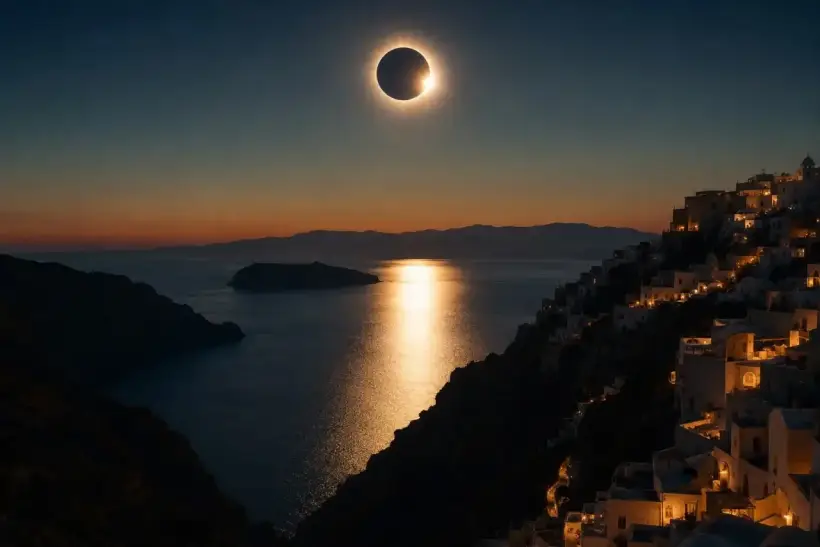
The Aug. 12, 2026 total solar eclipse sharply distorted accommodation markets in parts of Spain and Iceland, with average advertised standard hotel rates in Reykjavík reaching about $1,012 a night for eclipse week and short-term rentals averaging roughly $1,172. In Bilbao, vacation rentals were advertised at about $1,088 a night. The surge was not a Europe-wide hotel boom but a highly localized pricing shock concentrated where the narrow path of totality met limited accommodation supply and intense international demand.
The eclipse created a temporary lodging market
CNBC’s report on European hotel prices around the eclipse highlighted an unusual characteristic of the event: travelers could not simply choose Spain or Iceland as a destination. Those seeking totality had to be inside a relatively narrow corridor of the Moon’s central shadow at a specific time.
The Aug. 12 eclipse crossed Greenland, Iceland, northern Russia, the Atlantic Ocean, Spain and a small corner of Portugal. Maximum totality anywhere along the path was about 2 minutes and 18 seconds, while most populated viewing locations experienced less than two minutes. Totality began at about 8:28 p.m. local time in León and 5:48 p.m. in Reykjavík. It was the first total solar eclipse visible from the Iberian Peninsula since 1912.
That geography dramatically reduced travelers’ ability to substitute one destination for another. A city outside the totality corridor could be geographically close yet offer only a partial eclipse, concentrating accommodation demand in a relatively small number of markets.
Reykjavík hotel rates moved above $1,000
Lighthouse estimated the average advertised standard hotel rate in Reykjavík at about $1,012 per night for eclipse week. That was roughly twice the comparable 2025 level and 212% above the Icelandic capital’s average for 2026.
Short-term rentals averaged approximately $1,172 per night, 178% higher year over year. These were advertised rates observed before the event rather than an audited measure of the average amount ultimately paid for every occupied property.
Bilbao showed an especially wide gap between accommodation types. Standard hotel rooms averaged about $315, up 35% year over year, while short-term rentals averaged roughly $1,088, an increase of 206%.
Santiago de Compostela remained substantially cheaper, with hotels averaging about $193 a night, just 13% above the comparable 2025 level.
Demand indicators for Aug. 12 were 186% higher year over year in A Coruña, 166% higher in Reykjavík and 63% higher in Bilbao. About 81% of A Coruña’s short-term rental inventory was already booked by mid-July.
The figures also challenge the assumption that vacation rentals are necessarily a cheaper substitute for hotels during major events. When remaining supply becomes scarce, individual property owners can reprice accommodation particularly aggressively.
Booking pressure appeared months before August
The surge was already visible well before eclipse week. Amadeus reported that flight bookings to airports along the eclipse path for arrivals between Aug. 7 and Aug. 12 were 25% higher than in the comparable 2025 period.
For the week of Aug. 9-16, hotel occupancy already on the books across Spain and Iceland was 16% higher than a year earlier, while average daily rates were up 36%.
Individual destinations recorded much larger booking increases. Bilbao was up 366%, Asturias 292% and Valencia 137% compared with 2025.
The hotel data reflected reservations recorded as of May 11, while the flight comparison used bookings as of May 7. They therefore measured forward demand rather than final August occupancy.
Average daily rate measures the average room revenue earned for each occupied room. A simultaneous rise in both occupancy and room rates is considerably more valuable to hotel operators than higher prices accompanied by falling demand.
Spain forecast almost 447,000 additional tourists
Spain’s Ministry of Economy, Trade and Enterprise projected approximately 446,700 additional tourists between Aug. 10 and Aug. 16 across 36 provinces affected by totality and nearby attraction areas.
About 164,000 of those visitors were expected to come from abroad, while roughly 282,700 represented additional domestic travel.
Additional tourist spending was projected at €342.19 million, including €247.29 million from international travelers and €94.90 million from Spanish residents. The modeled net contribution to the Spanish economy was €347.60 million.
Scheduled airline seats for eclipse week were running 7.9% above the comparable 2025 period, while hotel bookings for August were 17.8% higher year over year. Authorities estimated that more than 1 million accommodation places remained available across hotels, apartments, campsites, rural lodging and tourist homes in the area of influence.
Those figures were forecasts rather than final tourism accounts. An additional visitor does not necessarily stay in a hotel, and a quoted room rate does not prove that the room was ultimately sold at that price.
A Coruña approached full hotel occupancy
Early post-event figures confirm that visitor demand reached exceptional levels in individual Spanish cities.
A Coruña’s municipal government estimated that more than 225,000 people were in the city on Aug. 12. About 125,000 gathered along the waterfront between the aquarium area and Riazor, more than 30,000 were at Monte de San Pedro, a similar number at O Portiño and around 25,000 near the Tower of Hercules.
Around 15,000 additional visitors were cruise passengers.
Hotel occupancy reached approximately 99%. About 75% of eclipse-period bookings had already been made from October 2025 onward, indicating unusually long planning horizons for an event lasting only minutes.
A total of 83,712 vehicles entered the city during the day, a figure broadly comparable with the previous Wednesday, as authorities had encouraged early arrivals and the use of public transport.
Iceland’s earlier tourism data show how exceptional August was
Iceland was already an expensive destination, but hotel statistics before the eclipse did not show anything comparable to the August pricing shock.
Hotel overnight stays totaled about 532,000 in June 2026, 0.4% fewer than a year earlier. In the Capital Region, hotel overnight stays fell by roughly 6.5%, while room occupancy dropped from 81.6% to 78.2%.
There were 182 hotels operating nationwide with 12,670 rooms, including 59 hotels and 5,671 rooms in the Capital Region.
That baseline suggests the eclipse premium was driven primarily by an extraordinary concentration of demand around a specific date rather than a broad acceleration in Icelandic hotel activity throughout the year.
Advertised rates are not the same as realized revenue
The distinction between a quoted rate and the actual amount earned by a hotel is critical when interpreting eclipse pricing.
As availability falls, inexpensive rooms disappear from booking systems first and the remaining inventory naturally becomes more expensive. Conversely, operators may reduce unsold rooms close to arrival if demand does not meet expectations.
The headline figure above $1,000 in Reykjavík should therefore not be interpreted as the rate paid for every room occupied during the eclipse. It represents the average level of advertised inventory in the relevant dataset and period.
Other market reporting also found severe but varying increases immediately before the event, with Reykjavík hotel prices more than 140% above the comparable 2025 level. A Coruña rates had more than doubled, while Bilbao and Santiago de Compostela recorded increases of about 59% and 31%, respectively.
The different percentages are not necessarily contradictory. Studies captured prices on different dates, for different stay periods and across different property samples.
Spain avoided major disruption despite huge crowds
The accommodation boom also created a major transport and emergency-management challenge. Authorities had estimated that the eclipse could generate between 400,000 and 1.5 million additional road journeys toward totality areas.
Spain’s Ministry of Territorial Policy and Democratic Memory said after the event that observation had proceeded without major nationwide incidents.
There were localized traffic restrictions and congestion, limited evacuations from mountain areas and isolated medical interventions. A fire at a viewing area in Cantabria was quickly extinguished, while emergency services responded to fires on two vessels in the Balearic Islands.
Public services remained operational even at locations experiencing exceptionally high visitor concentrations.
That matters economically because event tourism produces additional revenue only when transport networks, emergency services, telecommunications and local infrastructure can continue operating under peak demand.
Final August hotel statistics are not yet available
As of Aug. 17, Spain’s official monthly hotel statistics did not yet cover August 2026. The latest release covers June.
Spanish hotels recorded more than 38.6 million overnight stays that month, 0.9% fewer than in June 2025. Average revenue per occupied room was €137.1, up 5.8%, while the Hotel Price Index increased 5.6%.
Across the first six months of 2026, hotel overnight stays were 1.8% higher than in the corresponding period of 2025.
Those national figures provide an important benchmark. Eclipse-related increases of dozens or hundreds of percentage points in individual destinations were far above the underlying rate of hotel price growth across Spain.
The final commercial impact will be clearer once August data show realized overnight stays, occupancy, average room revenue and revenue per available room.
Revenue per available room is particularly useful because it combines both pricing and occupancy. A property can advertise extremely expensive rooms and still produce a weaker result if a large share remains unsold.
The eclipse demonstrated the power and limits of event pricing
For hotels and vacation-rental owners, the eclipse provided an unusually clear example of event-driven pricing.
During a conventional summer holiday, a traveler unhappy with one destination’s prices can move to another resort or change dates. A traveler seeking totality on Aug. 12 had far fewer substitutes.
That made accommodation inside the eclipse corridor unusually valuable for a handful of nights. It also explains why neighboring cities could show dramatically different pricing patterns.
For hotel investors, such events can materially lift monthly room revenue, but the effect is inherently temporary and should not be treated as evidence of a permanent repricing of the local market.
As International Investment experts report, the 2026 eclipse demonstrated that a rare event tied to a precise place and time can affect room rates and occupancy more dramatically for several days than ordinary seasonal trends do over months. Rates above $1,000, however, should not be treated as a new structural level for Reykjavík or Europe’s hotel market. Much of the published evidence reflects advertised prices and pre-event economic models, while final August statistics are still pending. Realized overnight stays and revenue will be more important than the highest price displayed before the eclipse.