







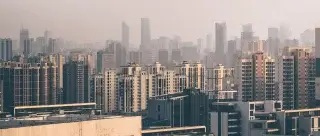
 China Home Prices Continue to Fall
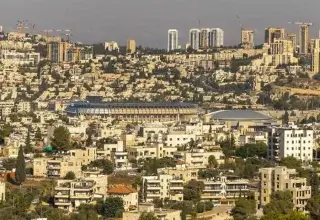 Housing Prices in Israel Fell 1.5% Year-on-Year
 Immigration Slowdown Reshapes the US Sun Belt
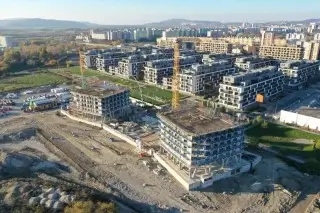 Slovakia Reforms Building Rules as Housing Starts Slide
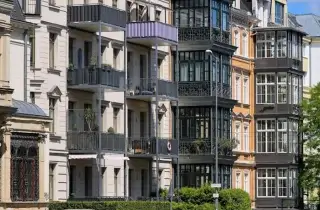 EU Proposes New Restrictions on Short-Term Housing Rentals
 Canada Fast-Tracks Tax Rulings for C$1 Billion Investments
Drought Dries Bärenschützklamm Waterfalls in Austria
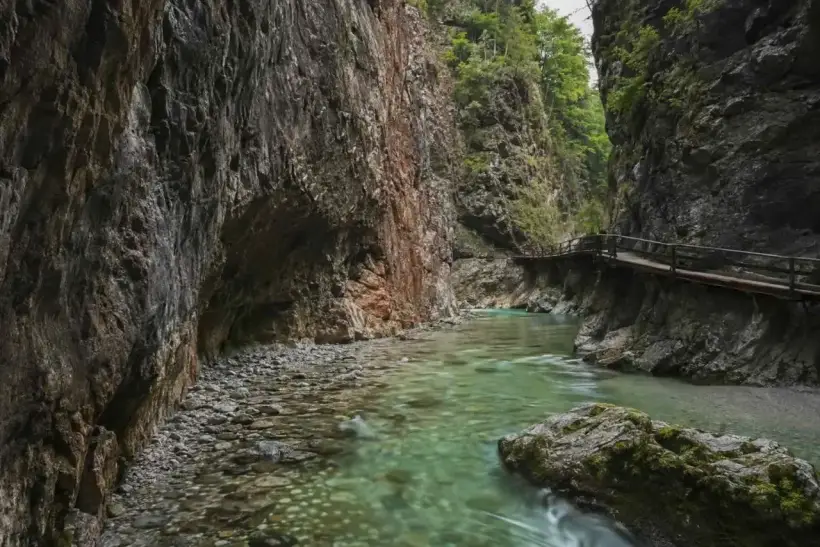
Water flow through Bärenschützklamm, one of the best-known mountain gorges in the Austrian state of Styria, had stopped by the end of July 2026, leaving waterfalls dry and parts of the creek bed exposed. The event coincides with Austria’s driest 12-month period since systematic observations began in 1850. Yet national tourism is moving in the opposite direction, with overnight stays reaching a record 41.87 million between May and July.
Bärenschützklamm waterfalls disappeared by late July
Bärenschützklamm lies near Mixnitz in Styria. Its developed mountain trail runs between steep limestone walls using a network of wooden ladders and bridges above the Mixnitzbach stream. Waterfalls and fast-flowing cold water have long been central to the attraction’s landscape.
The scene changed dramatically this summer. An Euronews report from the gorge published on 15 August cited Gerhard Jantscher, chairman of the Mixnitz section of the Austrian Alpine Club, as saying that water flow had ceased by the end of July because of insufficient precipitation. The Mixnitzbach originates around Sommeralm, passes through Teichalm and then feeds Bärenschützklamm. Jantscher estimated that at least a week of steady rainfall would be needed for a meaningful recovery. Photographs taken on 5 August showed dry waterfalls and exposed stream beds.
The system is naturally fed rather than artificially regulated. Rain falling higher in the catchment is partly stored in soils and rock before gradually reaching the stream. After an extended drought, new precipitation must first replenish depleted moisture reserves, meaning one short storm may not immediately restore normal flow.
Austria is experiencing a record 2026 drought
The dry gorge is part of a nationwide hydrological deficit. Austria’s meteorological and geophysical service, GeoSphere Austria, said in an 18 August assessment that the previous 12 months were the driest since systematic records began in 1850. Between 1 January and 12 August, 72% of the country experienced more dry days than in any comparable period during the previous 65 years. Precipitation in Styria was 29% below normal, while two summer heatwaves pushed Austria’s maximum temperature to 41.2°C.
Conditions have been particularly severe in the east. Vienna, Lower Austria and Burgenland received an average of only 210.9 millimetres of precipitation between 23 February and 9 August, compared with a normal 405 millimetres. Austria’s longest continuous dry spell in 2026 reached 48 days.
The Standardised Precipitation Evapotranspiration Index, or SPEI, shows how exceptional the event has become. The index combines precipitation with potential moisture loss through evaporation. Values below minus 2 indicate extreme drought. Austria’s 12-month SPEI fell below minus 4 in July, a level not previously recorded in the national observational series.
The deficit was not created by a few dry summer weeks. Climate researchers say it has been building progressively since the floods of 2024, before the exceptionally dry spring and summer of 2026 and high temperatures drove the water balance to a historic low. Even average rainfall would not quickly eliminate the accumulated deficit.
The Alps entered summer with little snow
Summer rainfall is only part of the water supply for Alpine streams. Snow acts as a seasonal reservoir, storing precipitation during winter and gradually releasing it into rivers and creeks during spring and early summer.
The winter preceding the current drought provided little support. A joint Alpine climate review covering November 2025 through April 2026 found that average snow depths across the German, Austrian and Swiss Alpine region were among the five lowest since 1991. The Northern Alps experienced their second-driest winter since 1991, while the Southern Alps recorded the driest. Precipitation deficits reached as much as 70% during parts of the winter, while average temperatures were 1.1°C above the 1991–2020 reference period.
That meant the summer began with an already limited snow reserve before subsequent dry months further reduced water supplies to smaller mountain streams.
Alpine snow cover has been declining for decades
The 2025/26 winter also fits a longer trend. Research published in The Cryosphere compiled records from more than 2,000 monitoring stations in Austria, France, Germany, Italy, Slovenia and Switzerland, with more than 800 stations used for trend analysis between 1971 and 2019. Average seasonal snow depth from November through May declined by about 8.4% per decade. Seasonal maximum snow depth and snow-cover duration each declined by an average of around 5.6% per decade.
Those findings provide long-term context but do not by themselves prove that human-driven climate change caused the specific drying of Bärenschützklamm in 2026. Quantifying the role of global warming in an individual drought requires a dedicated climate-attribution study.
Bärenschützklamm remains open to visitors
The missing waterfalls have not forced the gorge to close. The official Eastern Styria tourism portal lists Bärenschützklamm as open from 1 May through 31 October 2026, with daily entry between 8 a.m. and 4 p.m. The gorge itself takes around an hour to traverse, while complete hiking options range from roughly 4.5 to nine hours. Adult admission is €9.
The local Alpine Club section also currently reports no access restrictions. Winter entry is prohibited because the wooden structures, rock faces and overall route require recurring inspections.
Commercially, this creates an unusual situation. The attraction remains available, but one of its defining natural features has temporarily disappeared. Visitors can use the same trail while encountering a landscape that looks markedly different from the waterfall-filled imagery traditionally associated with Bärenschützklamm.
The gorge reopened after a €1.7 million reconstruction
The current drought has arrived shortly after a major rebuilding programme. A rockfall in July 2020 killed three people and led to the closure of Bärenschützklamm for more than four years.
The Mixnitz section of the Austrian Alpine Club says the gorge reopened to the general public on 22 September 2024. Reconstruction costs had reached about €1.7 million. Steel rockfall barriers were installed and 110 of the route’s 168 ladders and crossing structures were fully replaced. Before the accident, the gorge received around 40,000 visitors a year.
The investment reduced risks linked to rockfall and ageing infrastructure, but it could not remove the attraction’s dependence on precipitation. Less than two years after reopening, the limiting factor has shifted from structural safety to water availability.
The first full season showed strong demand
Visitor demand recovered quickly during the first full season following the long closure. By 8 August 2025, around 20,000 people had already visited the gorge, more than half of them from outside Austria. The operator was expecting roughly 30,000 visitors over the full season. Regional broadcaster ORF also reported that admission revenue helps cover ongoing maintenance costs, including repairs to ladders damaged by winter snow.
No comparable final visitor figures are yet available for the 2026 summer season. It is therefore too early to determine whether the missing waterfalls have materially reduced demand at Bärenschützklamm itself.
Austrian tourism sets a new summer record
At national level, there is no sign so far of a drought-driven tourism contraction. Statistics Austria figures published on 25 August and cited by the Federal Ministry for Economic Affairs, Energy and Tourism show 41.87 million overnight stays between May and July 2026. That was 3.2% more than a year earlier and a new record for the first half of the summer tourism season.
July alone generated 19.46 million overnight stays, up 4.8% year on year. Guest arrivals increased even faster, rising 9.3% to 5.97 million. International visitors accounted for 14.68 million overnight stays, 5.9% more than a year earlier, while domestic guests generated 4.78 million, up 1.7%. Between January and July, total overnight stays reached 96.46 million, an increase of 1.8%.
The figures put the drought into perspective: it has not produced a nationwide tourism crisis. But aggregated accommodation data cannot reveal what is happening at an individual gorge or other climate-sensitive natural attraction.
Climate risk is becoming more local than tourism statistics
Bärenschützklamm illustrates why strong national tourism numbers can mask problems at individual destinations. A country can set records for overnight stays while a gorge, lake, glacier or ski area loses part of the natural conditions on which its appeal depends.
For tourism property and infrastructure investors, exposure to a particular natural resource matters increasingly. Where demand relies on reliable snow, water levels, glaciers or waterfalls, climate risk can alter the visitor product before an attraction physically closes. Access remains possible, but the experience and potentially the commercial value change.
As International Investment experts report, the available evidence does not support describing Austrian tourism as being in crisis: overnight stays are growing and Bärenschützklamm remains open. The more significant warning is the divergence between strong industry-wide indicators and conditions at individual nature-based assets. For investors, national tourism growth is no longer sufficient evidence on its own; the dependence of a particular location on rainfall, snow, temperature and reliable water supply needs to be assessed separately. At the same time, it is too early to conclude that the 2026 drought will cause a lasting decline in Bärenschützklamm visitor numbers. That would require full-season data and evidence from subsequent years.