







 Georgian Law Enforcement Busts Scammers Posing as Real Estate Brokers
 World’s Largest Economies in 2026: GDP and Purchasing Power Rankings
 Escalation in the Middle East: New US and Iranian Strikes
 Hong Kong Property Rebounds as Momentum Slows
 Bulgaria’s Property Market Enters a More Mature Phase
 UK House Prices Rise as Mortgage Demand Weakens
Turkish Airlines Cancel Flights to Moscow
Magnefik
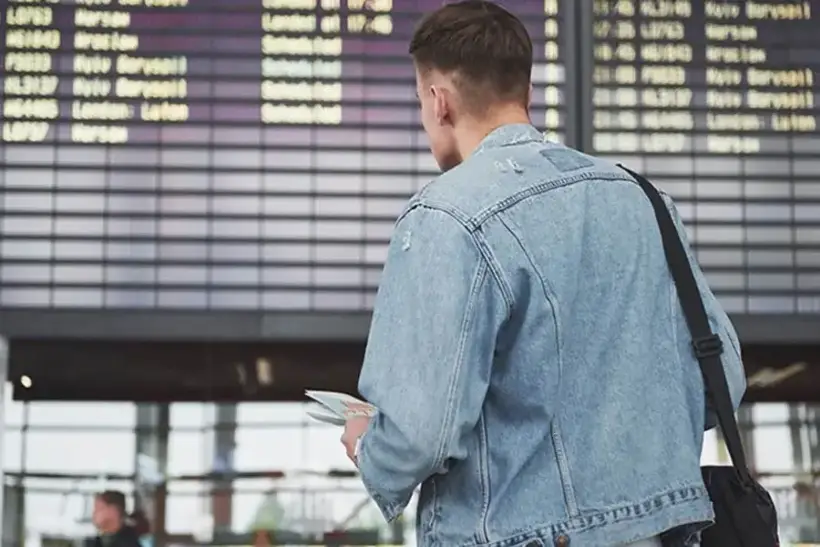
Around 77 flights were cancelled or delayed at Moscow airports on September 2 following another drone attack. Turkish carriers Pegasus Airlines and Turkish Airlines also cancelled services to the Russian capital, TourDom reports.
Disruptions to the Pegasus Schedule
Problems with the Pegasus Airlines schedule began even before restrictions were introduced at Vnukovo Airport. Aircraft from Antalya and Izmir, which were due to arrive in Moscow at 00:15 and 00:55 respectively, turned around in mid-air and returned to Turkey.
Flight PC-1576 from Antalya changed course over Lithuania at 22:40 Moscow time, while PC-1521 from Izmir turned around over Hungary. PC-386 from Istanbul, scheduled to depart at 22:45 Moscow time, began preparing for take-off but remained on the ground, according to Flightradar24. Flights PC-1456 from Bodrum, PC-390 from Istanbul and PC-1458 from Dalaman were also cancelled.
As the aircraft did not arrive at Vnukovo, the carrier also cancelled the corresponding return services. As a result, on September 2 passengers were unable to fly from Moscow to Antalya, Istanbul, Izmir, Bodrum and Dalaman.
Passengers were informed that the departures would take place at a later date, although the new dates had not yet been determined. The carrier said alternative travel options would be provided later, while rebooking onto the nearest available flights was not currently planned. Some passengers decided not to wait for the airline’s decision and purchased new tickets for September 3 at their own expense. After completing their trips, they plan to seek compensation for additional travel costs and an extra night in a hotel.
130 Drones Over Russia
The disruptions were not limited to Pegasus Airlines. Turkish Airlines cancelled two services from Istanbul to Moscow, TK-419 and TK-407. As a result, the corresponding return flights TK-420 and TK-408 from the Russian capital were also cancelled.
Around 77 flights were delayed or cancelled at Sheremetyevo, Domodedovo and Vnukovo airports on the morning of September 2, according to the Ostorozhno, Moskva Telegram channel. Schedule changes affected 40 flights at Sheremetyevo, 20 at Domodedovo and 17 at Vnukovo.
At Domodedovo, the arrival of a flight from Antalya was postponed until the following day, with the total delay exceeding nine hours. At Sheremetyevo, a departure to Sochi was delayed by around six hours, while flights from Vnukovo to Sochi and Sharm El Sheikh faced similar disruptions.
Restrictions on the use of airspace around Vnukovo were in effect from 02:45 to 05:56 Moscow time. In the morning, the Russian Defence Ministry said air defence systems had destroyed 130 drones overnight over several regions of the country, including the Moscow region, as well as over the Black Sea.
Risks to Air Travel in Russia
Regular restrictions at airports in Moscow and many other Russian cities due to drone attacks have become a persistent factor for airlines. They repeatedly result in delays, cancellations and schedule changes. The issue attracted additional attention following a statement by Volodymyr Zelenskyy on September 1. The Ukrainian president urged airlines and insurers to take into account the risks of operating in Russian airspace. However, there is no evidence of a direct connection between his statement and the decisions taken by Pegasus Airlines and Turkish Airlines.
Analysts at International Investment note that recurring restrictions increase operational uncertainty for carriers: even a brief airport closure can disrupt aircraft rotations, affect subsequent routes and make it more difficult to maintain a stable schedule. This has a negative impact on tourism as well as on the country’s investment attractiveness.
The risks are likely to persist as long as hostilities between Russia and Ukraine continue and could intensify, including in the Moscow, St Petersburg and Sochi areas. These locations have been among those most frequently affected by schedule disruptions.